
Spring Sudoku: Free Seasonal Puzzles to Print for Any Occasion
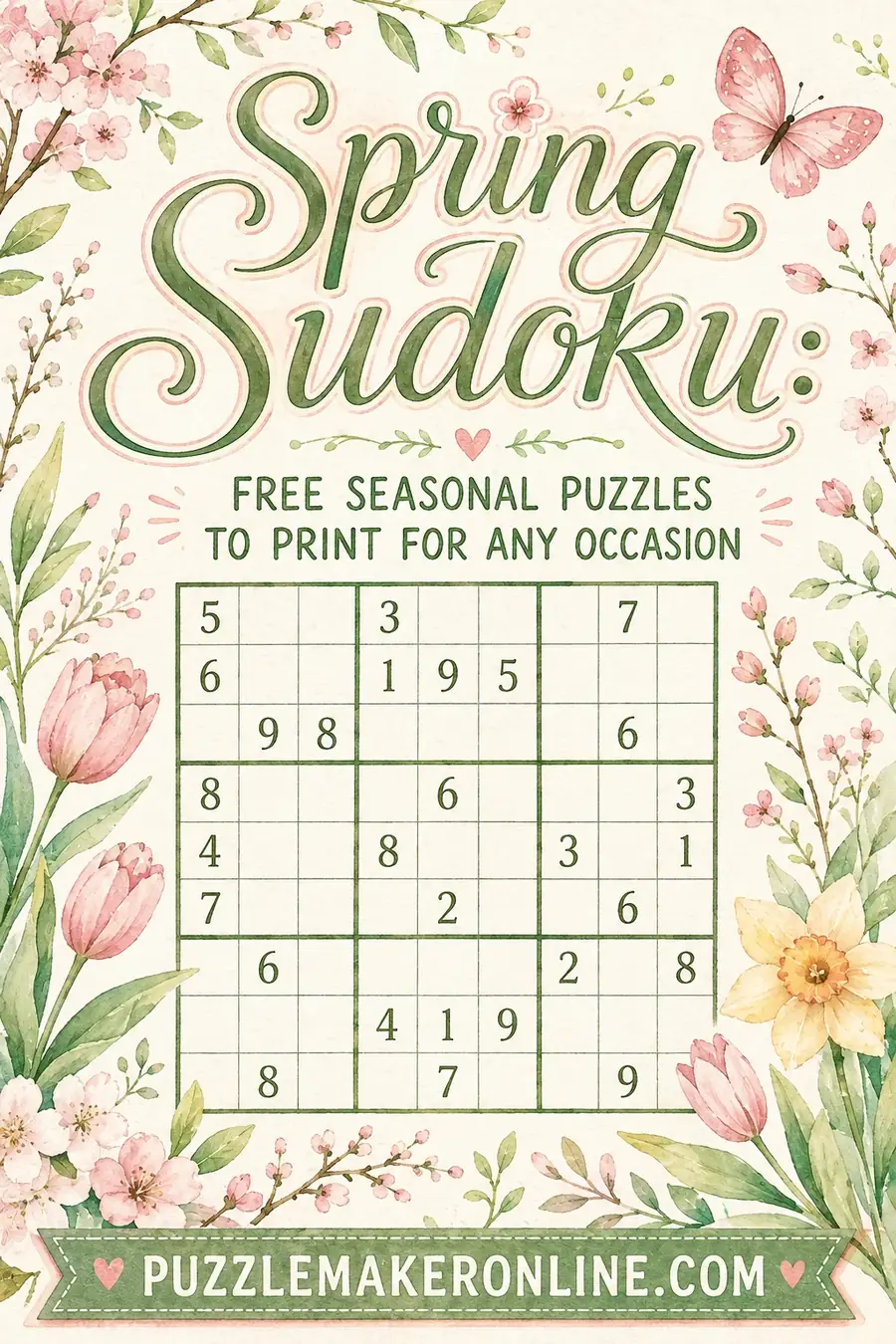
A "spring sudoku" is simply a standard sudoku puzzle presented with seasonal spring decoration around the grid — flowers, butterflies, pastel borders — rather than a different rule set or puzzle mechanic. The appeal isn't a new type of logic puzzle; it's giving a familiar, reliable activity a seasonal feel for a classroom bulletin board, a printed activity packet, or just a nicer-looking puzzle to sit down with on a spring afternoon.
Where Spring-Themed Sudoku Gets Used
Classrooms during spring months. Teachers frequently look for seasonal versions of familiar activities to keep worksheets and puzzle stations feeling fresh throughout the school year — a spring-decorated sudoku page fits naturally into March, April, or May classroom activities without needing to teach a new puzzle type.
Spring break and holiday activity packets. Family activity books and printable packets built around spring break, Easter, or general springtime themes often include a sudoku page alongside word searches, coloring pages, and other classic printable activities.
Seasonal home decor and routine. Some people simply enjoy swapping out puzzle themes with the seasons as a small, low-effort way to keep a regular puzzle habit feeling fresh year-round, similar to rotating seasonal decor.
Senior activity programs. Community centers and care facilities that run regular puzzle activities for seniors often rotate seasonal themes throughout the year, and spring-themed puzzle pages are a popular, gentle way to mark the change of season in a printed activity.
What Actually Changes (and What Doesn't)
What changes: the visual border, background elements, or color scheme around the grid — florals, pastel colors, spring-associated imagery like butterflies or rain clouds.
What stays exactly the same: the puzzle logic itself. A spring-themed sudoku follows the identical core rule as any standard sudoku — every row, column, and 3x3 box contains 1-9 with no repeats. There's no seasonal twist to the actual solving mechanic; the theming is purely presentational.
Picking the Right Difficulty for the Occasion
For a classroom of younger kids, an easier difficulty (or even a 4x4 sudoku for the youngest students) keeps the activity accessible and quick to complete within a class period.
For a spring break activity packet for mixed ages, offering a small range of difficulties — one easy page, one medium — lets different family members or students engage at their own comfortable level.
For a personal seasonal puzzle habit, matching the difficulty to your normal solving level works best, since the seasonal theme is really just a nice visual refresh rather than a reason to change how challenging your puzzle is.
Building Your Own Spring Sudoku Page
If you can't find a pre-made spring-themed puzzle that fits your specific need (a certain difficulty, a certain grid size, a certain number of puzzles per page), generating a standard puzzle and adding your own seasonal border or decoration around it is a completely valid approach — the puzzle content itself doesn't need to come from a specifically "spring" source, since (as covered above) the logic never actually changes based on the theme. A sudoku puzzle maker lets you generate and print puzzles at your chosen difficulty and grid size, which you can then present however fits your specific spring activity.
Pairing Sudoku With Other Spring Classroom Activities
A spring-themed sudoku page rarely works best as a standalone activity in a classroom setting — it tends to land better as one station or option within a broader spring activity block, alongside a word search, a coloring page, or a short writing prompt. This lets students with different preferences and attention spans self-select into what engages them most, while still giving the sudoku fans in the room a real logic challenge rather than just filler. For a mixed-difficulty group, offering both an easy and a medium version of the same themed puzzle page covers a wider range of student ability without requiring an entirely separate activity.
Seasonal Puzzle Rotation for a Recurring Habit
If you or your students already have a regular sudoku habit (see sudoku calendar for building one), rotating in a seasonally-themed page every few weeks is a low-effort way to keep a recurring activity feeling fresh without changing the underlying difficulty or format at all. This works particularly well in a classroom setting spanning a full school year, where a predictable seasonal rhythm — spring in March through May, then a summer or end-of-year theme, then fall, then winter — gives the activity a sense of occasion tied to the calendar, even though the actual puzzle-solving skill being built stays completely consistent throughout.
Printing Tips Specific to Decorated Puzzle Pages
A decorated border or background around a sudoku grid introduces one small practical consideration that a plain puzzle doesn't: make sure the decorative elements don't crowd or shrink the actual grid and its cells, since a cramped grid becomes genuinely harder to fill in by hand, especially for younger solvers still developing fine motor control. If you're combining a generated puzzle with your own decorative border, leaving generous white space around the grid itself — rather than tightly wrapping decoration right up against the puzzle's edge — keeps the page both attractive and fully functional as an actual puzzle to solve.
Why Seasonal Theming Genuinely Helps Engagement
There's real, if modest, psychological value in seasonal theming beyond pure aesthetics. A themed activity page — spring florals, a specific color palette tied to the season — signals a small sense of occasion and freshness that a plain, unthemed page doesn't quite carry, which can meaningfully help re-engage a solver or student whose interest in a recurring activity has started to flag from repetition. This is a well-understood principle in both classroom engagement and general habit-maintenance design: small, low-cost novelty (a seasonal visual refresh, in this case) can meaningfully extend interest in an otherwise repetitive activity without needing to change anything about the actual core content or difficulty.
Extending the Spring Theme Beyond Just Sudoku
If spring-themed puzzle activities are working well for your classroom, family, or personal routine, the same seasonal theming principle extends naturally to other puzzle types too — a spring-decorated word search, crossword, or maze alongside the sudoku page rounds out a more complete themed activity set without requiring you to learn or source an entirely different kind of content. Building a small rotating library of seasonally-themed puzzle pages across a few different formats gives you enough variety to keep a recurring activity genuinely fresh across an entire season, rather than relying on a single themed sudoku page to carry the whole seasonal engagement on its own.
Building a Full Spring Activity Packet Around a Themed Sudoku Page
A spring-themed sudoku page rarely needs to stand entirely alone — it works well as one page within a broader printed activity packet covering several spring-related tasks. Pairing it with a spring vocabulary word search, a short spring-themed writing prompt, and a coloring page creates a complete, well-rounded activity set that appeals to a wider range of interests and attention spans than any single activity could on its own, which is especially useful for a classroom or family setting with a mixed group of ages and preferences.
Making a Spring Sudoku Page Readable for Every Solver
The most common problem with a decorated seasonal puzzle page is not the decoration itself, it is what the decoration does to the grid. Two things are worth keeping in mind. Grid cells should stay at roughly half an inch square on a printed letter page, which gives an adult room to write a digit and a younger solver room to write a large, wobbly one. And the given numbers should print in a solid dark tone rather than a soft seasonal pastel, because pale green digits over a pale green background look fine on a screen and much less fine coming out of a home printer.
For senior activity programs, and for anyone with low vision, one puzzle printed large on a page beats four small ones every time. Keeping the inside of the grid plain white and confining the florals to the page border puts the contrast where it is actually needed. If you are printing for a mixed group, running a large-print version alongside the standard one costs a single extra sheet and quietly solves the problem for whoever needs it.
Answer Keys and Self-Checking
A themed page raises a small practical question that a plain puzzle does not: where the answer key goes. Printing the solution on the back of the same sheet is convenient at home and a mistake in a classroom, since the back of a page becomes visible the moment a sheet is flipped over or held up to the light. For classroom use, keep the keys on a separate sheet the teacher holds, or print several puzzles' keys together on one page at the end of a packet.
If the point is independent practice rather than assessment, it is worth building in a way to self-check. A simple version: mark three or four cells on the page and list their correct values in small print at the bottom, so a solver can confirm they are on track without being handed the whole solution. That keeps the puzzle honest while removing the specific frustration of finishing a grid with no way to find out whether it worked.
Tying the Page to a Specific Spring Date
A generic spring theme works all season, but anchoring a page to a specific date gives it a reason to appear on a particular day, which helps if you are building a classroom or activity calendar. The first day of spring, Earth Day, Mother's Day, a school's spring break week, and the last stretch before summer vacation all work as hooks, and each suggests a slightly different border: seeds and sprouts for the equinox, trees or a globe for Earth Day, cut flowers for May.
The puzzle underneath stays identical in every case, which is the whole advantage of decoration-based theming. One generated set of puzzles at your chosen difficulty can be redressed four or five times across a single season without sourcing any new puzzle content at all.
Frequently Asked Questions
Is a spring sudoku puzzle actually different or harder than a regular sudoku puzzle? No — the puzzle logic and rules are completely identical to standard sudoku. "Spring sudoku" refers purely to the seasonal visual theming around the grid, not any change to how the puzzle is solved.
What difficulty level works best for a classroom spring activity? It depends heavily on the age group — younger elementary students generally do best with easy puzzles or a smaller 4x4 grid, while older students can typically handle medium or even hard standard 9x9 puzzles as a spring seasonal activity.
Can I add my own spring decoration to a regular sudoku puzzle instead of finding a pre-themed one? Yes, completely — since the seasonal element is purely visual and separate from the puzzle logic itself, adding your own border, coloring, or decorative elements around a standard generated puzzle achieves exactly the same result as using a pre-made spring-themed puzzle.
Are there other seasonal sudoku themes besides spring? Yes — seasonal and holiday-themed sudoku pages are common throughout the year (fall/Halloween, winter/holiday, summer), all following the same principle of standard puzzle logic with seasonal visual decoration layered around it.
Are spring-themed puzzle pages generally free to find and print? Yes — most spring-themed sudoku and related seasonal activity pages are offered free, especially from sites focused on printable classroom and family activities, though quality and puzzle-validity can vary between sources.
Can I request a specific spring image or theme for a custom-decorated sudoku page? If you're building your own using a puzzle generator plus your own added decoration, yes — you have full control over the visual theme since it's layered on separately from the puzzle content itself.
Do spring-themed puzzles work well printed in black and white, or do they need color? Both work — a well-designed spring border or decoration still reads clearly in black and white, though color printing does add a bit more visual appeal if that option is available to you.
Do spring-themed puzzles need to specifically say "spring" anywhere on the page? No — the seasonal identity typically comes through purely visually (florals, pastel colors, spring imagery) rather than requiring explicit text labeling, though adding a small seasonal title or header is a nice optional touch.
Is it worth making a spring sudoku page if my audience doesn't celebrate spring the same way (e.g., different hemisphere)? Worth considering — spring in the Southern Hemisphere falls at a different time of year, so if your audience is there, timing a "spring" themed page to their actual local spring season (rather than the Northern Hemisphere's) keeps the seasonal connection meaningful.
Are there other flower or nature themes besides spring that work well for sudoku decoration? Yes — general floral, garden, or butterfly themes work well year-round beyond a strict spring association, giving you flexibility to reuse similar decorative elements across multiple seasonal pages if you prefer a consistent visual style.
Do libraries or community centers commonly offer spring-themed puzzle activities? Many do, especially as part of spring break or seasonal programming for kids and families, often incorporating themed sudoku and similar puzzles alongside other seasonal craft and activity offerings.