Spring Word Search: Free Printable Puzzles
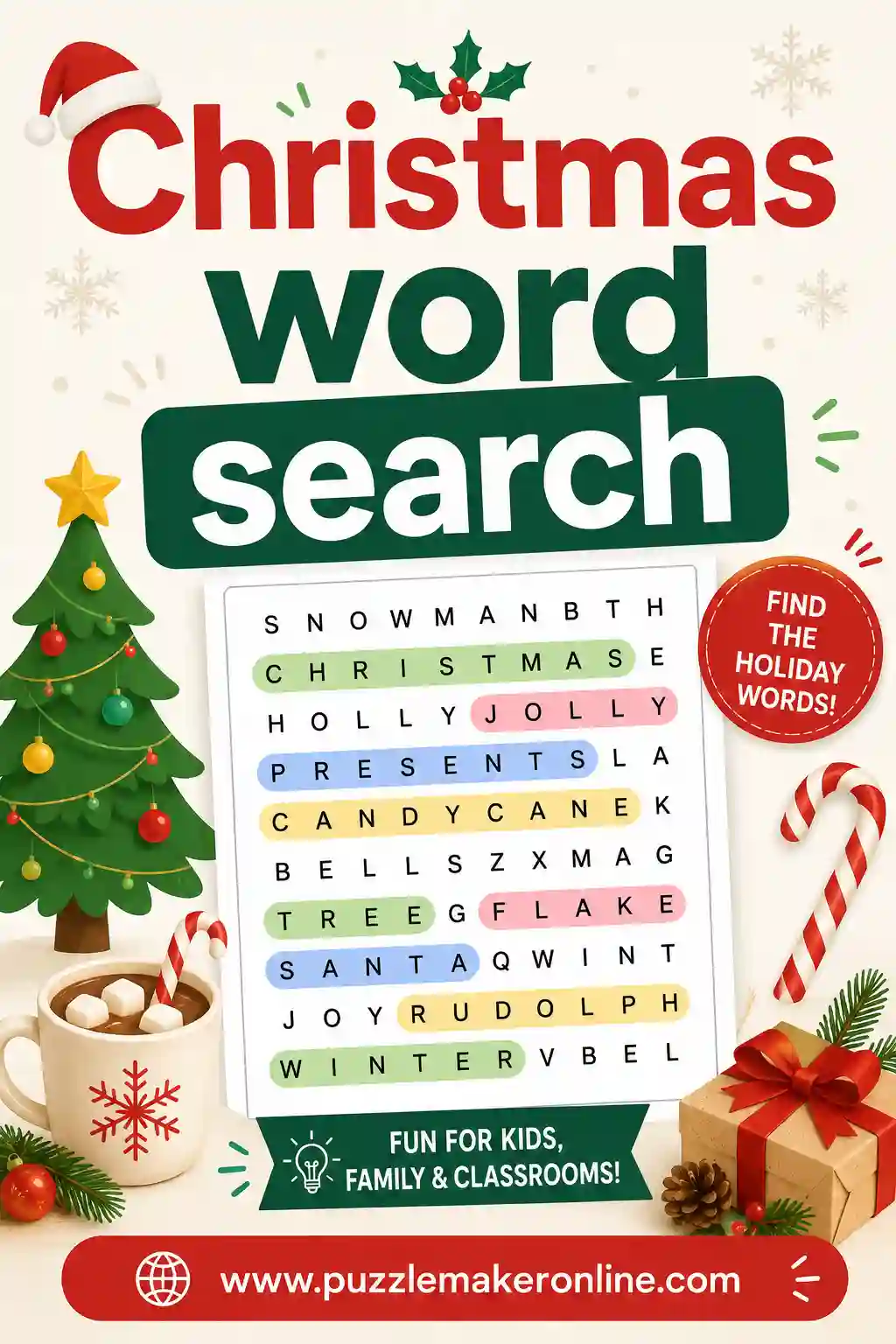
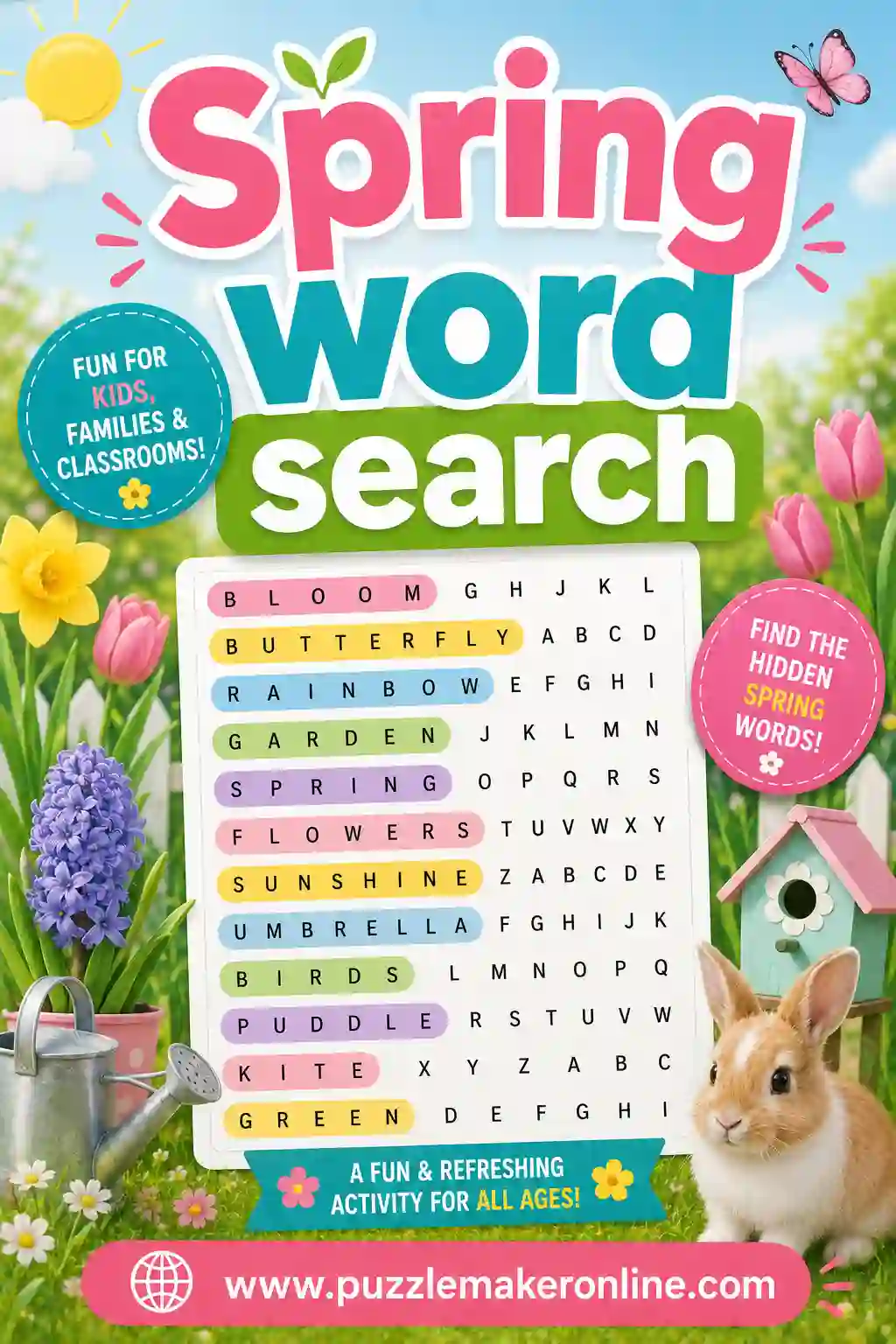
A spring word search is a grid of letters that hides spring-themed words like "blossom," "raindrop," and "butterfly," which players circle as they find them. It's a quiet, screen-free activity that works for a classroom, a rainy afternoon, or a party table. The fastest way to get one is to use a free puzzle maker that drops your word list into a clean, printable grid in seconds.
Want to skip ahead? Open the free puzzle maker, paste in a spring word list (there's a ready-made one below), and print as many copies as you need. No sign-up, no fee, nothing to install.
What Is a Spring Word Search?
Picture a square block of random-looking letters. Tucked inside, running across, down, or diagonally, are real words tied to spring. Players scan the grid, find each hidden word, and circle it. The puzzle's done when every word on the list is found.
It's one of the simplest puzzles to make and one of the friendliest to play. There's no losing, no timer unless you want one, and no special skill needed. That's why teachers, parents, and party hosts reach for it again and again.
You can make three flavors of spring puzzle with the same word list:
- Word search. Hidden words in a letter grid. The classic.
- Word scramble. Each word's letters are shuffled, and players unscramble them. Great as a warm-up.
- Crossword. Clues lead to spring answers that lock together in a grid. A little tougher and fun for older kids.
The puzzle maker builds all three from one list, so you can hand out a variety in the same packet.
Why Make Your Own Spring Word Search
You could grab a random printable off the internet, but making your own wins for a few reasons.
- It's free. No cost, no watermark, no "premium" upsell to remove ads.
- You pick the words. Match the puzzle to your class's reading level, your kid's vocabulary words, or your party's vibe.
- You control the difficulty. A bigger grid with diagonal and backward words is hard. A small grid with straight-line words is gentle for little ones.
And it's quick. Most people go from "I need a puzzle for tomorrow" to a printed stack in under five minutes.
Free Spring Word Search Word List (Copy & Paste)
Here's a ready-to-use list of 30 spring words, sorted into three easy groups. Pick 12 to 18 for a standard puzzle, or grab the whole set for a challenge. Copy any column straight into the puzzle maker.
| Nature & Weather | Plants & Flowers | Critters & Fun |
|---|---|---|
| Raindrop | Blossom | Butterfly |
| Rainbow | Tulip | Bunny |
| Sunshine | Daffodil | Ladybug |
| Puddle | Daisy | Robin |
| Breeze | Sprout | Chick |
| Thunder | Petal | Tadpole |
| Umbrella | Garden | Bee |
| Drizzle | Seed | Nest |
| Bloom | Stem | Caterpillar |
| April | Grass | Picnic |
Mix words across columns for variety. If you're working with very young kids, lean on short, easy-to-spell words like bee, nest, seed, and bunny.
Theme variations to try
- Easter word search. Add eggs, basket, hunt, jelly beans, and pastel for the holiday crowd.
- Garden word search. Focus on planting words: trowel, soil, watering can, weed, harvest, and roots.
- Rainy day word search. Build it around weather: galoshes, raincoat, drizzle, storm, and splash.
How to Make a Spring Word Search in 4 Steps
You don't need any design skills. Here's the whole thing.
- Choose your puzzle type. Word search, scramble, or crossword. Word search is the easiest for mixed ages.
- Add your words. Paste a list of 12 to 20 spring words. More words make a denser, harder grid.
- Set the difficulty. Pick a grid size and decide whether words can run backward and diagonally.
- Print. Hit print, grab your stack, and you're ready to go.
That's it. Want a built-in answer key? The puzzle maker prints one alongside the puzzle so you can check work in a glance.
Spring Word Search by Age and Skill
The same theme stretches from preschool to adult if you tweak a few settings. Here's a quick guide.
| Age group | Grid size | Word direction | Tips |
|---|---|---|---|
| Preschool (3–5) | 7x7 | Across & down only | Short words, big letters, picture clues |
| Early grades (6–8) | 10x10 | Across, down, some diagonal | 10–12 easy words |
| Tweens (9–12) | 13x13 | All directions | 15–18 words, allow backward |
| Teens & adults | 15x15+ | All directions | 20+ words, dense overlap |
The trick is to match the challenge to the player. Too easy and they're bored; too hard and they quit. When in doubt, start a notch easier and build up.
Making it harder or easier
- To make it easier: shrink the grid, use only across and down, and pick short words.
- To make it harder: grow the grid, allow diagonal and backward words, and add longer words that overlap.
- For a mixed group: print two versions of the same theme, one easy and one tough, so everyone plays at their level.
Fun Ways to Use a Spring Word Search
A word search is more flexible than it looks. A few of the best uses:
In the classroom
Spring word searches are a teacher's friend for the wiggly weeks before summer break. Use them as a morning warm-up, an early-finisher activity, or a quiet reward. Tie the word list to a spring science unit (life cycles, weather, plants) and the puzzle sneaks in real review.
At home
Print one for a rainy afternoon, a road trip, or a restaurant wait. It keeps hands busy and screens away. Pair it with crayons and let kids color the page when they're done.
At parties and events
A spring brunch, a baby shower, or an Easter gathering all benefit from a table activity. Set a puzzle at each place setting and offer a small prize for the first finished. It gives guests something to do while they chat.
As a brain break
Word searches are gentle on the brain in a good way. They're a popular calm-down activity for kids and a low-pressure puzzle for seniors and memory-care settings. The spring theme keeps it cheerful.
Printing Tips for Clean, Readable Puzzles
A few small choices make your puzzle look sharp.
- Print in black and white to save ink. A word search reads fine without color, and kids can color the border after.
- Use a clear, large font for young kids. Tiny letters are hard to scan. Bigger grids with fewer words help early readers.
- Print a test page first. Check that the full grid and word list fit on one page before you run a stack.
- Add the answer key on a second page. Handy for the caller or teacher, easy to hide from players.
- Use cardstock for reusable puzzles. Slip them into sleeves and let players solve with dry-erase markers, then wipe clean.
Common mistakes to avoid
- Too many long words in a small grid. They won't fit cleanly. Either grow the grid or trim the list.
- Forgetting the word list. Without the list of words to find, players are stuck. Always print it below or beside the grid.
- Skipping the answer key. For a classroom, you'll want one. The tool makes it automatically.
Spring Crossword and Scramble Ideas
Once your group has done a few word searches, switch it up with the same theme in a new format.
- Spring crossword. Write a short clue for each word ("a baby rabbit" → BUNNY). The puzzle maker locks the answers into a grid for you.
- Spring word scramble. Shuffle each word's letters and have players unscramble them. Quick to make, great for a warm-up or a quiz.
- Mixed packet. Hand out a word search, a scramble, and a crossword on the same spring theme. It keeps fast finishers busy and adds variety.
Mixing formats keeps the theme fresh and works different parts of the brain, spotting, spelling, and recall.
What Makes a Word Search Genuinely Worth Doing
A good spring word search isn't just busywork. Done right, it builds a handful of real skills while feeling like play. That's the quiet magic of the format, and it's worth knowing what's going on under the hood so you can lean into it.
The skills hiding inside the grid
- Visual scanning. Hunting for "butterfly" trains the eyes to move in a systematic pattern instead of darting around. That same skill helps with reading fluency.
- Spelling and letter recognition. To find a word, a solver has to hold its spelling in mind and match it letter by letter. Repeated exposure makes the spelling stick.
- Patience and focus. A word search rewards sticking with it. Finding that last stubborn word teaches kids that a little persistence pays off.
- Vocabulary. Themed lists introduce words a kid might not use every day, like "drizzle" or "tadpole," in a context that makes them memorable.
Keeping it positive
The best thing about a word search is that nobody loses. There's no clock unless you add one, no wrong answers, and no opponent. For a kid who gets anxious about timed math drills or spelling tests, that low-stakes feeling is a real gift. Praise the effort, not the speed, and the puzzle stays a treat rather than a test.
If a solver gets stuck, give a gentle nudge instead of the answer. Point to the row or column where a word hides, or share its first letter. The "aha" moment of finding it themselves is the whole point.
Building a Themed Spring Puzzle Packet
If you want more than a single page, a small packet turns a five-minute activity into a half-hour of quiet fun. Here's a simple recipe that works for a classroom, a party, or a rainy weekend.
- Page one: an easy warm-up scramble. Five or six short spring words with their letters shuffled. It gets the brain going without much effort.
- Page two: the main word search. Your full themed grid with 15 to 18 words. This is the centerpiece.
- Page three: a quick crossword. Use simple clues so it feels like a reward, not a wall. Six to eight answers is plenty.
- Page four: a blank "make your own" grid. Let kids hide a few spring words for a friend. Creating a puzzle teaches even more than solving one.
Staple the pages, add a cover with a spot to write a name, and you've got a keepsake. The puzzle maker builds each page from the same word list, so the whole packet stays on theme with almost no extra effort on your end.
Turn it into a game
A packet doesn't have to be solo and silent. Try these twists:
- Race the clock. Set a five-minute timer and see how many words each player finds. Great for older kids who like a challenge.
- Partner hunt. Pair up and split the word list. First team to find all their words wins. It builds teamwork and keeps shy kids included.
- Around the room. Tape several different puzzles to the walls. Players rotate through, solving one word at each station. A nice way to add movement.
Frequently Asked Questions
How many words should a spring word search have?
For young kids, 8 to 12 words is plenty. For older kids and adults, 15 to 25 words make a fuller, more satisfying puzzle. The puzzle maker fits your words to the grid automatically.
Are these spring word searches really free to print?
Yes. You make and print them yourself at no cost. There's no sign-up and no watermark, so you can run a whole classroom or party on one free word list.
Can I make a spring word search for preschoolers?
Absolutely. Use a small 7x7 grid, only across-and-down words, and short, easy terms like bee, sun, and egg. Big letters help non-readers spot the words.
What words go on a spring word search?
Recognizable spring things work best: blossom, raindrop, butterfly, tulip, rainbow, and bunny. The list above gives you 30 ready to copy.
Can I add my own spring words?
Yes. Type in any words you like, including your students' vocabulary list, your family's favorites, or local spring sights. The tool builds the grid around whatever you enter.
Can I print an answer key too?
Yes. The puzzle maker generates an answer key alongside the puzzle, so checking work takes a second.
Ready to Print Your Spring Word Search?
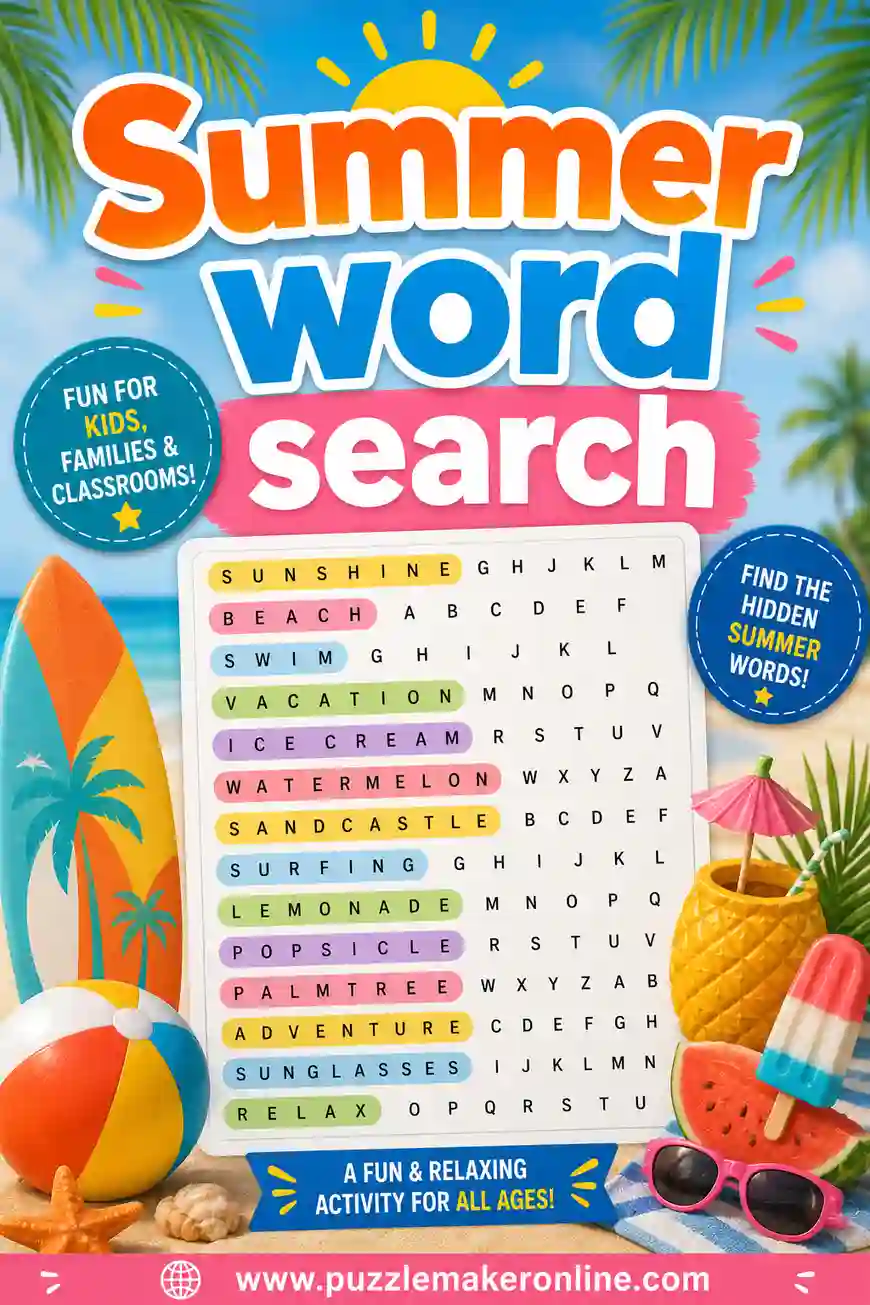
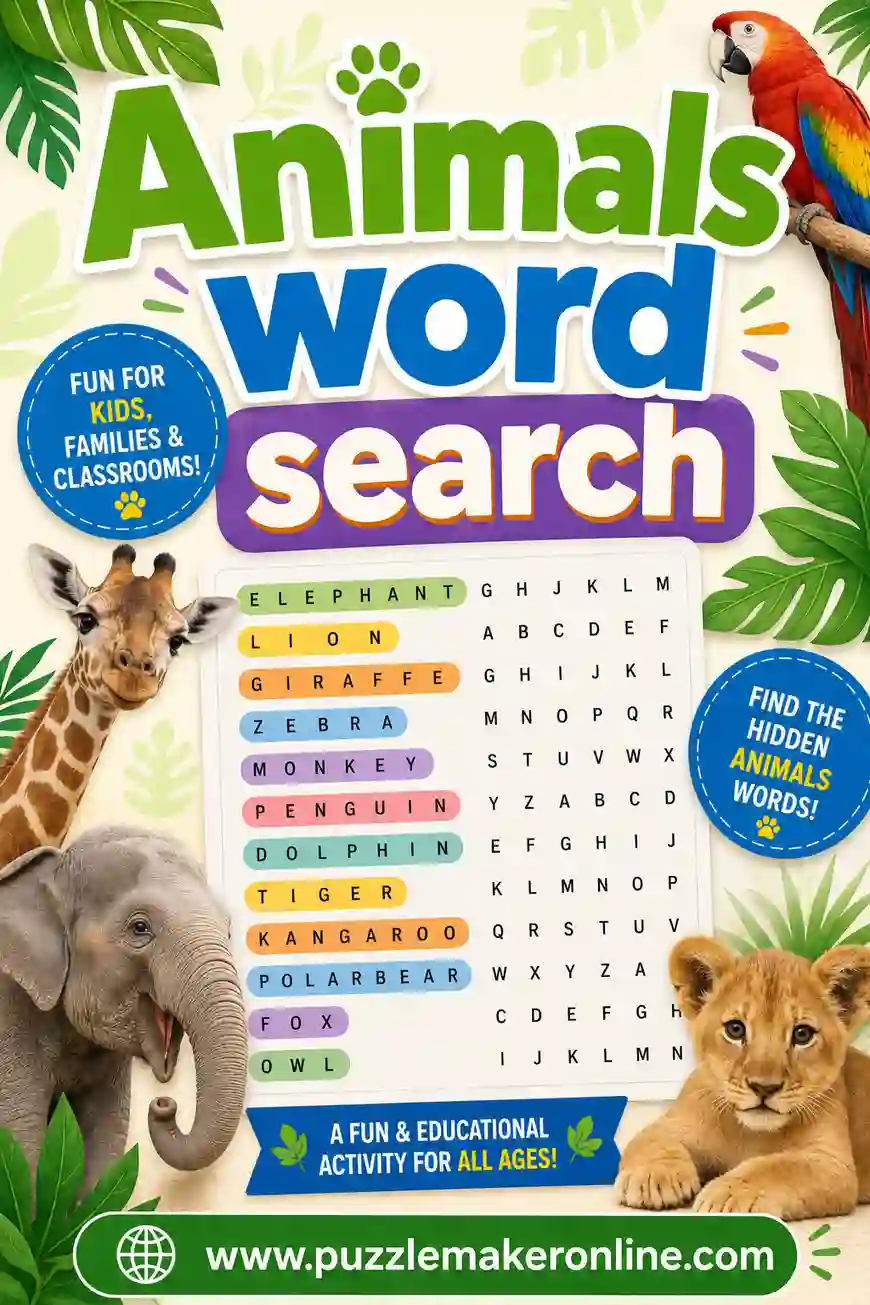
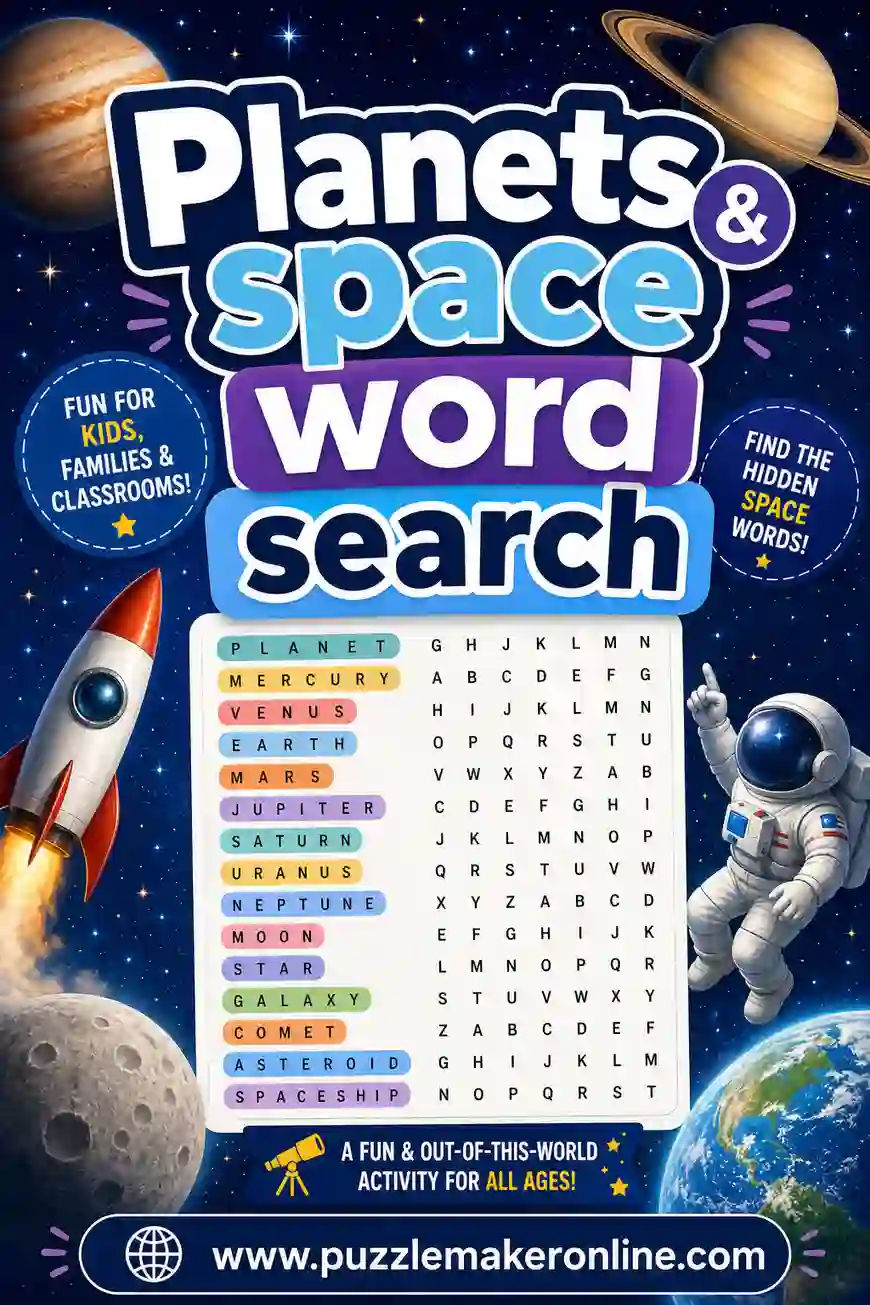
Grab the word list above, open the free puzzle maker, and you'll have a clean, printable spring word search in minutes. It's free, there's no sign-up, and you can build a word search, scramble, or crossword from the same list. Love the theme idea? Try a summer word search, an animals word search, or a planets and space word search next. Happy puzzling.