1st & 2nd Grade Word Search: Free Printable Puzzles
A 1st and 2nd grade word search is a small, easy puzzle with short, familiar words hidden in a grid, like CAT, SUN, and JUMP. The trick is keeping the grid small (usually 8x8 to 10x10), the words short, and the directions simple, so a 6 or 7-year-old can actually find them and feel proud. The fastest way to make one is to use a free puzzle maker that drops your words into a clean, printable grid in a couple of clicks.
Want to skip ahead and make one right now? Open the free puzzle maker, type in a few easy words (there's a ready-made list below), and print as many copies as your class or kitchen table needs. No sign-up, no software, no cost.
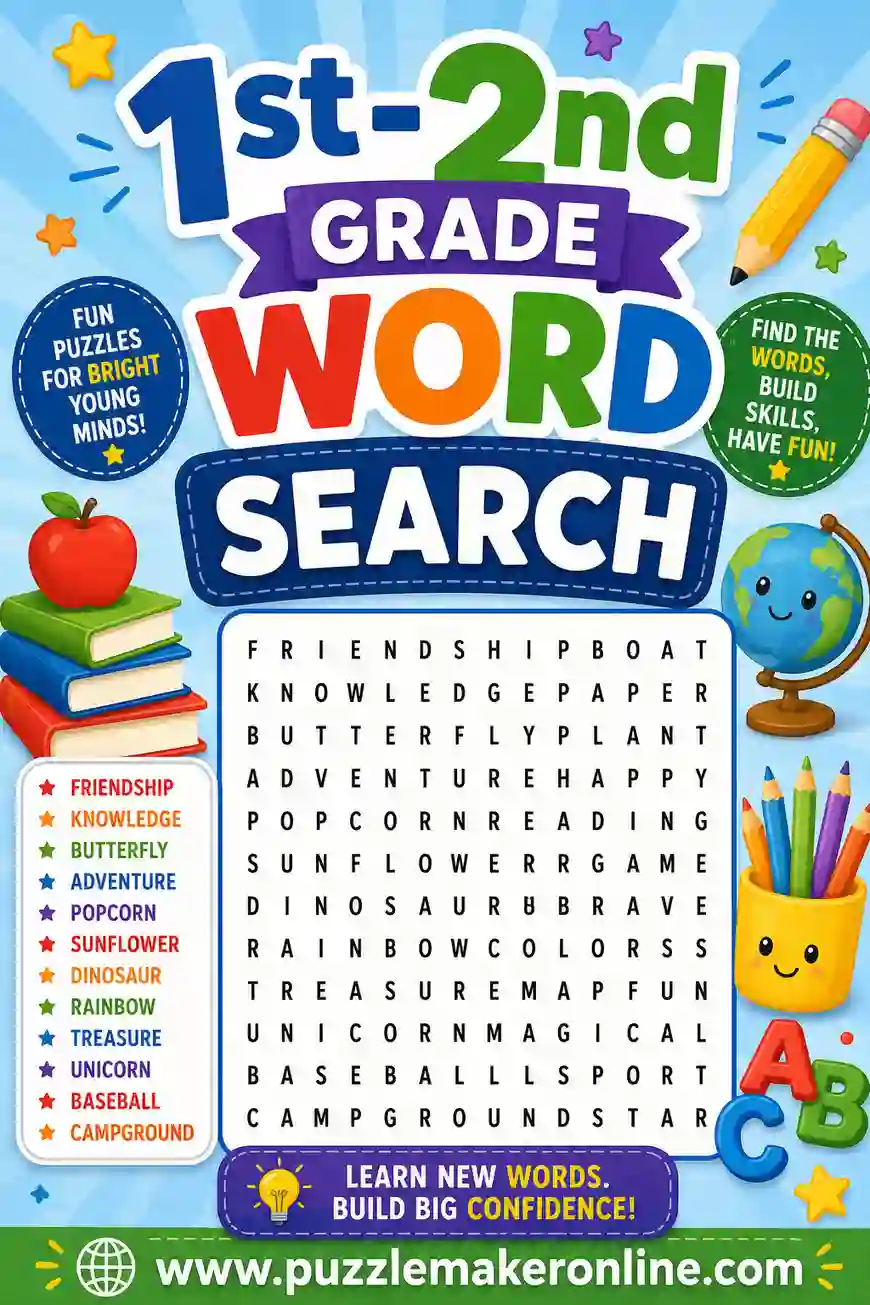
What Makes a Good 1st & 2nd Grade Word Search?
At this age, kids are still building reading confidence. A word search should feel like a win, not a wall. That means the puzzle has to match where they are: short words, a roomy grid, and letters they can scan without getting lost.
Here's what separates a great early-grade puzzle from one that frustrates:
- Short words. Stick to 3 to 5 letters. CAT and DOG are perfect. ELEPHANT is too much for most first graders.
- Small grid. An 8x8 or 10x10 grid keeps the search area manageable. Big grids overwhelm little eyes.
- Simple directions. Hide words left-to-right and top-to-bottom only. Skip the diagonals and the backwards words until later grades.
- Familiar themes. Animals, colors, family, and school words connect to what kids already know.
When you build with a puzzle maker, you can set the grid size and turn off the harder directions, so every puzzle stays in the sweet spot.
Why word searches help young readers
Word searches do more than fill time. For a new reader, scanning a grid for "f-r-o-g" reinforces letter recognition, left-to-right tracking, and word shape. It's quiet, low-pressure practice that feels like a game. Teachers use them as morning work, early-finisher activities, and calm-down breaks for exactly that reason.
Free 1st & 2nd Grade Word Search Word List (Copy & Paste)
Here's a ready-to-use list of 30 short, age-appropriate words. Pick 8 to 12 for a single puzzle, or mix across columns for variety. Copy them straight into the generator.
| Animals | Around Home | School & Play |
|---|---|---|
| Cat | Bed | Book |
| Dog | Cup | Pen |
| Frog | Hat | Desk |
| Fish | Door | Read |
| Bird | Sock | Jump |
| Bear | Lamp | Run |
| Duck | Spoon | Star |
| Cow | Ball | Sun |
| Pig | Milk | Tree |
| Ant | Bath | Play |
Lean on words your kids see every day. The more familiar the word, the faster they'll spot it, and the more likely they are to keep going.
Theme ideas kids love
- Farm animals. Cow, pig, hen, duck, goat, sheep. Great for a barnyard unit.
- Colors. Red, blue, green, pink, black. Pairs nicely with an art lesson.
- My family. Mom, dad, baby, aunt, pet. Personal words feel special.
- Weather. Sun, rain, snow, wind, cloud. Easy to tie to the calendar.
How to Make a 1st & 2nd Grade Word Search in 4 Steps
You don't need to be techy. Here's the whole process.
- Pick a theme and 8 to 12 short words. Use the list above or your own spelling words.
- Set a small grid. Choose 8x8 or 10x10 so the search stays friendly.
- Keep directions easy. Use horizontal and vertical only for early readers. Add diagonals later.
- Print. Hit print and you've got a stack ready for the table or the classroom.
That's it. If you want a softer challenge, print one puzzle and circle the first letter of each hidden word as a starting hint.
Make it a spelling-practice tool
Got this week's spelling words? Drop them straight into the puzzle maker. Now your child practices the exact words they'll be tested on, but it feels like play instead of a drill. Many parents do this every Sunday night in under five minutes.
Word Search Difficulty by Age
Matching the puzzle to the child makes all the difference. Here's a quick guide for the early grades and just beyond.
| Age / Grade | Grid size | Word length | Directions |
|---|---|---|---|
| Age 5 (Kindergarten) | 6x6 to 8x8 | 3 letters | Across only |
| 1st grade (6–7) | 8x8 | 3–4 letters | Across + down |
| 2nd grade (7–8) | 10x10 | 3–5 letters | Across + down |
| 3rd grade (8–9) | 12x12 | 4–6 letters | Add diagonals |
If a puzzle feels too easy, bump up the grid size before you add tricky directions. A bigger grid adds search time without confusing new readers.
Tips for First-Time Solvers
Some kids take to word searches instantly. Others need a little coaching. A few things that help:
- Read the word list first. Have your child say each word out loud before they start hunting.
- Find the first letter. Teach them to scan for the starting letter, then check the letters around it.
- Use a finger or a highlighter. Tracking with a finger keeps little eyes from jumping around.
- Cross words off the list. Checking off found words gives a sense of progress and prevents repeats.
- Celebrate every find. A simple "you got it!" keeps the momentum going.
What to do if they get stuck
If your child can't find a word, don't just point to it. Give a clue instead: "It's in the top row" or "Look for the F." Guiding them to the answer builds the skill. Handing it over skips the learning.
Great Ways to Use These Puzzles
A simple word search stretches a long way. Here's where these early-grade puzzles shine.
In the classroom
Teachers use them for morning work, early finishers, and indoor recess. Print a class set, hand them out with crayons, and you've got a calm, on-task activity that runs itself. Tie the words to your current unit and it doubles as review.
At home
Word searches are a screen-free win for car rides, restaurant waits, and rainy afternoons. Keep a few printed in your bag. They're also a gentle way to sneak in reading practice over summer break without it feeling like homework.
For parties and travel
Make a themed puzzle for a birthday goodie bag or a road trip activity pack. Kids love finding their own name or their favorite animal hidden in the grid.
Printing Tips for Clear, Kid-Friendly Puzzles
A few small choices make these puzzles much easier for little hands and eyes.
- Use large letters. Bigger print helps new readers scan without squinting.
- Print in black and white. It saves ink and reads clearly. Kids can color the page after.
- Leave the word list on the page. Early readers need the list right there to check against.
- One puzzle per page. Crowding two onto a sheet shrinks everything. Give each puzzle room.
- Print a test copy first. Check that nothing's cut off before you run a full class set.
Make it reusable
Slip puzzles into clear sleeves and let kids solve with dry-erase markers. Wipe clean and the same puzzle works for the next child or the next day.
Build a Mini Puzzle Pack for Young Learners
A word search is a great start, but the same short word list can become a couple of other easy puzzles. The puzzle maker builds them all from one list, so you set up your words once and get more out of them.
Add an easy word scramble
For first and second graders, a simple word scramble of three and four-letter words is perfect practice. Kids unscramble CAT or JUMP, which reinforces spelling and letter order. Keep the words short so it stays fun, not frustrating. A scramble pairs nicely with a word search as a quick second activity.
Make a tiny crossword
A picture-clue crossword works well even for early readers. Use a small grid and a simple hint, like a drawing of a sun for SUN. It nudges kids to connect a word to its meaning, not just its shape. Keep it short, four to six words is plenty at this age.
Print a word search and a scramble together and you've got a two-page activity that keeps a young reader busy and builds real skills. It's a handy quiet-time pack for the classroom or the car.
Frequently Asked Questions
How many words should a 1st or 2nd grade word search have?
Aim for 8 to 12 words. That's enough to feel like a real puzzle without overwhelming a young reader. For a first grader just starting out, even 6 words is plenty. The puzzle maker lets you set exactly how many you want.
What grid size is best for early readers?
An 8x8 grid works well for first graders and a 10x10 for second graders. Smaller grids keep the search area friendly. If the puzzle feels too easy, grow the grid before you add harder directions like diagonals.
Are these word searches really free to print?
Yes. You make and print them yourself at no cost. There's no sign-up and no watermark, so you can run a whole classroom or a stack of birthday-party puzzles on one free word list.
Can I use my child's spelling words?
Absolutely, and it's one of the best uses. Type this week's spelling list into the generator and your child practices the exact words for their test, but it feels like a game. Many parents make a fresh puzzle each week.
Should I include backwards or diagonal words?
Not yet for most first and second graders. Stick to across (left-to-right) and down (top-to-bottom) so new readers can track easily. Save diagonals and backwards words for third grade and up.
How do I make the puzzle easier or harder?
For easier: fewer words, a smaller grid, and across-only directions. For harder: more words, a bigger grid, then add down and diagonal directions. Adjust one thing at a time so the jump in difficulty stays gentle.
Ready to Print Your 1st & 2nd Grade Word Search?
Grab the word list above, open the free puzzle maker, and you'll have an easy, printable word search ready in minutes. It's free, there's no sign-up, and you control the words and grid size, so every puzzle fits your reader just right.
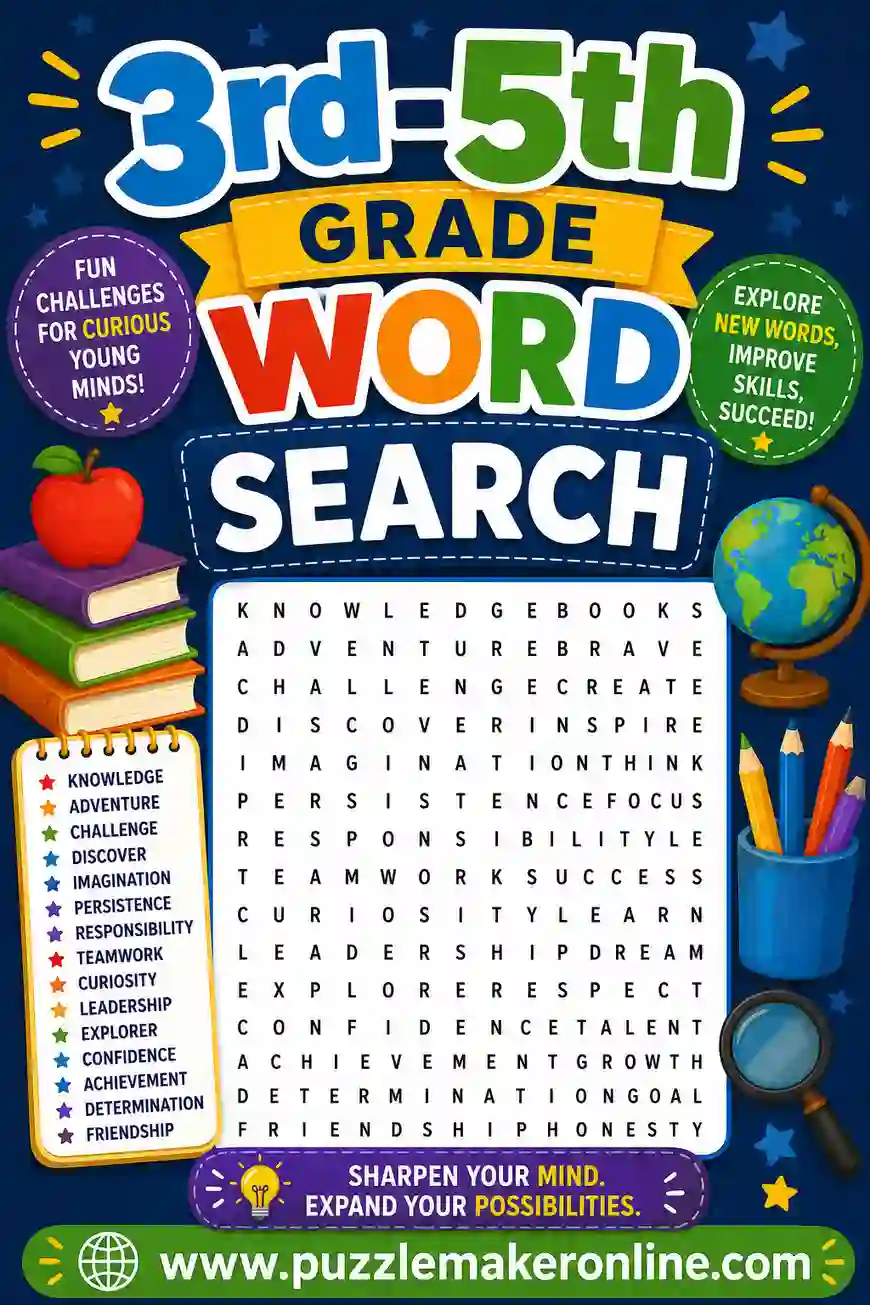
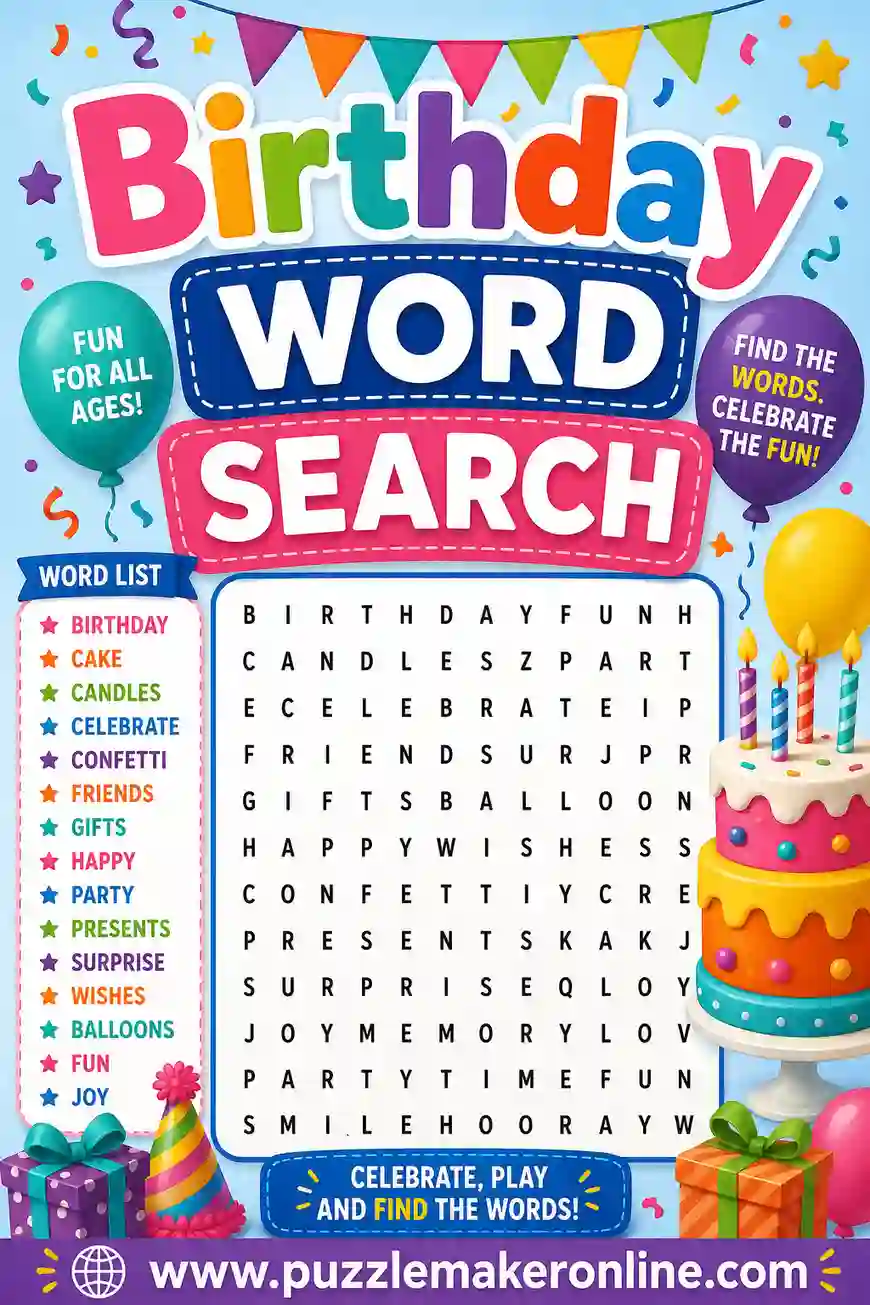
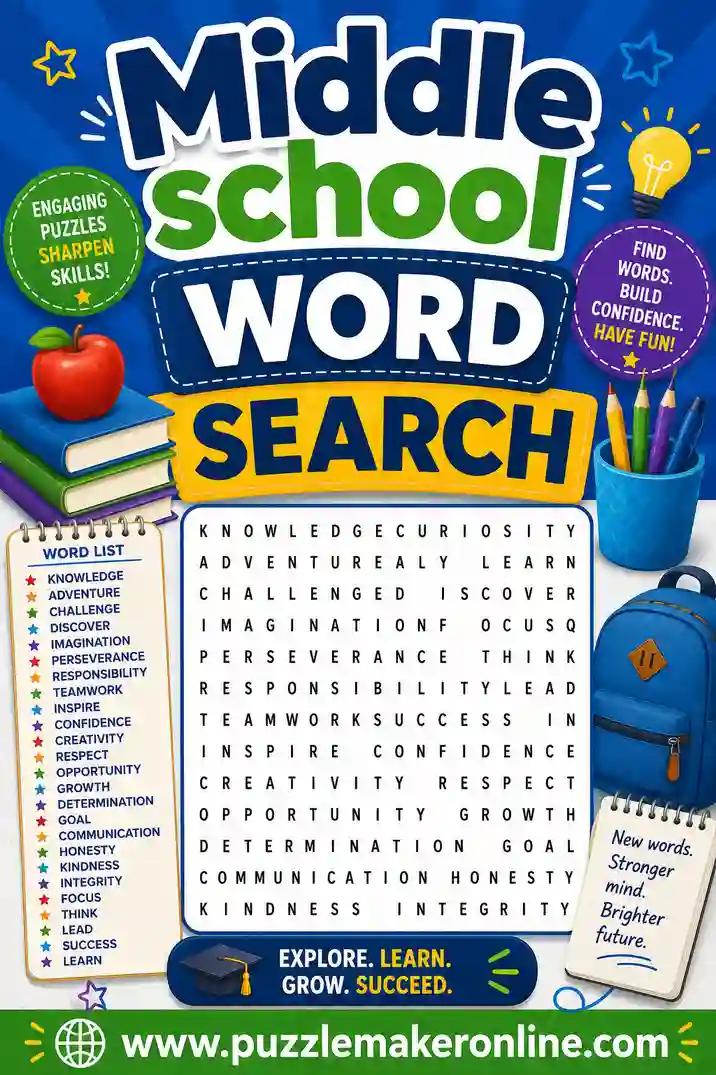
Want more by age and theme? Try our 3rd-5th grade word search, a fun birthday word search, or step it up with a middle school word search. Happy hunting!