Insects Word Search: Free Printable Bug Puzzle
An insects word search is a printable grid of letters with bug words like "beetle," "ladybug," and "dragonfly" hidden inside, going across, down, and diagonally. Players circle each word they find until the list is empty. The fastest way to make one is to drop a bug word list into a free puzzle maker that hides your words in a fresh grid you can print at home.
Want to skip ahead and just make one? Open the free puzzle maker, paste in a bug word list (there's a ready-to-copy one below), and print as many copies as you need. No sign-up, no fee, nothing to install.
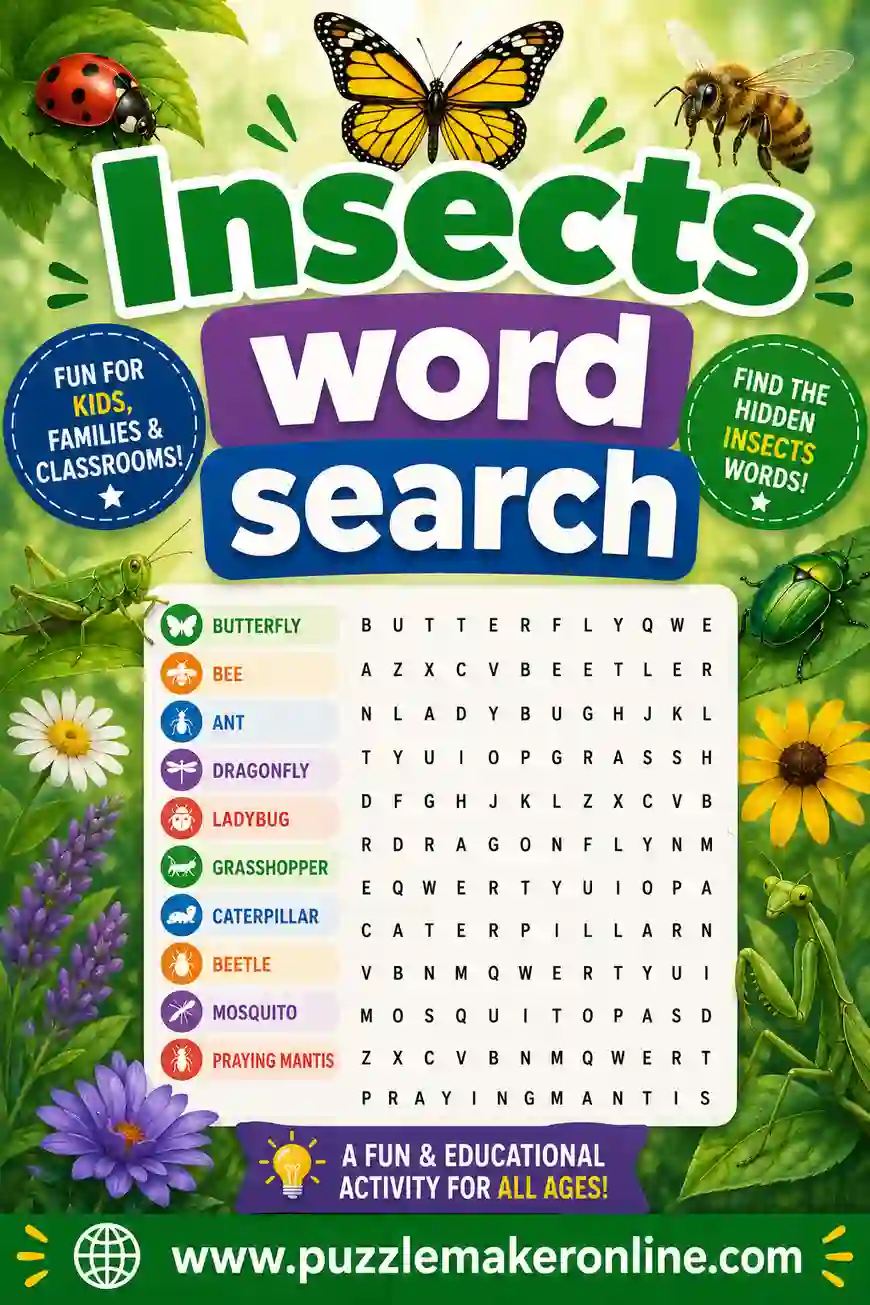
What Is an Insects Word Search?
Picture a block of random-looking letters. Tucked inside are real bug names, and your job is to spot and circle each one. The words can run left to right, top to bottom, diagonally, and sometimes backward if you want a harder puzzle. A word bank usually sits underneath so players know what they're hunting for.
It's a simple format, but it does a lot. Kids practice spelling and letter patterns without feeling like they're doing schoolwork. Adults get a quiet, satisfying brain break. And because the theme is bugs, you can tie it to a science unit, a garden day, a summer camp, or a rainy afternoon at home.
The best part is how flexible it is. You decide the grid size, the words, and how tricky to make it. A generator handles the boring part, which is hiding the words and filling the gaps with random letters.
Why Make Your Own Bug Word Search
You could grab a printable off a random site, but making your own wins for a few reasons.
- It's free. You print as many copies as you want at no cost.
- You pick the words. Match the puzzle to a lesson, a grade level, or the bugs in your own backyard.
- Every copy can be unique. Need different puzzles so kids can't copy each other? A generator makes fresh grids in seconds.
It's also fast. Most people go from "I need a bug puzzle for class" to a printed stack in under ten minutes. No design skills required.
Free Insects Word List (Copy & Paste)
Here's a ready-to-use list of 30 insect and bug words. Pick 12 to 15 for an easy puzzle, or use all 30 for a tough one. Copy the column you like straight into the puzzle maker.
| Common Bugs | Garden Critters | Tricky & Fun |
|---|---|---|
| Ant | Ladybug | Dragonfly |
| Bee | Caterpillar | Grasshopper |
| Fly | Butterfly | Mosquito |
| Moth | Beetle | Centipede |
| Wasp | Cricket | Praying mantis |
| Gnat | Firefly | Cockroach |
| Flea | Honeybee | Bumblebee |
| Tick | Earwig | Walking stick |
| Aphid | Termite | Damselfly |
| Larva | Weevil | Cicada |
A quick note for the sticklers: spiders, ticks, and centipedes aren't technically insects (they're arachnids and other arthropods). For a fun classroom puzzle, mixing them in is totally fine. For a strict science lesson, stick to the true insects in the first two columns.
Theme variations to try
- Garden bugs only. Use the critters kids might actually spot outside: ladybug, bee, ant, butterfly, worm.
- Creepy crawlies. Lean into the spooky ones for Halloween: spider, cockroach, centipede, beetle, moth.
- Pollinators. Tie it to a science unit: honeybee, bumblebee, butterfly, moth, hoverfly.
How to Make an Insects Word Search in 4 Steps
You don't need any special tools. Here's the whole process.
- Pick your grid size. A 10x10 grid suits younger kids. Go 15x15 or bigger for a real challenge.
- Add your words. Paste 12 to 15 bug words for an easy puzzle, or 20+ for a hard one.
- Choose your settings. Turn diagonals and backward words on for older kids, off for beginners.
- Print. Hit print, grab your stack, and hand them out.
That's it. If you want copies that last, print on cardstock or slip them into clear sleeves so kids can solve with a dry-erase marker and you can reuse them.
Insects Word Search by Age and Difficulty
The same theme works for a five-year-old or a fifth-grader if you tweak a few settings. Here's a quick guide.
| Age group | Grid size | Word count | Settings |
|---|---|---|---|
| Ages 4–6 | 8x8 or 10x10 | 6–8 short words | Across and down only |
| Ages 7–9 | 12x12 | 10–14 words | Add diagonals |
| Ages 10–12 | 15x15 | 15–20 words | Diagonals + a few backward |
| Teens & adults | 17x17 or bigger | 20–30 words | All directions, longer words |
The two biggest difficulty dials are word direction and grid size. Backward and diagonal words make a puzzle much harder. A bigger grid with more empty filler letters does too, since the words are spread further apart.
Fun Ways to Use a Bug Word Search
A word search can be more than a worksheet. Here are some ways teachers and parents put them to work.
In the classroom
Pair the puzzle with a science lesson on insect life cycles or pollination. Hand it out as a warm-up while you take attendance, or use it as a calm-down activity after recess. You can also turn it into a vocabulary builder by asking kids to write a sentence using three words they found.
At home
Bug word searches are great for road trips, waiting rooms, and quiet afternoons. Print a few before a long car ride so you've got a screen-free activity ready to go. Younger kids love it when you read the word bank aloud and search together.
At parties and camps
Throwing a bug-themed birthday or running a nature camp? A word search makes an easy table activity or a quiet station between louder games. Offer a small prize, like a bug sticker, for the first finished puzzle.
Printing Tips for Clean, Reusable Puzzles
A few small choices make a big difference in how your puzzles look and last.
- Print in black and white. Word searches read perfectly without color, and you'll save a ton of ink.
- Use cardstock for repeat use. Regular paper is fine for one-and-done. Cardstock survives a busy classroom.
- Laminate or use sleeves. Then kids solve with dry-erase markers and you wipe the sheets clean for next time.
- Print one test copy first. Check that the grid and word bank aren't getting cut off before you run the whole stack.
- Bump up the font for young kids. Bigger letters are easier on little eyes and beginning readers.
What to solve with
No fancy supplies needed:
- A pencil or crayon to circle words
- Highlighters for a colorful finish
- Dry-erase markers if you laminated the sheets
Common Mistakes to Avoid
A word search is easy to make, but a few slip-ups can frustrate solvers.
- Too many long words in a small grid. "Praying mantis" won't fit nicely in a 10x10. Match word length to grid size.
- Forgetting the word bank. Always print the list of hidden words underneath, or younger kids won't know what to look for.
- Cranking difficulty too high for the age. Backward diagonal words will defeat a six-year-old. Start easy and build up.
- Mixing in words that overlap oddly. A good generator handles placement, so let the tool do the hard part instead of hand-drawing grids.
Turn the Word Search Into a Bigger Bug Lesson
A single puzzle can anchor a whole afternoon of learning if you build around it. Here are a few easy ways to stretch it.
Add a matching crossword
After kids find the bugs in the word search, hand them a crossword using the same words with simple clues, like "It glows at night" for firefly or "Spotted red beetle" for ladybug. The repetition locks the spelling in, and the same puzzle maker builds the crossword from your list. Two puzzles, one word bank.
Sort the bugs by trait
Once the puzzle's done, have kids group the words they found. Which bugs fly? Which ones crawl? Which ones bite or sting? This turns a quiet activity into a quick science discussion without any prep. You can even draw three columns on the board and let kids call out where each bug goes.
Make it a scavenger hunt
On a nice day, take the word list outside. Challenge kids to spot real versions of the bugs on the puzzle, like an ant, a bee, or a ladybug. They circle the word in the grid when they find the real thing. It blends a word search with a nature walk and gets everyone moving.
Build a class bug book
Give each student one bug from the puzzle to research and draw on a single page. Staple the pages together and you've got a class-made field guide that started with a simple word search. It's a low-cost project that stretches across a few days.
More Themed Word Searches to Try
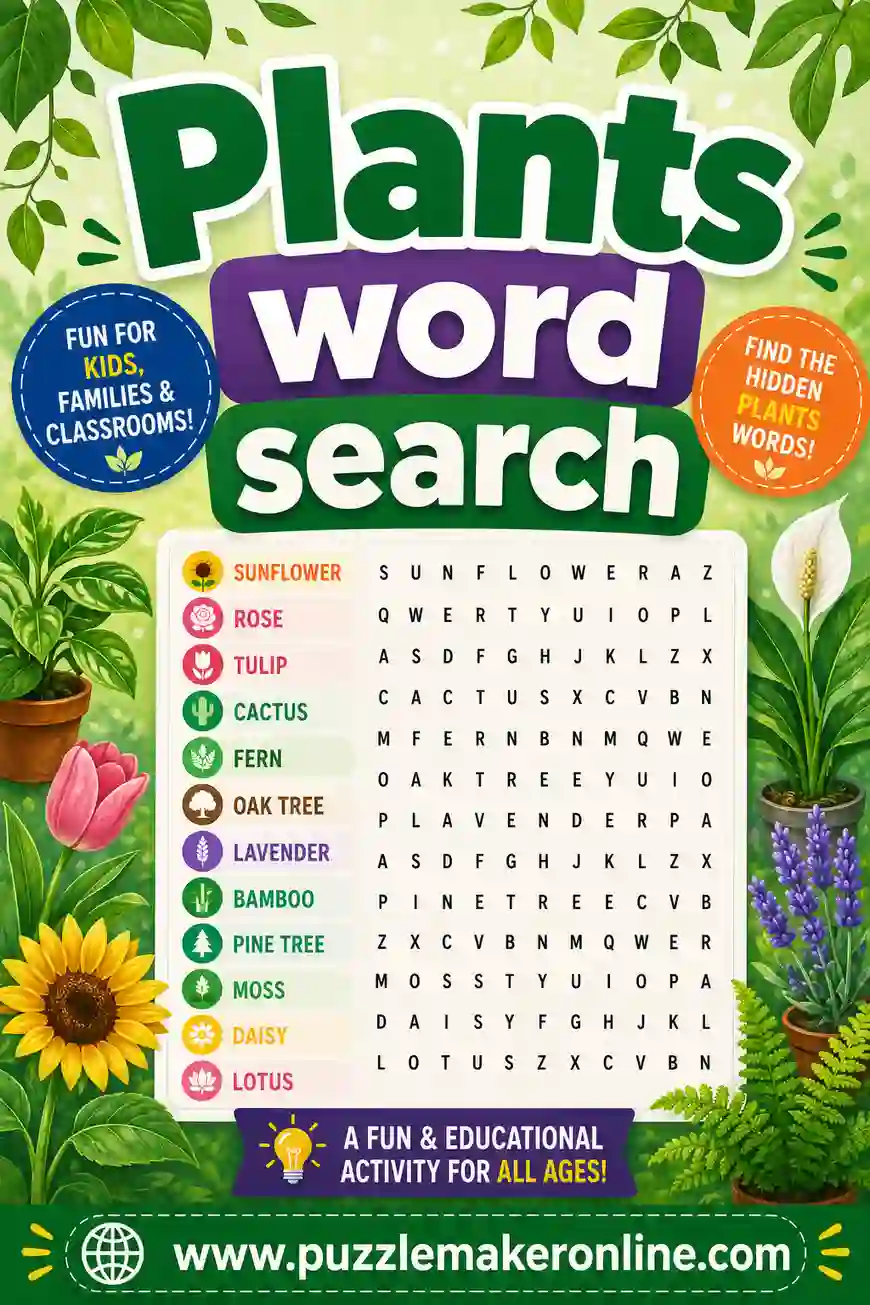
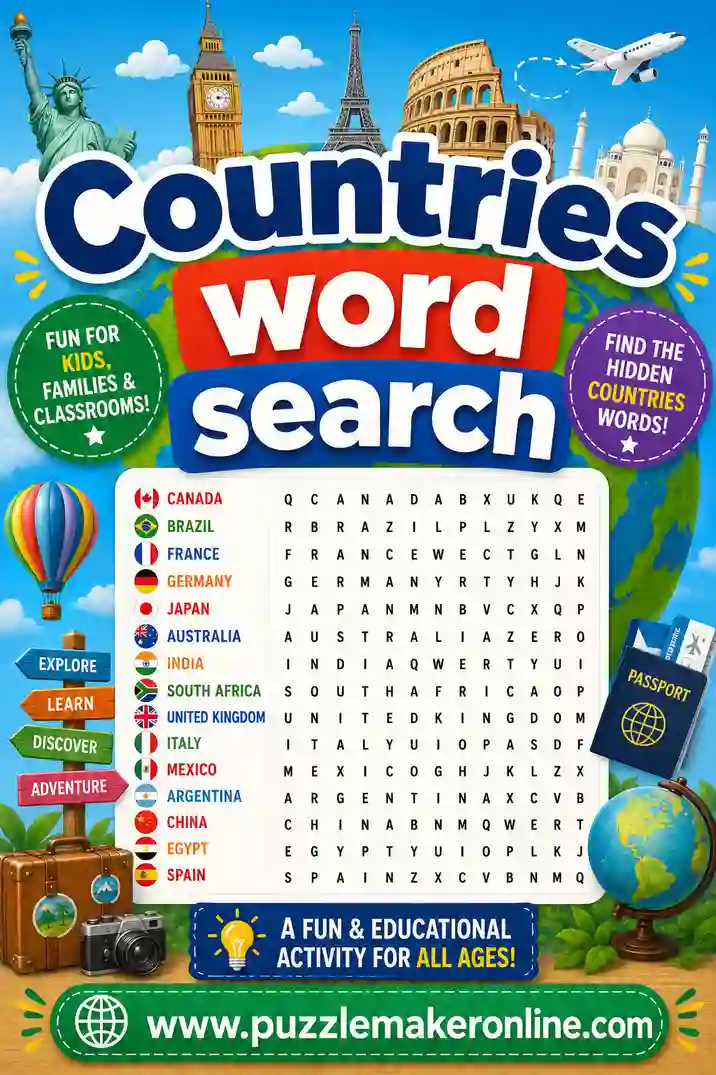
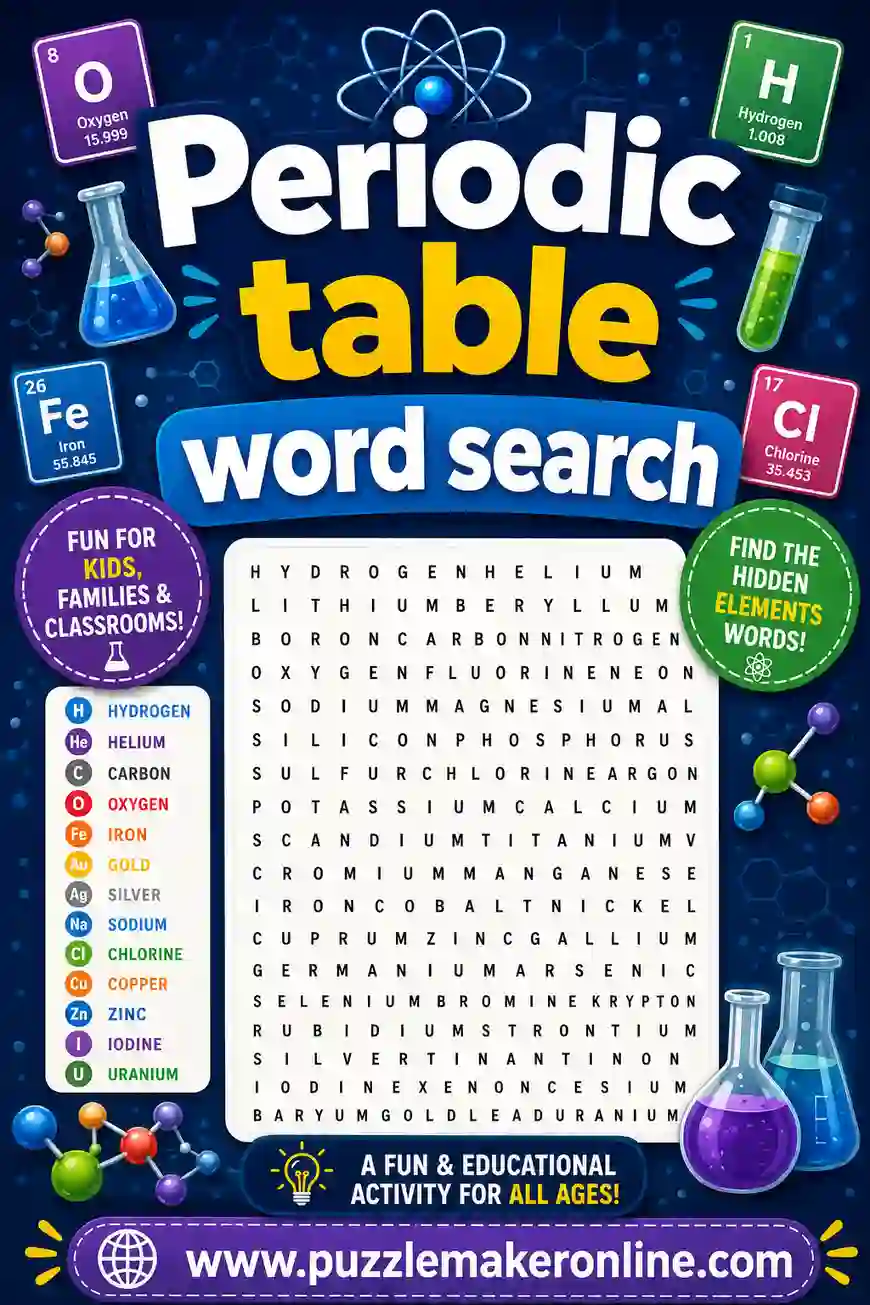
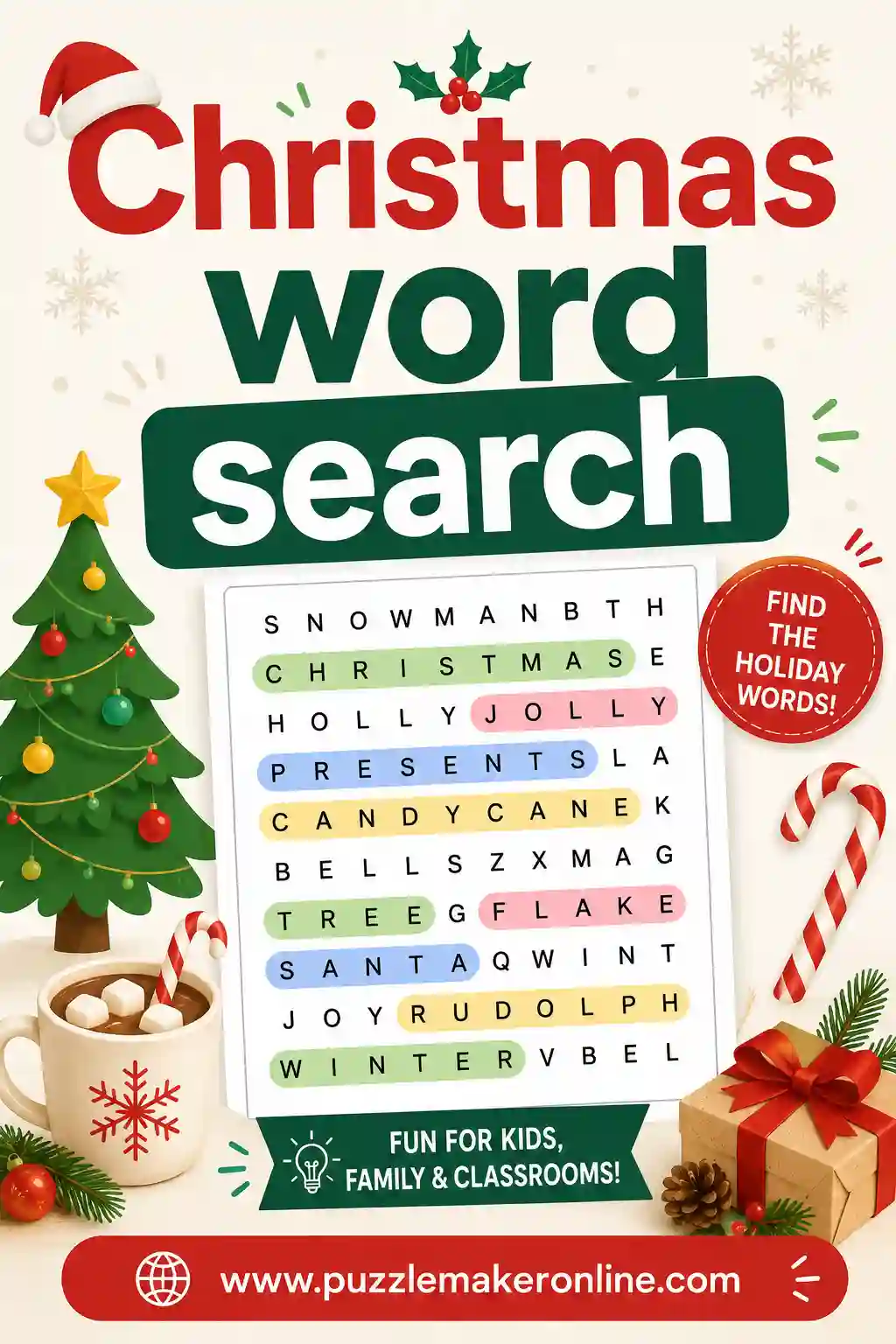
Once you've made one bug puzzle, the same tool builds endless others. If your kids love nature, try a plants word search to go with it. For older students, a periodic table word search makes science review fun, and a countries word search pairs nicely with a geography unit.
Frequently Asked Questions
What words should go on an insects word search?
Pick recognizable bug names like ant, bee, ladybug, butterfly, beetle, and dragonfly. The list above gives you 30 ready to copy. For younger kids, stick to short, easy words; for older kids, add tougher ones like grasshopper and centipede.
Are these insects word search puzzles really free to print?
Yes. You make and print them yourself at no cost. There's no sign-up and no watermark, so you can run a whole classroom or party on a single free word list.
How do I make the word search easier or harder?
Two dials control difficulty. For easier puzzles, use a small grid, fewer words, and only across-and-down placement. For harder ones, use a bigger grid, more words, and turn on diagonal and backward directions.
Can I make a bug word search for preschoolers?
Absolutely. Use a small 8x8 grid, six to eight short words, and keep all words running left to right or top to bottom. Bigger letters and a read-aloud word bank help non-readers join in.
Are spiders and ticks insects?
Technically no. Spiders, ticks, scorpions, and centipedes are arthropods but not insects. For a fun puzzle, mixing them in is fine. For a strict science lesson, stick to true insects like ants, bees, and beetles.
How many words should a word search have?
It depends on the age. Six to eight words suit preschoolers, 10 to 14 work for early elementary, and 20 to 30 make a meaty challenge for older kids and adults. More words plus a bigger grid means a harder puzzle.
Ready to Print Your Insects Word Search?
Grab the word list above, open the free puzzle maker, and you'll have a printable insects word search in minutes. It's free, there's no sign-up, and you can make as many unique copies as your class or party needs. Happy hunting, and may every bug get circled.