Puzzles for Summer Learning: Free Printable Word Games
Puzzles for summer learning are printable word searches, crosswords, and word scrambles that keep kids reading, spelling, and thinking through the break, without feeling like school. They fight the summer slide, fill long afternoons, and turn quiet time into quiet practice. The fastest way to make them is a free puzzle maker that turns spelling lists or theme words into a clean, printable sheet in seconds.
Want to make one now? Open the free puzzle maker, paste in your words (there's a ready-made grade-level list below), pick word search, crossword, or scramble, and print a sheet for each child. No sign-up, no software, and it's free.
Why Puzzles Fight the Summer Slide
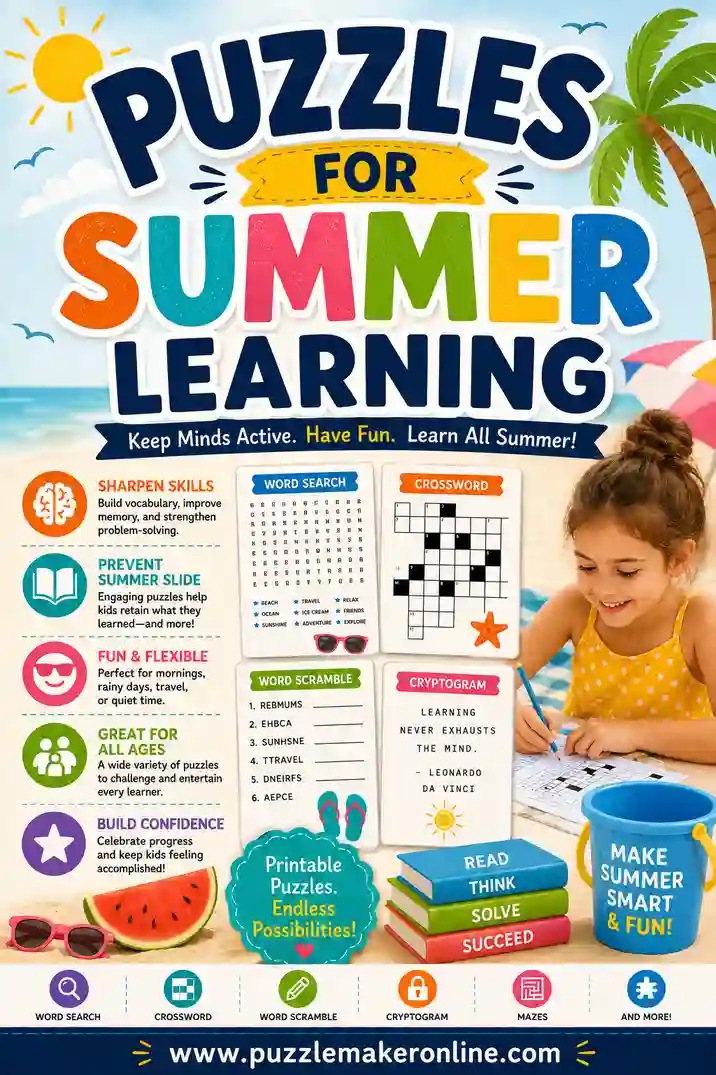
Over a long break, kids can lose a chunk of what they learned, especially in reading and spelling. The fix isn't more worksheets that feel like homework. It's short, low-pressure practice that kids will actually do. Word puzzles hit that sweet spot. They look like a game, but they quietly reinforce vocabulary, spelling, and word recognition.
Here's why parents and teachers lean on them all summer:
- They feel like play. Circling words in a grid doesn't feel like school, so kids stick with it.
- They keep skills warm. Reading and spelling stay sharp without a single "do your homework" battle.
- They're flexible. Five minutes in the car or a whole rainy afternoon, a puzzle fits any slot.
- They're free and portable. Print a stack, toss them in a bag, and you've got learning on the go.
You also control the words, so practice can match exactly what your child needs to keep up, whether that's sight words, spelling lists, or a fun summer theme.
Best Puzzle Types for Summer Learning
You've got three formats to choose from, and you can make all three from one word list in the puzzle maker.
Word search
The gentle daily habit. Hide spelling or theme words in a grid and let kids find them. Word searches build word recognition and spelling without any pressure, and they suit a wide range of ages. This is your easy everyday pick.
Crossword
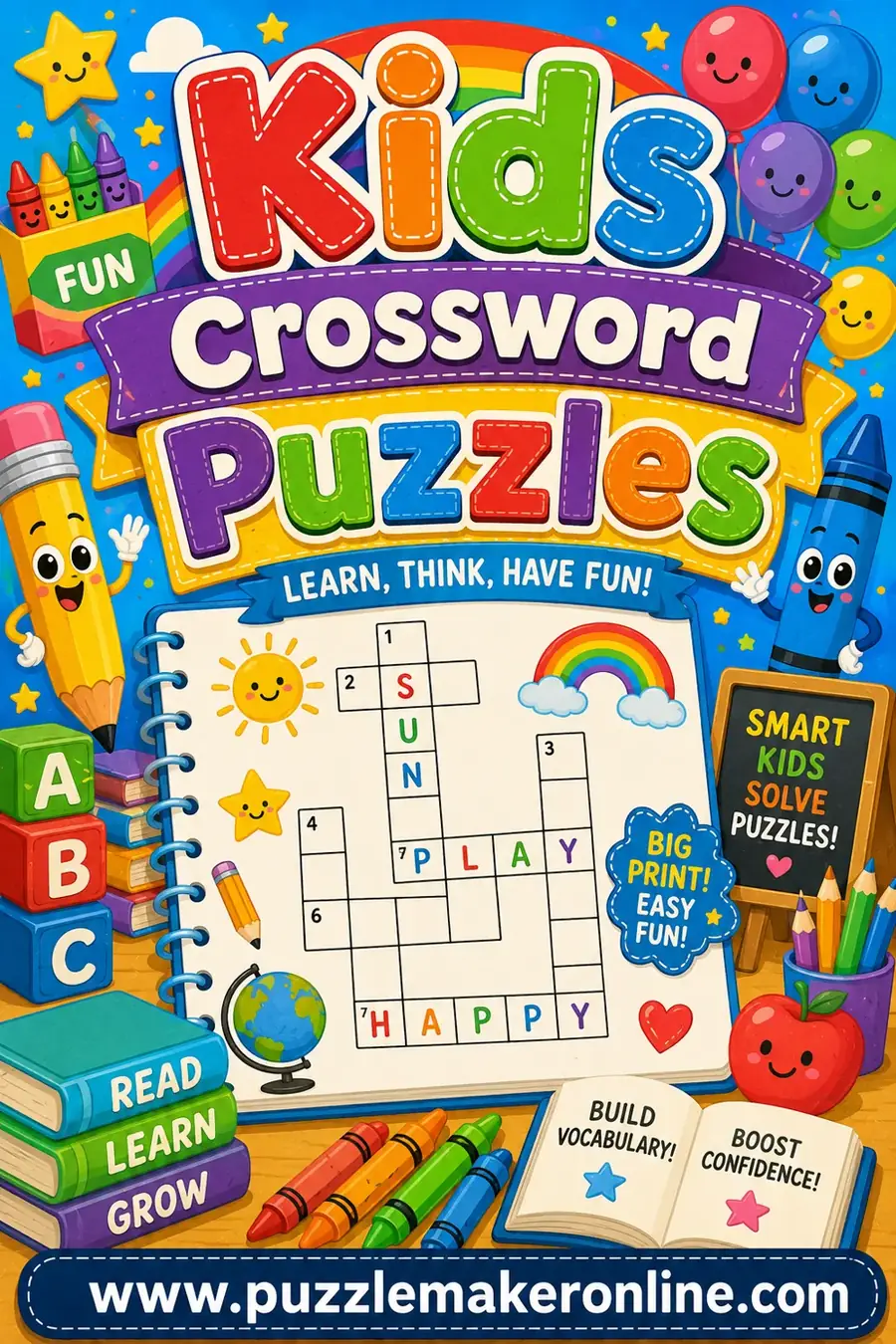
A bit more brainwork. Crosswords pair a clue with a spelling, so kids practice reading and meaning together. They work best once a child can read clues independently. Our kids crossword shows a good starting level.
Word scramble
Quick spelling practice. Scrambles ask kids to rebuild a word letter by letter, which is great drilling for tricky spellings. Print a strip of six and you've got a five-minute warm-up.
Grade-Level Word List (Copy & Paste)
Here's a flexible set of 30 words across reading levels you can drop into the puzzle maker. Use the early column for younger kids and the later columns as readers grow. Mix and match to fit your child.
| Early readers (K–1) | Building readers (2–3) | Stronger readers (4–5) |
|---|---|---|
| Sun | Summer | Adventure |
| Beach | Picnic | Vacation |
| Swim | Garden | Library |
| Sand | Camping | Discover |
| Bike | Lemonade | Explore |
| Pool | Sunshine | Science |
| Bird | Butterfly | Journey |
| Fish | Sandcastle | Recipe |
| Tree | Popsicle | Curious |
| Hat | Vacation | Telescope |
Pull words to match your child's level. To target specific skills, swap in their actual spelling list or sight words instead of the theme words.
How to Make Summer Learning Puzzles in 5 Steps
No prep skills needed. Here's the whole flow.
- Pick the skill. Spelling words, sight words, or a fun summer theme, depending on what your child needs.
- Choose a format. Word search for daily practice, crossword for reading and meaning, scramble for spelling drills.
- Paste your words. Drop them into the puzzle maker. Match the word length to your child's level.
- Add a friendly title. "Maya's Summer Word Hunt" makes it feel fun, not like homework.
- Print a set. A week's worth at a time keeps the routine going without daily setup.
That's it. Most parents go from idea to printed stack in under ten minutes.
Building a Simple Summer Routine
A little structure keeps the practice going without nagging. You don't need a strict schedule, just a steady habit.
- One puzzle a day. Keep it short, ten to fifteen minutes. A daily word search is plenty to fight the slide.
- Tie it to a moment. After breakfast, before screen time, or in the car. Anchoring it to a routine makes it stick.
- Rotate the format. Word search Monday, scramble Tuesday, crossword Wednesday. Variety keeps it fresh.
- Track progress. A simple sticker chart for completed puzzles turns practice into a small game.
Make it about reading too
After a word search, have your child read the found words aloud, or use each in a sentence. That small step turns recognition into real reading practice and meaning.
Matching Puzzles to Grade Level
The same theme stretches across ages if you adjust word length and format.
| Grade | Best puzzle | Word tips |
|---|---|---|
| Pre-K / K | Picture word search | Short, simple words, large grid |
| 1st–2nd | Easy word search or scramble | Sight words and CVC spellings |
| 3rd | Word search or simple crossword | Grade spelling list, short clues |
| 4th–5th | Crossword | Vocabulary words with meaning clues |
| Mixed siblings | Two versions, one theme | Easy and harder from the same words |
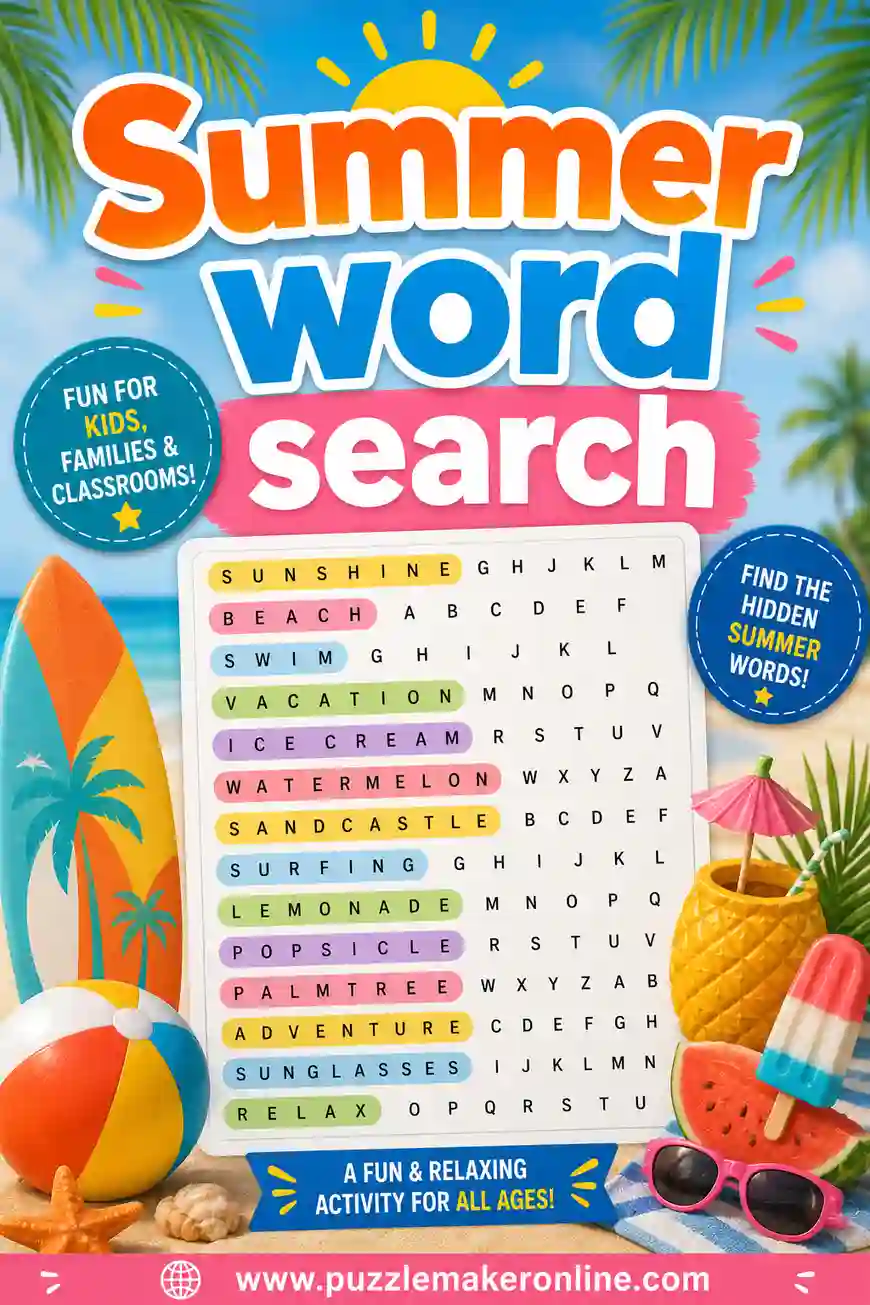
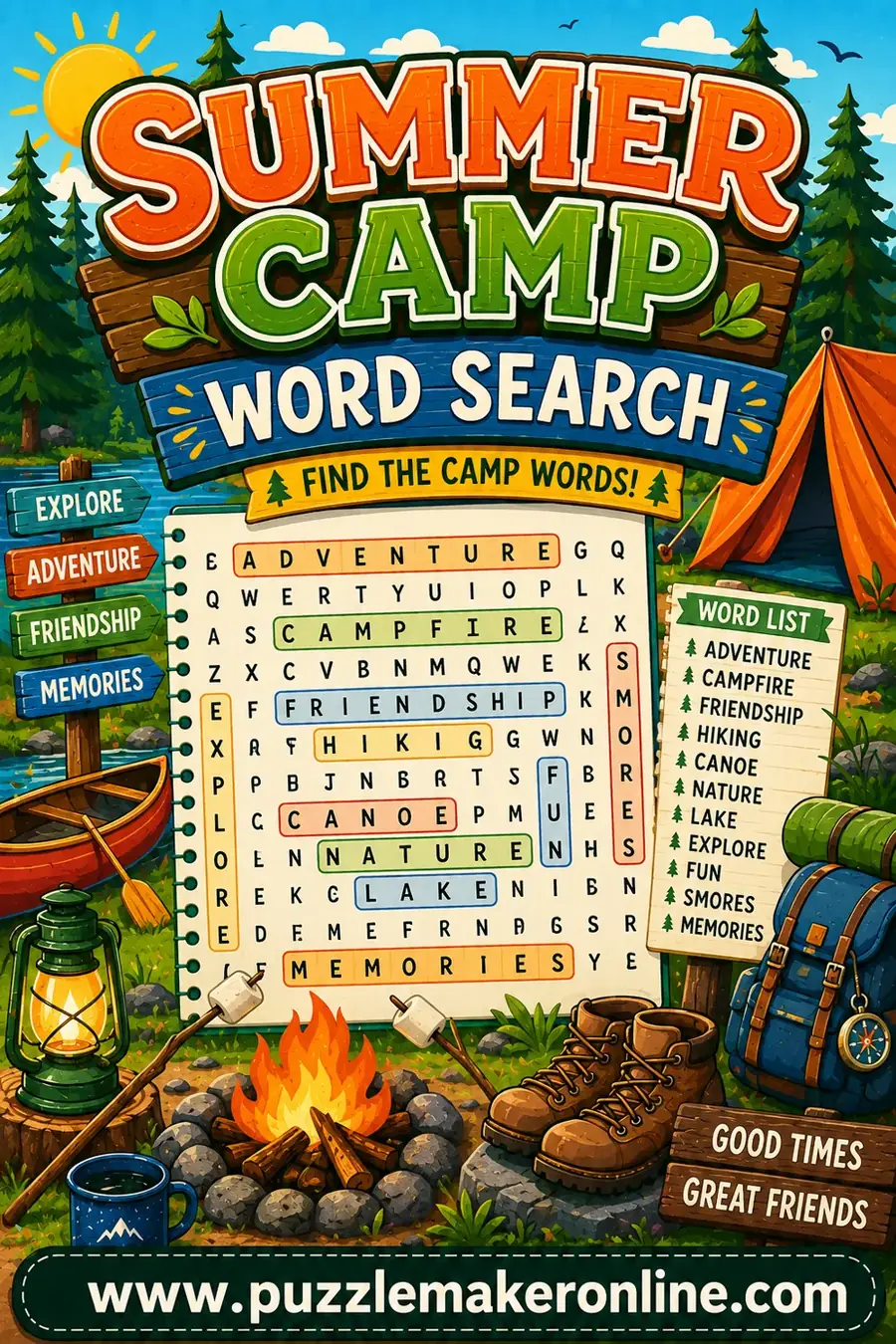
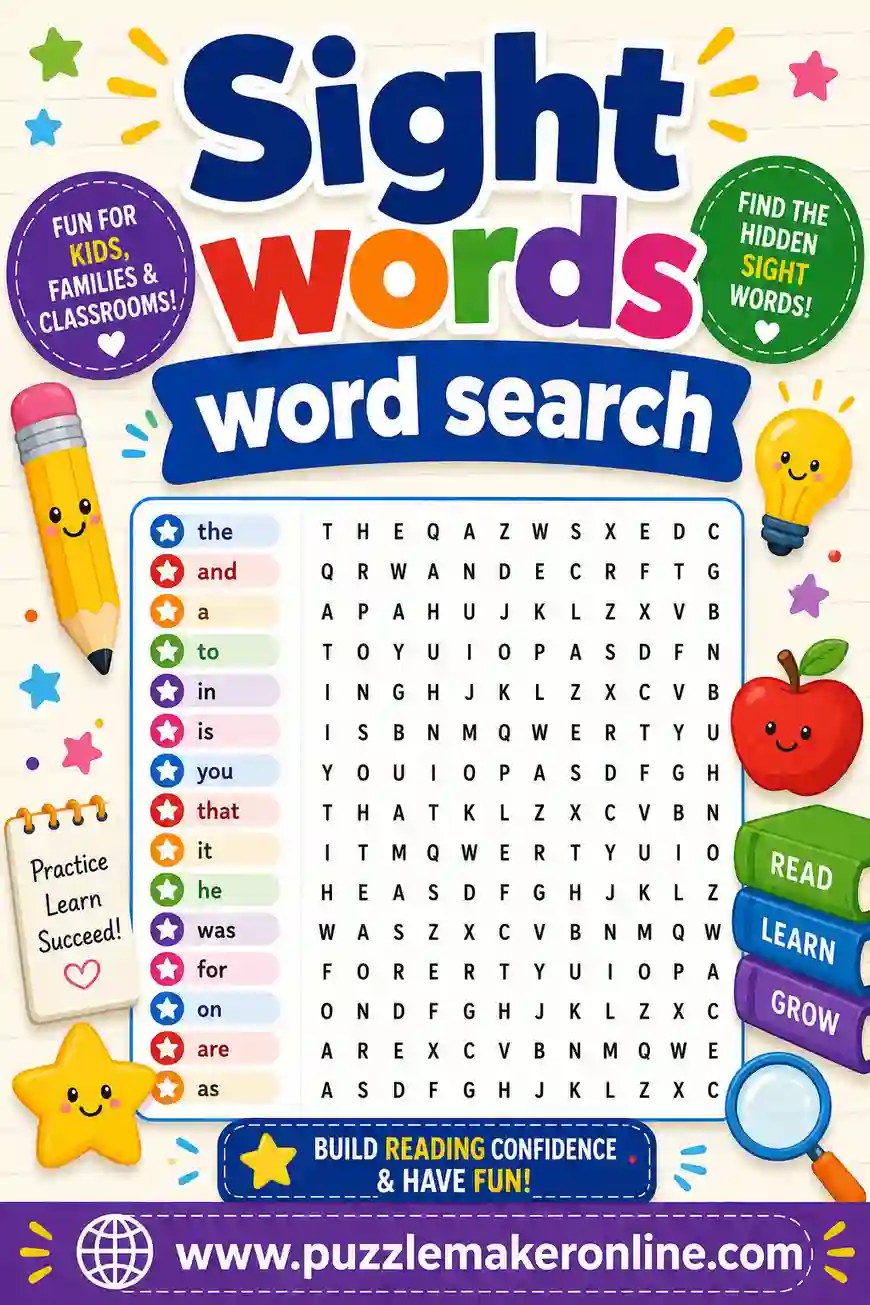
For younger kids, our sight words word search builds the foundation, while a fun summer word search keeps the season front and center. Heading to day camp? The summer camp word search is ready to print.
Fun Summer Themes to Try
Tie puzzles to what your kids are actually doing and they'll engage more.
- Beach day. Words like sandcastle, seashell, wave, and sunscreen. Great for a trip or a rainy "wish we were there" day.
- Backyard nature. Butterfly, ladybug, garden, robin. Pair it with a walk to spot the real things.
- Road trip. Map, license plate, rest stop, mountains. Perfect for the car.
- Summer reading. Pull words from the book your child is reading and make a puzzle from them.
- Camp week. Tent, canoe, campfire, hiking. A fun warm-up before or after camp.
Connecting puzzles to real experiences makes the words stick far better than a random list.
Skills You Can Target With Puzzles
Summer puzzles aren't just busywork. With the right words, each format hits a specific skill. Here's how to aim your practice.
- Spelling. Word scrambles are spelling workouts in disguise. Use this week's tricky words and have your child rebuild each one letter by letter.
- Sight words. A word search packed with high-frequency words builds instant recognition, the foundation of fluent reading.
- Vocabulary and meaning. Crosswords pair a clue with a word, so kids practice what words mean, not just how to spell them. Great for new vocabulary.
- Phonics patterns. Group words by a sound or pattern, like long-vowel words or words ending in "-ing," so the puzzle reinforces a rule.
- Content knowledge. Build a science or social studies word search from a documentary or museum trip to lock in new facts.
Pick the skill first, then choose the format that practices it best. That small bit of intention turns a fun puzzle into real, targeted learning.
A Simple Reward System That Works
Motivation is half the battle over a long summer. A light reward system keeps kids reaching for the next puzzle without you nagging.
- Punch card. Make a card with ten spots. Each finished puzzle earns a punch; a full card earns a small treat or outing.
- Reading jar. Drop a marble in a jar for every completed puzzle. When the jar fills, the whole family picks a fun activity.
- Choose-your-next. Let your child pick the theme of the next puzzle once they finish the current one. Choice is its own reward.
- Streak bonus. Three days in a row earns a bonus, like staying up fifteen minutes later. Streaks build the habit.
Keep rewards small and frequent. The goal is a steady rhythm, not a giant prize at the end of the summer.
Common Mistakes to Avoid
A few things can turn summer puzzles into a chore. Steer clear of these.
- Making it feel like school. Keep it light, short, and game-like. Pressure kills the habit fast.
- Words too hard. A frustrated kid quits. Match word length to your child's real level.
- Too long. A giant puzzle overwhelms. Short and frequent beats long and rare.
- No connection to skills. Random words are less useful. Use spelling lists or sight words when you can.
- Forgetting the reward. A sticker chart or small prize keeps motivation up across a long summer.
Frequently Asked Questions
What puzzles are best for summer learning?
Word searches are the easiest daily habit because they build spelling and word recognition without feeling like homework. Use word scrambles for focused spelling practice and crosswords once kids can read clues, since those add meaning to the practice.
How do I make a puzzle from my child's spelling list?
Paste the spelling words straight into the puzzle maker, choose word search, crossword, or scramble, and print. Using their real list means the puzzle practices exactly the words they need to keep sharp.
Are these summer learning puzzles free?
Yes. You make and print them yourself at no cost, with no sign-up and no watermark. You can print a whole summer's worth from a single free word list.
How much should my child do each day?
Ten to fifteen minutes a day is plenty to fight the summer slide. One short word search or a quick scramble keeps reading and spelling warm without overwhelming anyone.
How do I make puzzles for different-aged siblings?
Make two versions from the same theme: an easy word search for the younger child and a crossword for the older one. They practice together on one topic, each at the right level.
Can puzzles really help prevent the summer slide?
Yes. Regular, low-pressure word practice keeps reading, spelling, and vocabulary skills warm over the break. The key is making it a fun, steady habit rather than a chore, which is exactly what game-like puzzles do well.
Ready to Make Your Summer Learning Puzzles?
Grab the word list above, open the free puzzle maker, and you'll have printable word searches, crosswords, or scrambles ready in minutes. It's free, there's no sign-up, and every sheet prints clean and ready to go. Match the words to your child's level, keep it short and fun, and you'll close out summer with skills sharp and ready for the new school year. Happy puzzling.