Spanish Crossword: Free Printable Puzzle Maker
A Spanish crossword is a printable grid where every answer is a Spanish word like "perro," "casa," or "verde," and each clue is the English meaning or a short hint. Students read the clue, recall the Spanish word, and spell it into the numbered squares. The fastest way to make one is to use a free puzzle maker that turns your Spanish word list into a finished grid, with clues and an answer key included.
Want to skip ahead and just build it? Open the free puzzle maker, paste in a Spanish word list (there's a ready-made one below), and print as many copies as you need. No sign-up, no fee, nothing to install.
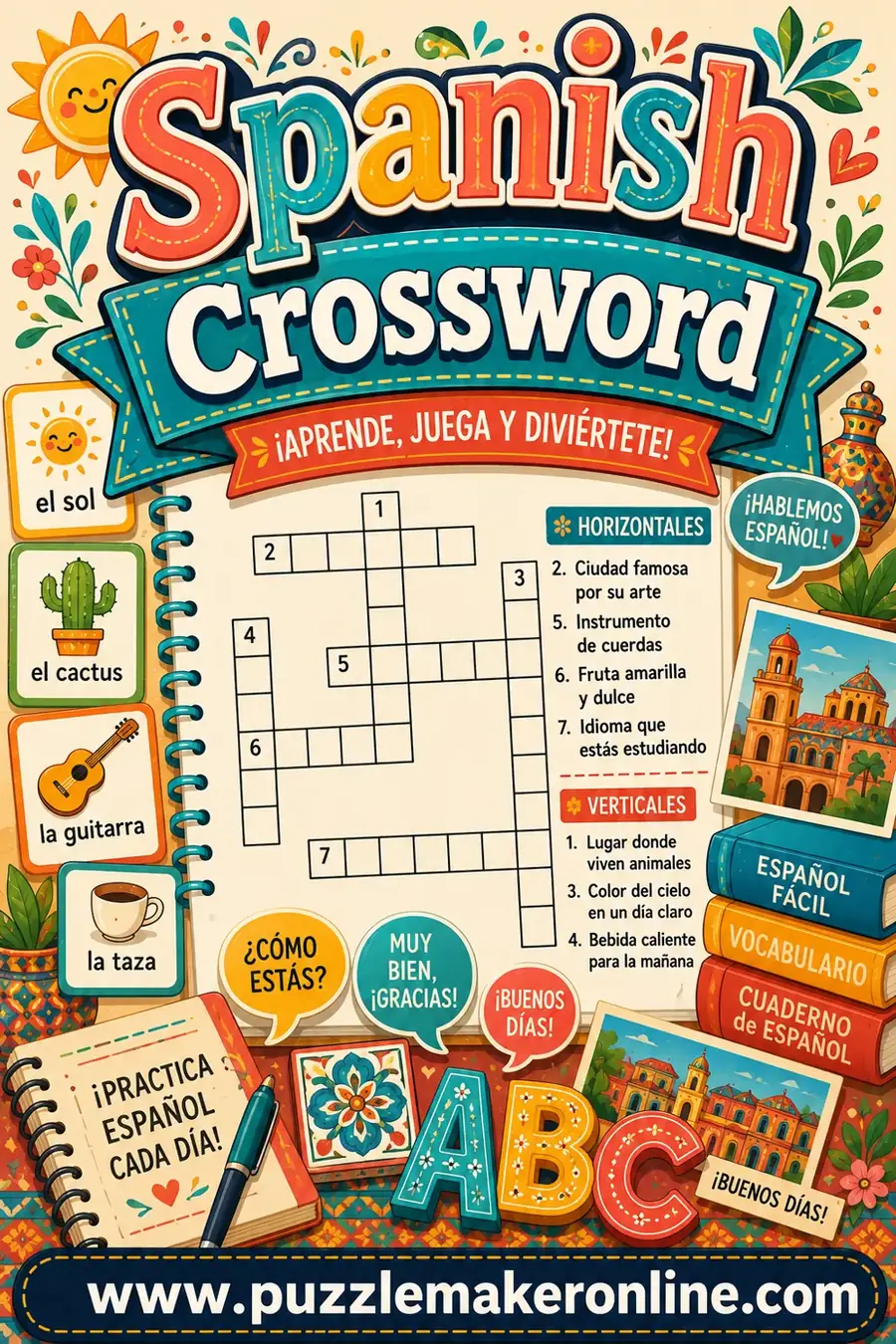
What Is a Spanish Crossword?
Take a regular crossword and fill every answer with a Spanish word. The clue is the English meaning. To solve, a student reads the English word, recalls the Spanish one, and spells it correctly into the grid. That blend of recall and spelling is exactly what a language learner needs to practice.
Spanish crosswords fit any level. A first-year class fills the grid with colors, numbers, and animals. A more advanced class uses verbs, family words, or food vocabulary. The same tool builds them all from whatever list you paste in.
A good Spanish crossword has two clear layers:
- The answers — the Spanish words in the grid, like "rojo" or "hermano."
- The clues — the English hints by each number, like "The color of grass" for VERDE.
Get those two right and the puzzle nearly builds itself.
Why Make Your Own Spanish Crossword
You could grab a generic Spanish puzzle online, but building one from your own list wins every time.
- It's free. A printable puzzle costs nothing when you make it yourself.
- It matches your unit. Use the exact words your class is learning, not a stranger's.
- It drills meaning and spelling together. Students recall the Spanish word and spell it right to fit the grid, accents and all.
- You get an answer key. The maker builds the solution, so grading takes seconds.
It's fast, too. Most teachers go from "I need a review sheet for tomorrow" to a printed puzzle in under ten minutes.
Free Spanish Crossword Word List (Copy & Paste)
Here's a ready-to-use list of 30 common Spanish words, sorted by topic, with the English meaning in parentheses to use as your clue. Copy a column straight into the puzzle maker. Twenty-plus words make a nice, full grid.
| Everyday Words | People & Places | Colors & Nature |
|---|---|---|
| Casa (house) | Familia (family) | Rojo (red) |
| Libro (book) | Madre (mother) | Verde (green) |
| Agua (water) | Padre (father) | Azul (blue) |
| Mesa (table) | Hermano (brother) | Sol (sun) |
| Puerta (door) | Amigo (friend) | Luna (moon) |
| Comida (food) | Escuela (school) | Flor (flower) |
| Perro (dog) | Maestro (teacher) | Arbol (tree) |
| Gato (cat) | Ciudad (city) | Cielo (sky) |
| Silla (chair) | Tienda (store) | Mar (sea) |
| Reloj (clock) | Calle (street) | Nieve (snow) |
Mix and match across columns for variety. For beginners, lean on short, concrete words like casa, perro, and sol.
Theme variations to try
- Numbers and days crossword. Fill the grid with "uno," "dos," "lunes," "martes" for an early-unit review.
- Verb crossword. Use common verbs like "comer," "hablar," "vivir," with English clues, for a conjugation-prep puzzle.
- Food crossword. Drop in "manzana," "pan," "queso," "leche" for a tasty vocabulary lesson.
How to Make a Spanish Crossword in 4 Steps
You don't need any design skills. Here's the whole process.
- Paste your words. Add at least 20 Spanish words. More words give the maker room to build a fuller, more interesting grid.
- Add the clues. Use the English meaning as each clue, or let the maker prompt you. Keep clues clear and level-appropriate.
- Choose your settings. Set the grid size and difficulty, then let the puzzle maker lock the words into place.
- Print. Print the puzzle and the answer key, and you're ready to hand it out.
That's it. If you want to reuse the worksheet, print on cardstock or slip copies into clear sleeves so students can solve with a dry-erase marker.
A Note on Accents and Ñ
Spanish has letters and marks that English doesn't, so plan for them before you print.
- Accents (á, é, í, ó, ú). Decide whether students must write the accent. For beginners, many teachers accept the word without it. For advanced classes, require it and note that the grid square still holds the base letter.
- The letter ñ. Words like "niño" and "España" use it. Tell students to write ñ where it belongs, even though the grid treats it as one square.
- Be consistent. Whatever you decide, say it on the worksheet so students know the rule before they start.
This small heads-up saves a lot of confusion when you grade.
Writing Good Spanish Crossword Clues
The clue carries the lesson in a Spanish crossword. Write it well and the puzzle teaches as students solve. A few rules help.
- Keep the English clue simple. "Dog" is a cleaner clue for PERRO than a long sentence.
- Match the level. Use single-word English clues for beginners; add a short phrase or a fill-in-the-blank for advanced students.
- Stay consistent in direction. If the grid holds Spanish words, every clue should be in English, not a mix.
- Add gender hints when useful. For nouns, a clue like "the house (la ___)" reminds students of the article.
Clue styles to mix in
- Direct translation: "Water" → AGUA
- Description: "Where you live" → CASA
- Fill-in-the-blank: "El ___ es el mejor amigo del hombre" → PERRO
- Category: "A color, like the grass" → VERDE
Spanish Crossword Difficulty by Level
The same approach stretches from a first lesson to an advanced class. Adjust the words, clue style, and grid size to fit.
| Level | Grid size | Word style | Tips |
|---|---|---|---|
| Beginner (year 1) | Small (8–12 words) | Colors, numbers, animals | Single-word English clues; accents optional. |
| Elementary | Medium (12–15 words) | Everyday nouns | Add family and classroom words. |
| Intermediate | Medium (15–20 words) | Verbs + nouns | Use short phrases as clues. |
| Advanced | Large (20–30 words) | Mixed vocabulary | Require accents and the ñ. |
| Heritage & adults | Large (25–30 words) | Idioms + topics | Add fill-in-the-blank and culture terms. |
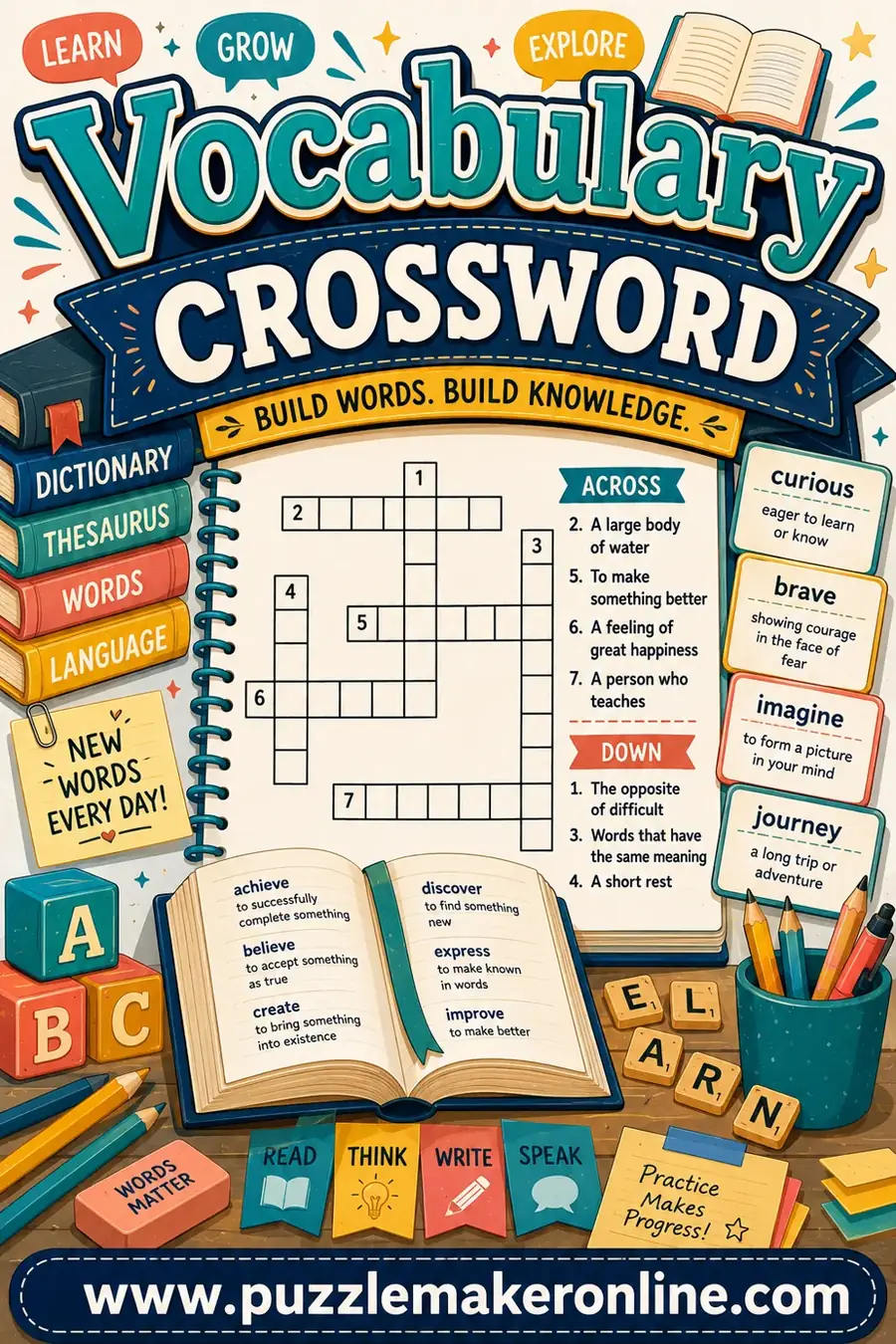
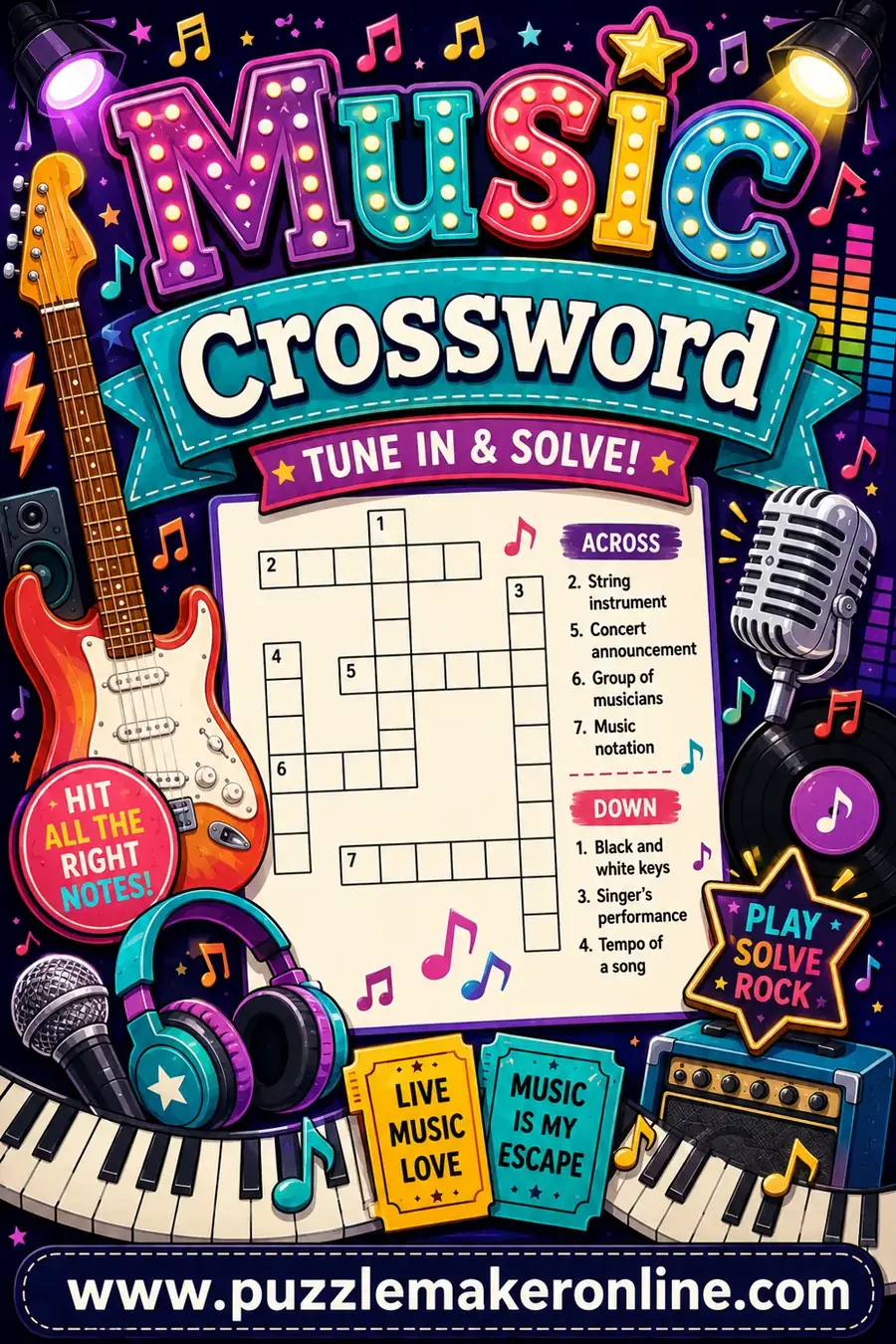
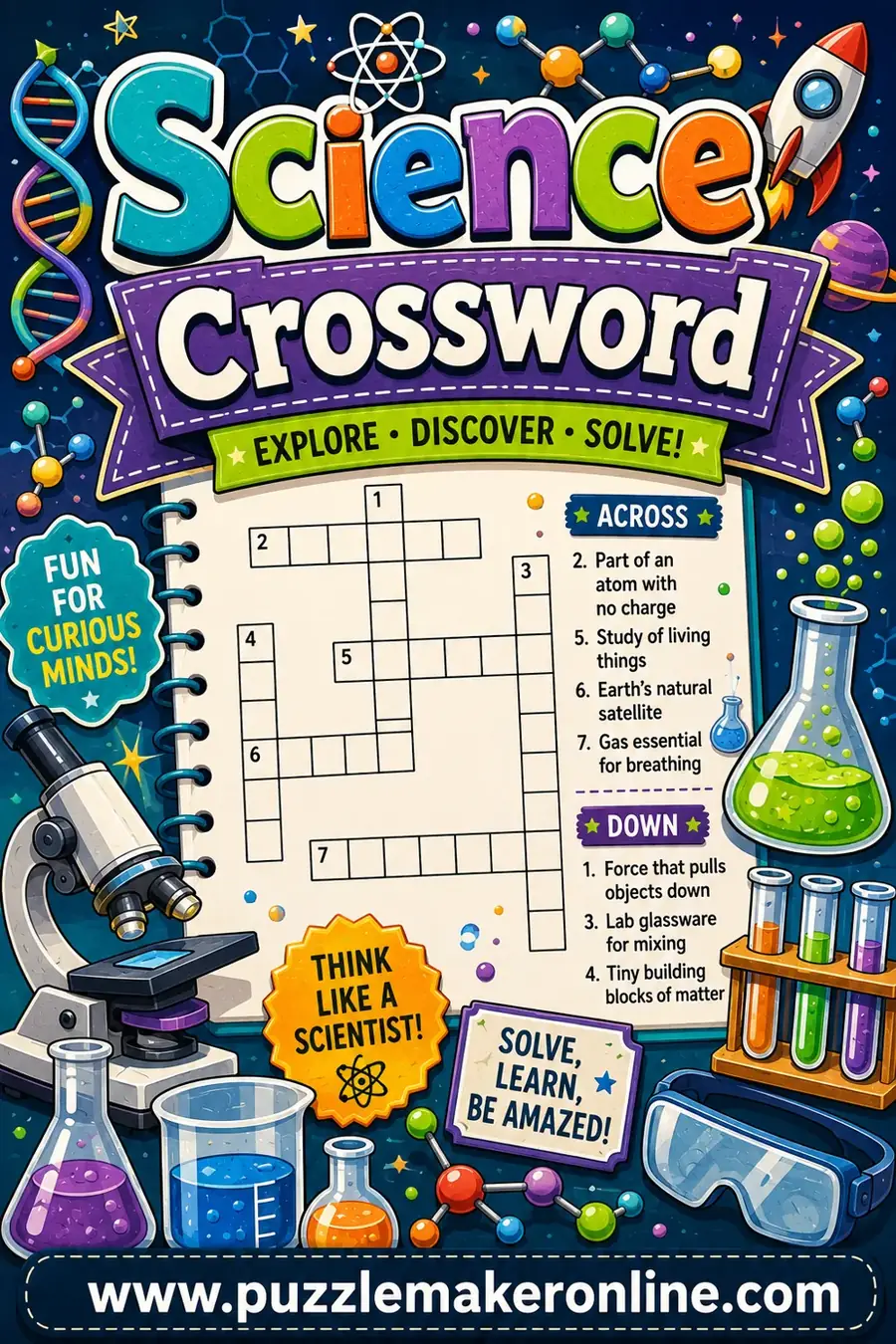
Loving the theme? You can build the same kind of puzzle for other subjects with our vocabulary crossword, music crossword, and science crossword makers.
Who a Spanish Crossword Is Great For
This puzzle flexes to almost any group. A few of the most popular crowds:
Spanish teachers
A crossword is the easiest way to turn a vocabulary list into active review. Build one from this week's words, print a class set, and you've got a focused warm-up that grades itself. Students have to recall and spell each word, which beats a flat list.
Homeschool and self-study learners
If you're learning Spanish at home, a crossword forces real recall instead of passive reading. Make one from your textbook unit and solve it without peeking at notes.
Substitute teachers
A printable Spanish crossword is a reliable plan when you cover a language class. Keep a few topic-based ones ready and you'll always have an on-target activity.
Tutors and conversation groups
Use a crossword as a warm-up before speaking practice. Filling in the words primes the vocabulary so it comes out faster in conversation.
Printing Tips for Clean, Reusable Puzzles
A few small choices make a big difference.
- Print a test page first. Check that the grid, clues, and any accented words fit on one sheet before a full class set.
- Use black and white to save ink. A crossword reads perfectly without color.
- Print the answer key separately. Keep it off the student copy so nobody peeks.
- Cardstock or sleeves for reuse. Then students solve with a dry-erase marker and you wipe the page clean.
- Bump up the font for younger kids. Bigger squares and larger clue text help small hands and new learners.
What to hand out with it
- A sharp pencil with a good eraser (new vocabulary invites second guesses)
- A highlighter to mark finished clues
- The answer key, kept by the teacher for quick grading
Fun Ways to Change Up a Spanish Crossword
Once the basic version feels familiar, try these twists to keep students interested.
- Reverse it. Put Spanish in the clue and English in the grid to practice the other direction.
- Team solve. Split into pairs and let them help each other. Lowers the pressure and gets students saying the words aloud.
- Picture clues. For young learners, use a small image as the clue instead of an English word.
- Theme of the week. Make a fresh puzzle for each unit, from colors to food to verbs, across a term.
You can also tie a puzzle to a culture lesson, pulling vocabulary from a holiday like Día de los Muertos.
Frequently Asked Questions
What words should go on a Spanish crossword?
Use the words your class is learning: common nouns like casa and perro, colors like verde, and verbs like comer. The word list above gives you 30 ready to copy, with English meanings for clues. Aim for at least 20 so the grid fills out nicely.
How do accents and ñ work in a crossword?
Each accented letter or ñ still sits in one grid square. Decide ahead of time whether students must write the accent, and note the rule on the worksheet so everyone knows before they start.
Is this Spanish crossword maker really free?
Yes. You build and print the puzzle yourself at no cost. There's no sign-up and no watermark, so you can make a new puzzle for every unit, all year long.
Can I make a Spanish crossword for beginners?
Absolutely. Use a smaller grid, short concrete words, and single-word English clues. Make accents optional for new learners so they can focus on the vocabulary first.
Can I put the English in the grid instead?
Yes. Just flip it: paste English words and use Spanish clues, or the reverse. The maker doesn't care which language goes where, so you can practice both directions.
Does it make an answer key?
Yes. The maker builds the solved grid for you, so you can grade in seconds or let students check their own work.
Ready to Print Your Spanish Crossword?
Grab the word list above, open the free puzzle maker, and you'll have a clean, printable Spanish crossword in minutes. It's free, there's no sign-up, and you get a matching answer key every time, so your class or self-study session is ready to review. ¡Buena suerte, and may every clue lead to the right word!