Weather Crossword: Free Printable Puzzle Maker
A weather crossword is a science-themed puzzle filled with words like "thunder," "humidity," and "tornado," each paired with a clue your solvers fill in across and down. The fastest way to make one is to type your words into a free puzzle maker, let it build the grid, and print copies for a science unit, an ESL lesson, or a rainy-day homeschool activity. No software, no sign-up, no design skills required.
Want to skip ahead and just build one? Open the free puzzle maker, paste in a weather word list (there's a ready-made one below), add a short clue for each word, and print as many as you need. You'll have a ready-to-solve worksheet in a couple of minutes.
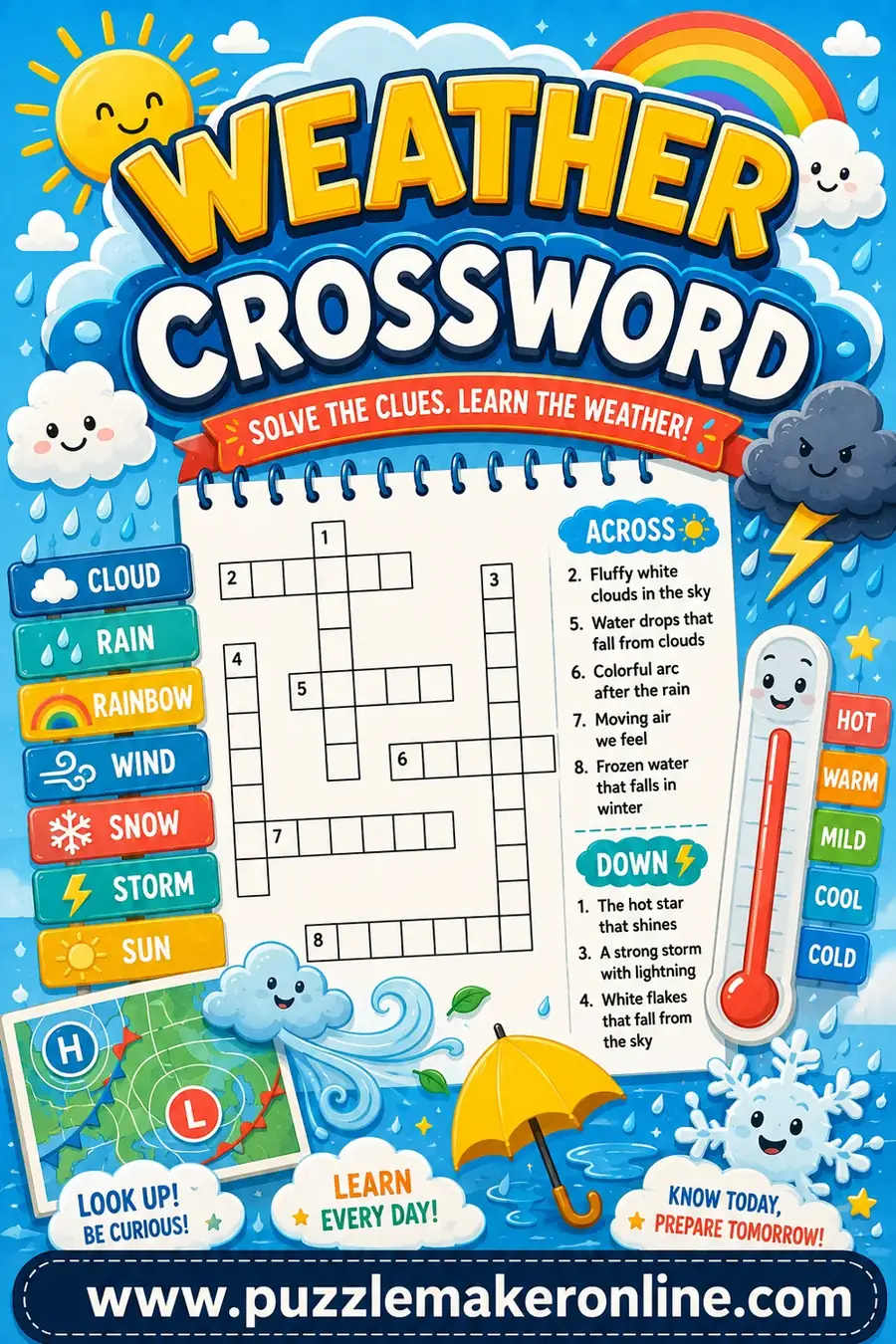
What Is a Weather Crossword?
Think of a regular crossword, then fill it with everything about the sky and the seasons. Instead of random answers, the words are weather terms, like thunder, fog, rainbow, and forecast. Solvers read each clue, write the answer into the grid across or down, and the overlapping letters give helpful hints along the way.
It's a calm, useful puzzle for a weather or climate unit. Teachers use it as a warm-up, a homework page, or an end-of-unit review. Because you build it from your own word list, you can keep it simple with sunny, rainy, and windy for little kids, or push into humidity, barometer, and precipitation for older students.
You can use it a few ways:
- Vocabulary review. Match clues to the weather words students just learned.
- Seasons spin-off. Build a version around one season's weather: a winter puzzle, a summer one.
- Language practice. Great for ESL or world-language classes learning weather words.
Why Make Your Own Instead of Printing a Random One
Plenty of pre-made weather crosswords exist online, but building your own beats them for a few reasons.
- It's free. Make and print as many as your class needs at no cost.
- You pick the words. Match the puzzle to exactly what you taught, from "sunny and cloudy" to "barometer and condensation."
- You set the difficulty. Easy weather words for young kids, science terms for older students.
- It fits your lesson. A kindergarten review and a middle-school climate unit need very different words. You control both.
Most teachers go from "I need a review worksheet" to a printed class set in under ten minutes.
Free Weather Word List (Copy & Paste)
Here's a ready-to-use list of 30 weather words. Pick 12 to 15 for a simple puzzle, or grab the whole set for a fuller grid. Copy the column you like straight into the puzzle maker.
| Everyday Weather | Storms & Extremes | Science Terms |
|---|---|---|
| Sunny | Thunder | Humidity |
| Cloudy | Lightning | Forecast |
| Rainy | Tornado | Barometer |
| Windy | Blizzard | Pressure |
| Foggy | Hurricane | Precipitation |
| Snowy | Hailstorm | Condensation |
| Drizzle | Cyclone | Temperature |
| Breeze | Flood | Atmosphere |
| Rainbow | Lightning bolt | Climate |
| Frost | Downpour | Meteorologist |
Mix and match across columns to fit your students' level. For younger kids, lean on words they can picture, like sunny, rainy, windy, and snowy.
Clue ideas to get you started
You don't need clever wordplay. Clear, factual clues teach as they go. A few examples:
- Thunder — The loud sound that follows a flash of lightning.
- Humidity — How much water is in the air.
- Tornado — A spinning funnel of wind that touches the ground.
- Forecast — A prediction of what the weather will do.
- Barometer — A tool that measures air pressure.
The puzzle maker lets you type a clue beside each word, so the whole worksheet comes together in one place.
How to Make a Weather Crossword in 4 Steps
You don't need design skills. Here's the whole process.
- Add your words. Paste a list of 12 or more from the table above. More words means a richer grid.
- Write a clue for each. Keep them short and factual. One sentence is plenty.
- Let the maker build the grid. It fits the words together and numbers the clues for you automatically.
- Print. Hit print, grab your class set, and you're ready to teach.
That's it. For grading, print one filled-in copy as your answer key.
Who Weather Crosswords Are Great For
This puzzle flexes across grades and settings. A few of the most common uses:
Science classes
It's a natural fit for a weather, seasons, or climate unit. Use it as a pre-test to see what kids already know, a mid-unit review, or an end-of-unit recap. The crossing letters give just enough of a hint that students stay encouraged.
ESL and world-language classes
Weather is one of the first topics language learners cover, since it's part of everyday small talk. Build the puzzle in the target language with clues in plain English, or the reverse, to reinforce new words.
Homeschool
A crossword makes a clean, low-prep worksheet. Build one that matches the chapter your child just read, and you've got an instant review with no packets to buy or print.
Rainy-day and sub plans
Keep a stack of weather crosswords on hand for a substitute day, an indoor recess, or a stormy afternoon. They're self-explanatory and keep kids learning without extra instruction.
Printing Tips for Crisp, Easy-to-Solve Puzzles
A few small choices make a big difference.
- Print one test copy first. Check that the grid and clues fit the page before you run a class set.
- Use black and white to save ink. Crosswords read clearly without color.
- Bump up the font for younger grades. Bigger squares are easier for small hands to write in.
- Add a word bank for beginners. List the answers in a box so early learners can match rather than recall.
- Keep an answer key handy. Print one solved copy for fast grading.
What to pair with the puzzle
A few add-ons make it a fuller lesson:
- A blank weather chart for students to track real conditions for a week
- A short word bank for students who need a hint
- A simple cloud-types diagram to label alongside the puzzle
Make It Easier or Harder for Your Students
The same word list can stretch from kindergarten to middle school if you adjust a few things.
| Student group | Words to use | Clue style |
|---|---|---|
| Early grades (K–2) | Sunny, rainy, windy, snowy | Picture clues, add a word bank |
| Grades 3–5 | Thunder, rainbow, frost | Simple, literal one-line clues |
| Middle school | Humidity, forecast, pressure | Factual clues, no word bank |
| Older students | Barometer, condensation | Detailed, science-level terms |
| ESL learners | Everyday weather words | Clues in their stronger language |
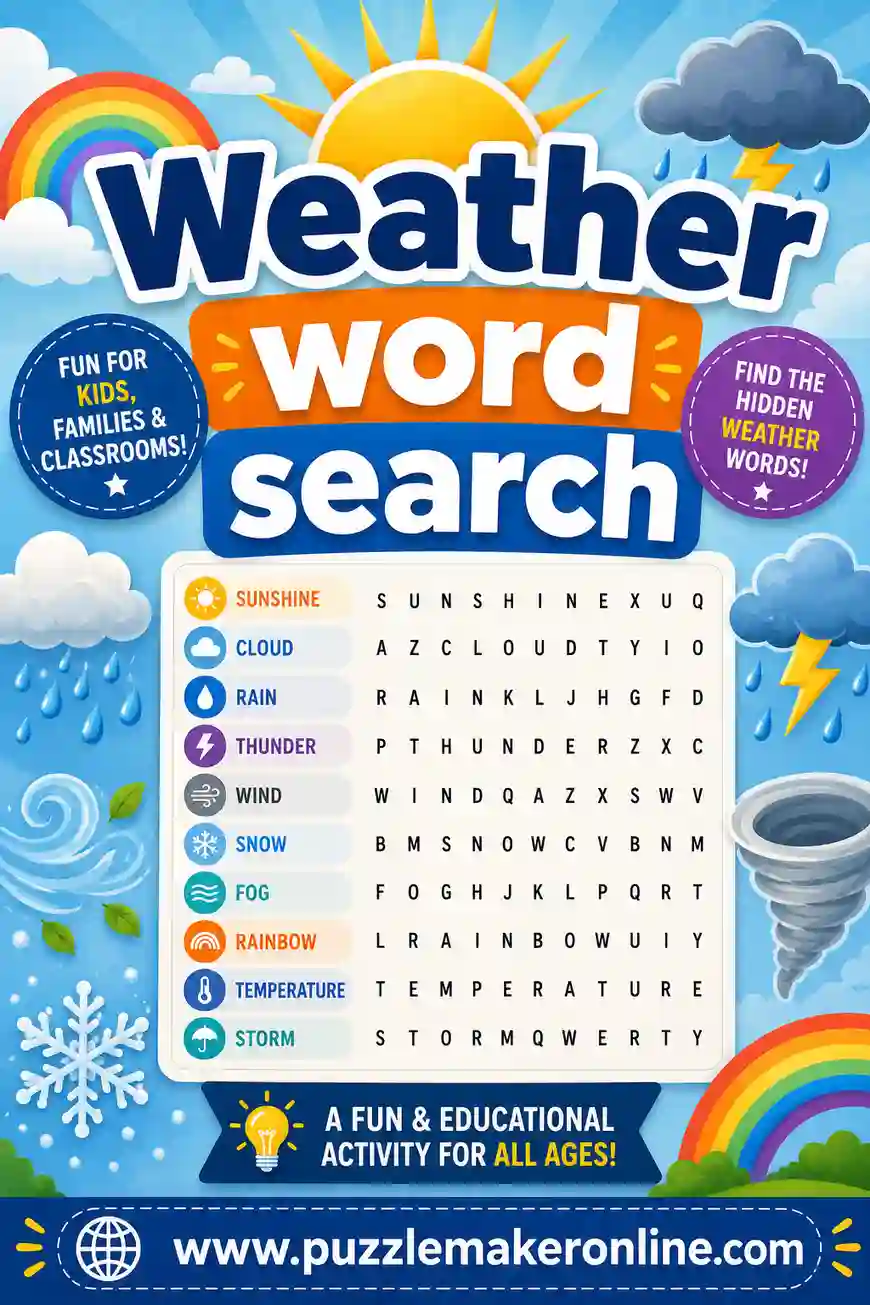
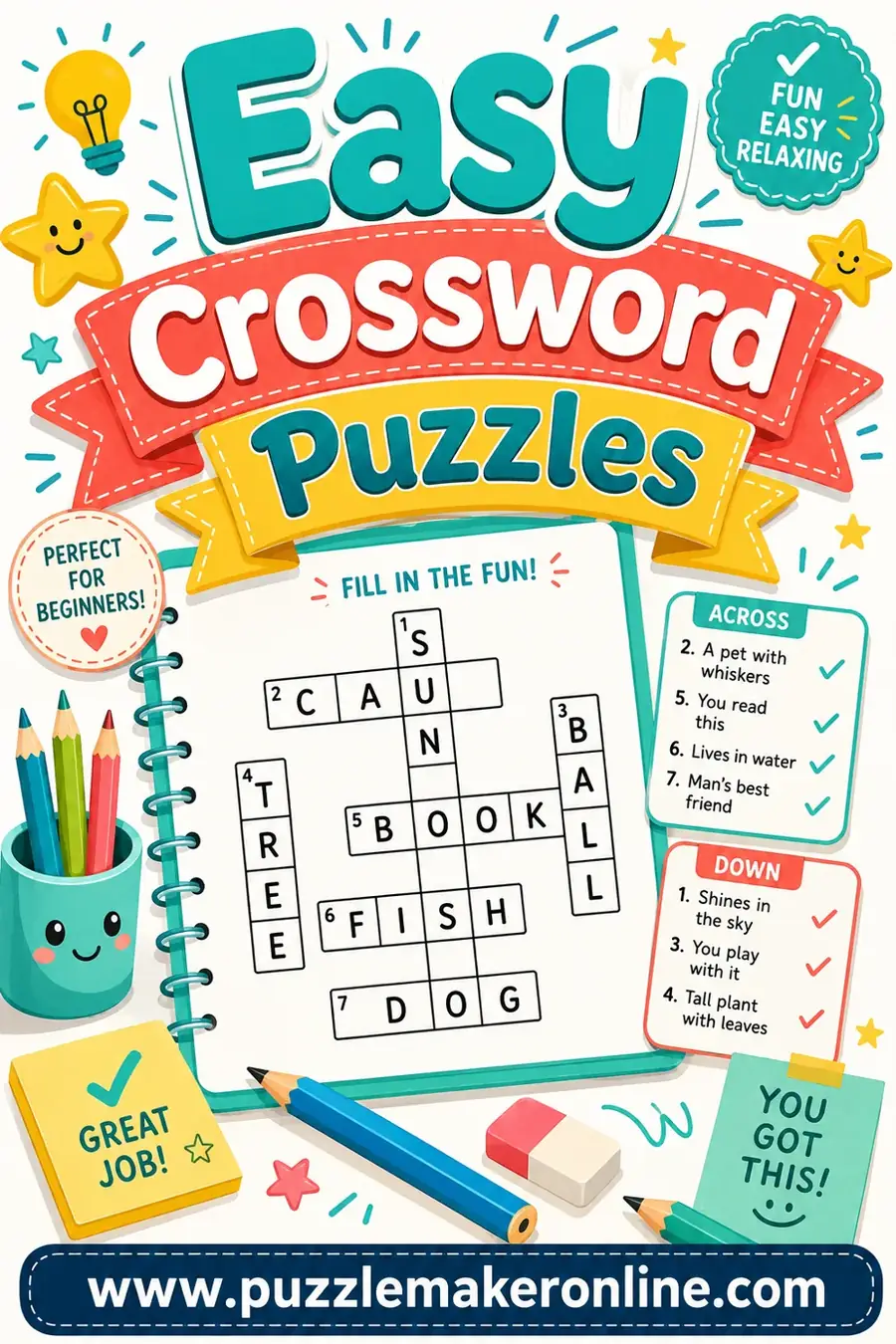
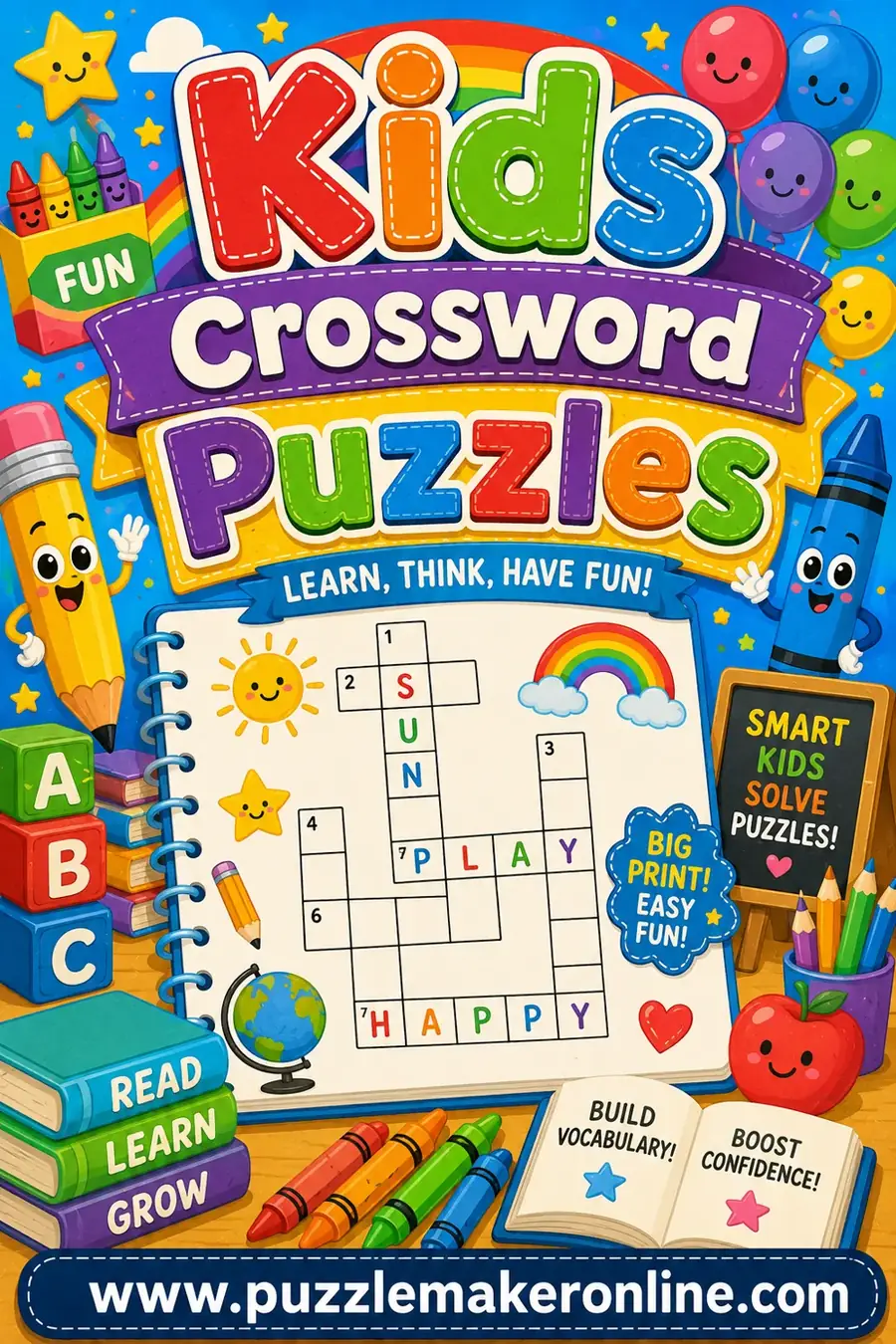
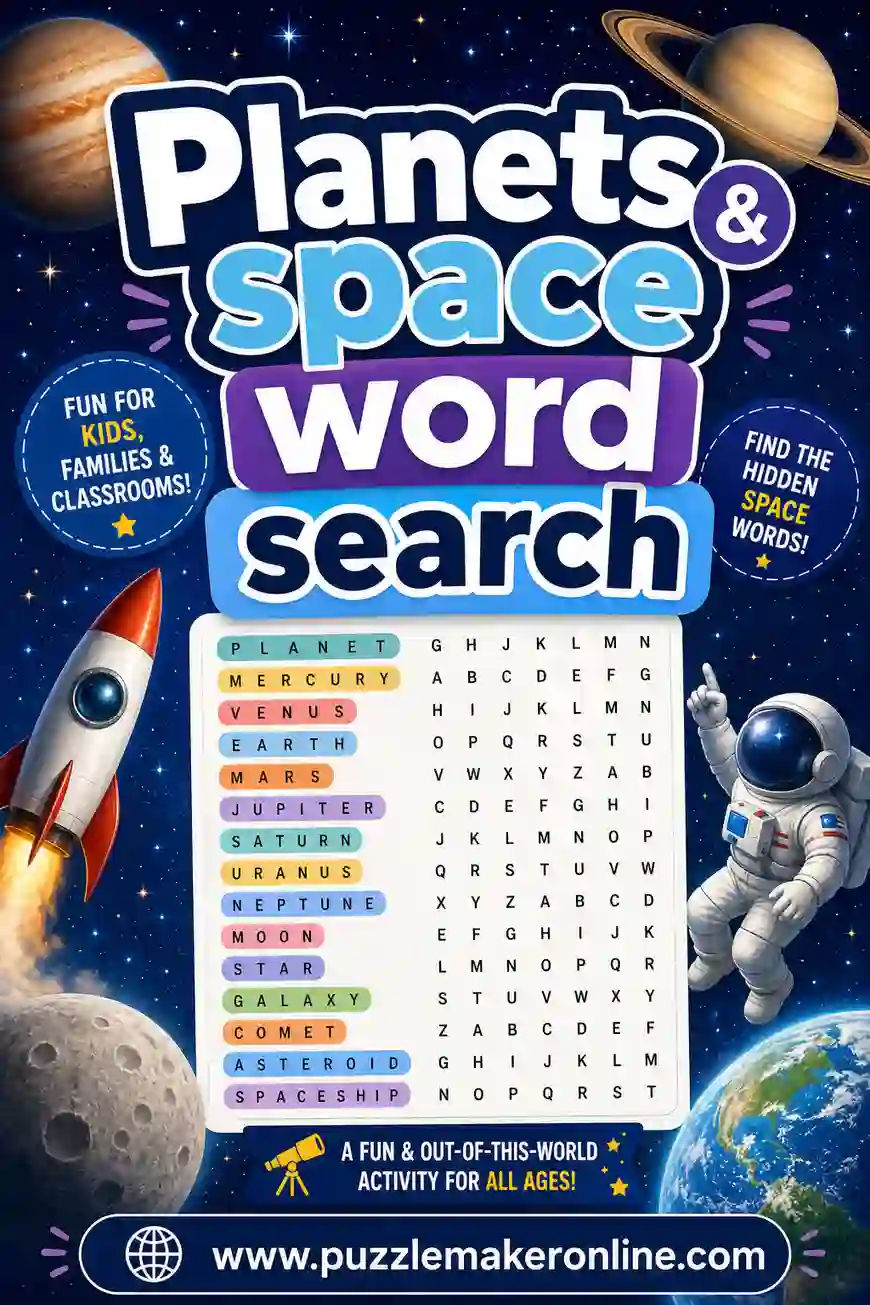
Want more learning puzzles? You can build the same kind of review with our weather word search, easy crossword, and kids crossword makers, or branch into our planets and space word search.
Fun Twists to Keep It Interesting
Once the basic puzzle is set, try these to mix it up.
- Season set. Make a separate crossword for each season's weather. Students collect all four.
- Two-sided sheet. Put a word-bank version on the front and a recall-only version on the back.
- Forecast challenge. Pair the puzzle with a week of real weather tracking so the words come alive.
- Build-it-together. Have students name the weather words after a lesson, then make the puzzle live. They remember words they chose.
You can also turn it into a quick competition with a small prize for the first correct, fully-filled grid.
Common Mistakes to Avoid
A few small slip-ups can make a learning crossword more frustrating than useful. Here's what to watch for.
- Too few words. A grid with only a handful of terms fills up fast and barely reviews the unit. Aim for at least a dozen so the puzzle covers the material and the letters cross often.
- Clues that don't match the lesson. If you taught everyday weather, don't slip in "barometer." Keep clues tied to exactly what students learned so the puzzle reinforces rather than confuses.
- No word bank for beginners. Asking early readers to spell "lightning" from memory sets them up to give up. Add a word bank so they match rather than recall.
- Skipping the answer key. Grading a class set without a key is slow and error-prone. Print one solved copy first.
- Tricky spellings with no support. Words like "precipitation" and "meteorologist" trip kids up. Pair hard-to-spell terms with a clear clue or a hint.
Avoid those, and the crossword does exactly what you want: a calm, low-stress review that actually sticks.
Building Across and Down: A Quick Primer
If you've never built a crossword, the "across and down" part can feel like the hard bit. It isn't. The puzzle maker fits the words for you, but a little background helps you write a stronger word list.
Every answer runs either horizontally (across) or vertically (down), and a good puzzle has answers that share a letter where they cross. That crossing is what helps students along: if they're stuck on "forecast," a letter from "frost" they already filled in gives them a nudge. A varied word list gives the maker more chances to find those overlaps, so a longer list usually builds a tighter, more solvable grid.
A couple of practical tips for science puzzles:
- Mix word lengths. Long terms like "temperature" anchor the grid, while short ones like "fog" and "ice" fill the gaps.
- Avoid near-identical words. Too many lookalike terms can crowd one corner of the grid.
You don't have to manage any of this by hand. Paste your terms, let the maker fit them, and only adjust if a grid comes out lopsided.
Frequently Asked Questions
How many words should a weather crossword have?
For a quick review, 12 to 15 words works well. For a full end-of-unit puzzle, use 20 to 30. The puzzle maker fits them together automatically, so more words just means a bigger, richer grid.
What words should go on a weather crossword?
Pick the terms your students are learning: everyday words like sunny and rainy for young kids, science terms like humidity and barometer for older students. The word list above gives you 30 ready to copy.
Is the weather crossword really free to print?
Yes. You make and print it yourself at no cost. There's no sign-up and no watermark, so you can print a whole class set on a single free word list.
Can I make a weather crossword for young kids?
Absolutely. Stick to words kids can picture, like sunny, rainy, windy, and snowy, and add a word bank so non-readers can match rather than recall. A smaller grid keeps it friendly.
Can I use it for ESL or language class?
Yes. Build the puzzle with weather words in the target language and write the clues in your students' stronger language (or the reverse). It's a clean way to drill everyday vocabulary.
Can I add my own clues?
Yes. The puzzle maker lets you type a clue beside each word, so you can match the exact level your lesson needs, from simple hints to detailed science clues. You're in full control.
Ready to Print Your Weather Crossword?
Grab the word list above, open the free puzzle maker, and you'll have a stack of printable weather crosswords in minutes. It's free, there's no sign-up, and you control every word and clue, so your science class, ESL lesson, or homeschool day is set. Pencils ready, and may the first "Done!" be yours.