Easy Crossword Puzzles: Free Printable & Beginner-Friendly
An easy crossword is a small grid built from short, familiar words and plain, no-trick clues, so almost anyone can finish it without feeling stuck. The fastest way to make one is to type your words and clues into a free puzzle maker, let it lay out the grid, and print as many copies as you need. No software, no sign-up, no puzzle-design skills required.
Want to skip ahead and just build one? Open the free puzzle maker, paste in a simple word list (there's a ready-made one below), pair each word with a short clue, and print. You'll have a clean, beginner-friendly crossword in a couple of minutes.
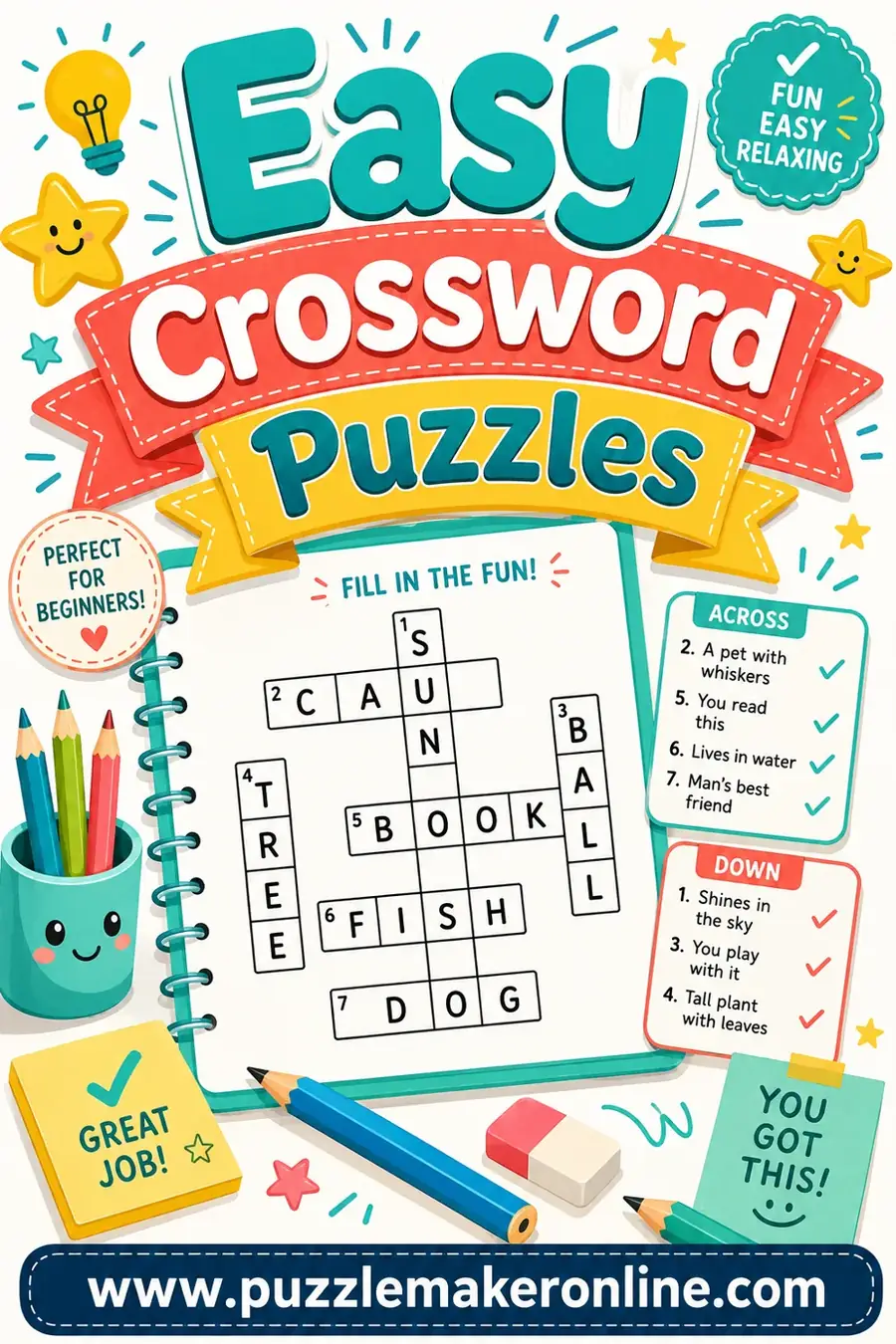
What Makes a Crossword "Easy"?
It's not just about a smaller grid. An easy crossword is easy because of three things working together: short words, common words, and clear clues. Get those right and a beginner can fill the whole thing in without ever feeling lost.
Here's what separates an easy puzzle from a hard one:
- Short answers. Most words run 3 to 6 letters. Long words leave fewer letters showing, which makes guessing harder.
- Everyday vocabulary. Think "apple," "house," "dog," not "antediluvian." If a word shows up in normal conversation, it belongs in an easy crossword.
- Plain clues. Skip the puns and wordplay. "A red fruit" beats "Newton's falling friend." Direct definitions keep things gentle.
- Lots of crossings. When letters from one word help fill another, solvers get free hints. More overlaps means more momentum.
A good easy crossword feels less like a test and more like a warm-up. The solver should feel smart, not stumped.
Why Make Your Own Easy Crossword
You can find printable crosswords online, but making your own beats grabbing a random one for a few reasons.
- It's free. A custom puzzle costs nothing when you build it yourself.
- You pick the words. Use a spelling list, a vocabulary set, names from your family, or words tied to an event.
- You control the difficulty. Keep every word short and simple, and you'll never accidentally hand a beginner a brutal puzzle.
- It prints clean. The puzzle maker lays out the grid and numbers it for you, so the page looks polished without any fiddling.
It's quick, too. Most people go from "I need a simple crossword" to a printed page in under ten minutes.
Free Easy Crossword Word List (Copy & Paste)
Here's a ready-to-use list of 28 short, simple words, grouped so you can mix and match. Drop any 12 to 18 into the puzzle maker, add a quick clue for each, and you've got a beginner crossword. All of these are concrete and easy to picture.
| Around the House | Outdoors & Nature | People & Feelings |
|---|---|---|
| TABLE | TREE | SMILE |
| CHAIR | RIVER | HAPPY |
| LAMP | CLOUD | LAUGH |
| DOOR | GRASS | FRIEND |
| CLOCK | BEACH | QUIET |
| SPOON | FLOWER | BRAVE |
| TOWEL | STONE | KIND |
| BOOK | BIRD | DREAM |
| PLATE | RAIN | HUG |
| BRUSH | SUN | CALM |
Keep your words between 3 and 6 letters for the gentlest puzzle. If you want a little more challenge, sprinkle in one or two 7-letter words, but don't overdo it.
Easy clue ideas
Pair each word with a short, plain clue. A few examples to copy the style:
- TABLE — "You eat dinner on this."
- TREE — "It has leaves and a trunk."
- SMILE — "What you do when you're happy."
- RAIN — "Water falling from clouds."
- BOOK — "You read this."
Notice there's no trickery. For easy puzzles, define the word plainly and move on.
How to Make an Easy Crossword in 4 Steps
You don't need any design skills. Here's the whole process.
- Pick 12 to 18 short words. Grab them from the list above, a spelling unit, or any simple theme.
- Write one clue per word. Keep each clue short and literal. A single sentence is plenty.
- Let the tool build the grid. The puzzle maker arranges the words, numbers them, and creates the across/down clue lists for you.
- Print. Hit print and you've got a clean puzzle plus an answer key.
That's it. If you want to reuse the puzzle, print it on cardstock or slip copies into sleeves so solvers can work in dry-erase marker.
Who Easy Crosswords Are Great For
A gentle crossword flexes to a lot of different people. A few of the most popular crowds:
New solvers and kids
Someone trying crosswords for the first time needs a win, not a wall. Short words and plain clues give beginners that early success, which keeps them coming back. For young readers, an easy crossword doubles as spelling and vocabulary practice without feeling like homework.
Classrooms
Teachers use easy crosswords as warm-ups, review sheets, and sub-day activities. Build one from this week's spelling list or vocabulary words, and students review the material while having fun. Print a class set and you've got a quiet, productive 15 minutes that runs itself.
Seniors and memory care
A simple crossword is a friendly brain exercise. Larger grids with short, familiar words give the satisfaction of solving without the frustration of obscure trivia. Keep the print big and the words concrete for the best experience.
Anyone who wants to relax
Not every puzzle has to be a battle. Plenty of people just want a calm, satisfying activity with their morning coffee. An easy crossword delivers that gentle, no-pressure win.
Easy Crossword by Age and Skill
The same idea stretches across ages if you adjust word length and clue style. Use this as a quick guide.
| Solver | Word length | Grid size | Clue style |
|---|---|---|---|
| Ages 5–7 | 3–4 letters | Small (8–10 words) | Picture-friendly, very plain |
| Ages 8–11 | 3–5 letters | Medium (12–15 words) | Simple definitions |
| Teens | 4–6 letters | Medium (15–18 words) | Definitions, light trivia |
| Adults (casual) | 4–7 letters | Larger (18–20 words) | Definitions, mild wordplay |
| Seniors | 3–6 letters | Medium, large print | Familiar, concrete clues |
Match the row to your solver and you'll land the difficulty almost every time. When in doubt, go shorter and simpler. It's easy to add challenge later.
Printing Tips for Clean, Readable Puzzles
A few small choices make a big difference.
- Use a clear, large font. Tiny grids are hard to write in. Bigger squares help kids, seniors, and anyone in a hurry.
- Print the answer key separately. Keep it on its own page so solvers aren't tempted to peek.
- Black and white saves ink. Easy crosswords don't need color to read well.
- Test one page first. Print a single copy to check the margins before you run a full class set.
- Cardstock for reuse. Print on sturdy paper and slip into sleeves so solvers can work in dry-erase marker and wipe clean.
Make it a packet
For a longer activity, build three or four easy crosswords on different themes and staple them together. Solvers can pick whichever grabs them, and you've got a quiet activity that lasts.
How to Write Clues That Stay Easy
The grid matters, but clues are where an "easy" crossword lives or dies. A short word with a tricky clue isn't easy anymore. Here's how to keep your clues gentle.
- Define, don't disguise. Say what the word is in plain terms. "A red fruit" for APPLE, not "Teacher's gift."
- Use the word's most common meaning. BAT should be the flying animal or the baseball bat, whichever your theme expects, not some rare definition.
- Keep clues short. One simple sentence is plenty. Long, wordy clues add reading difficulty that has nothing to do with the puzzle.
- Add a hint when needed. For a slightly harder word, a tiny nudge helps: "A farm bird that says cluck" points straight at HEN.
- Avoid clues that need clues. If your clue uses a word harder than the answer, simplify it.
When you're not sure whether a clue is easy enough, read it out loud and imagine your solver hearing it cold. If they'd nod, you're good.
Why a Generator Beats Drawing It by Hand
You could sketch a crossword on graph paper, but it's slow and fussy, and the first time you need to move a word, the whole grid falls apart. A generator skips all of that.
- It fits the words together. The tool finds where your words can overlap and packs them into a tidy grid automatically.
- It numbers everything. Across and down numbers line up with your clue lists, with zero counting on your part.
- It makes the answer key. No solving your own puzzle to write the key. The tool hands it to you.
- It's instant to redo. Want different words? Paste a new list and rebuild. No erasing, no starting over.
That's the whole reason the puzzle maker exists, to turn a fiddly craft project into a two-minute task.
Common Mistakes to Avoid
A few easy slip-ups can turn a "simple" crossword into a frustrating one. Watch for these.
- Words that are too long. A 9-letter word in an "easy" puzzle leaves too many blanks. Keep answers short.
- Tricky clues. Save the puns for harder puzzles. Beginners want plain definitions.
- Too few crossings. If words barely overlap, solvers lose the free-letter hints that make easy puzzles feel easy. Let the tool maximize overlaps for you.
- Forgetting the answer key. Always print one. Solvers want to check their work, and you'll want it if you're grading.
- Crammed, tiny grids. Give the puzzle room to breathe. White space and larger squares make it feel approachable.
Fun Theme Ideas for Easy Crosswords
Once the basic version works, give your puzzle a theme to make it more engaging.
- Animals. Cat, dog, bird, fish, frog, bear. Perfect for young kids.
- Food. Apple, bread, milk, soup, cake. Great for a snack-time activity.
- Weather. Rain, sun, snow, wind, cloud. Ties into a science lesson nicely.
- Body parts. Hand, foot, nose, ear, eye. A classic for early learners.
- Colors. Red, blue, green, pink, gold. Simple and bright.
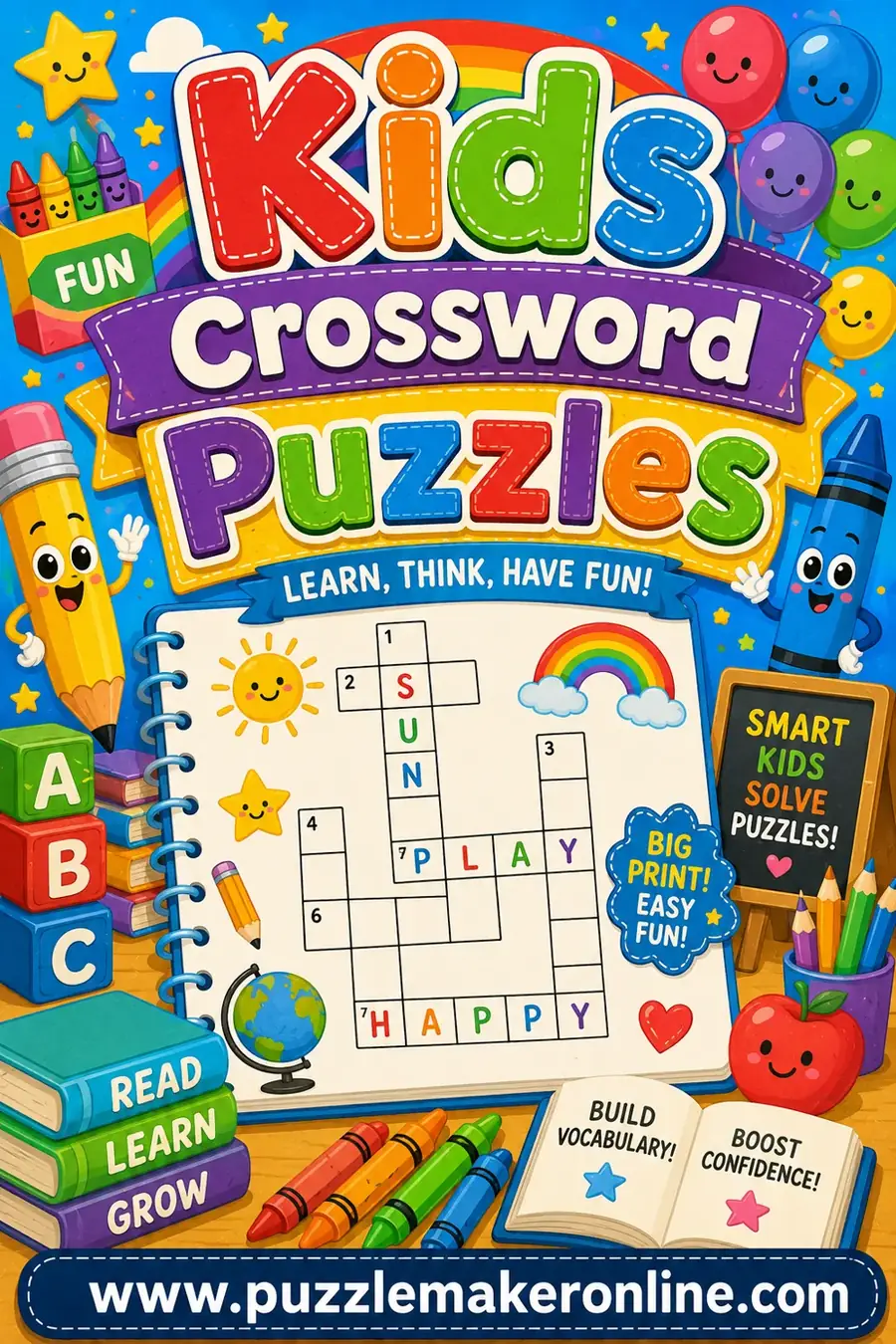
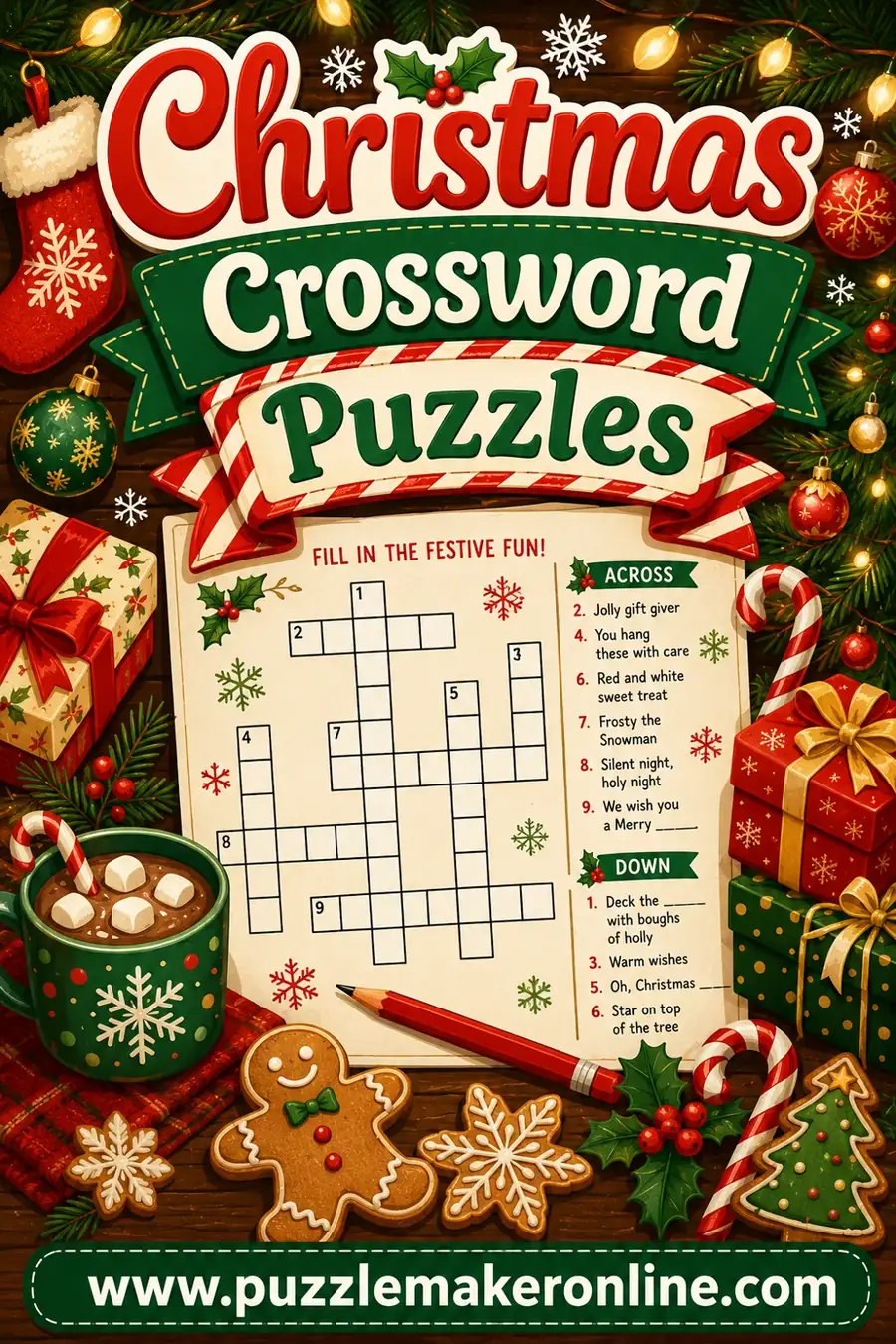
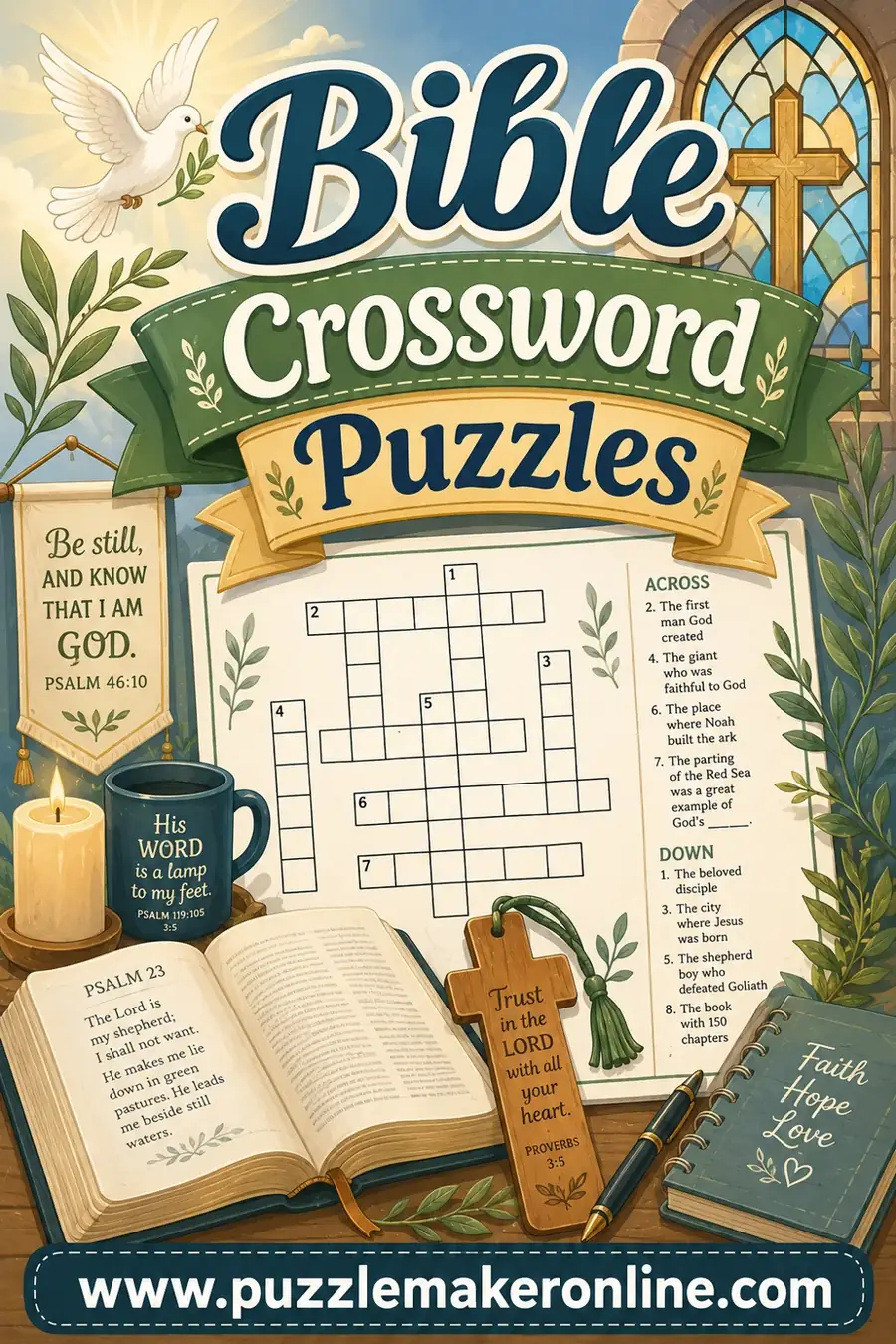
Love the easy approach? You can build the same beginner-friendly grids for other themes with our kids crossword, Christmas crossword, and Bible crossword ideas.
Frequently Asked Questions
What is an easy crossword?
An easy crossword is a small puzzle built from short, common words paired with plain, direct clues. It's designed so beginners, kids, and casual solvers can finish it without getting stuck. The puzzle maker lets you build one from your own simple word list in minutes.
How many words should an easy crossword have?
For most easy puzzles, aim for 12 to 18 words. Fewer than that and the grid feels empty; many more and it starts to feel like a challenge. Keep each word between 3 and 6 letters for the gentlest experience.
Are these easy crosswords free to print?
Yes. You build and print them yourself at no cost. There's no sign-up and no watermark, so you can make a whole stack for a class, a party, or your own quiet morning.
How do I make a crossword easier for kids?
Use very short words (3 to 4 letters), plain clues that define the word directly, and a smaller grid. Bigger squares and a larger font help young hands write their answers, and picture-friendly words like "cat" or "sun" are easiest to guess.
Can I add my own words to the crossword?
Absolutely. That's the whole point of making your own. Type in spelling words, vocabulary, names, or any theme you like, and the puzzle maker builds the grid and clues around your list automatically.
Do I get an answer key?
Yes. The tool generates an answer key alongside your puzzle, so you can check work or hand it out for self-checking. Print it on a separate page to keep the temptation to peek at bay.
Ready to Build Your Easy Crossword?
Grab the word list above, open the free puzzle maker, add a few plain clues, and you'll have a clean, beginner-friendly crossword in minutes. It's free, there's no sign-up, and you get an answer key with every puzzle. Pick your words, hit print, and let the solving begin.