Cryptogram Maker: Free Printable Puzzle Tool
A cryptogram maker is a free tool that turns a quote, phrase, or word list into a coded puzzle, where every letter is swapped for a different letter or symbol, and players crack the code to read the message. You type your text, the tool builds the cipher and an answer key, and you print. It's the easiest way to make a satisfying brain teaser without working out the code by hand.
Want to skip ahead and just make one? Open the free cryptogram maker, paste in a quote or word list, and print as many copies as you need. No sign-up, no fee, nothing to install.
What Is a Cryptogram?
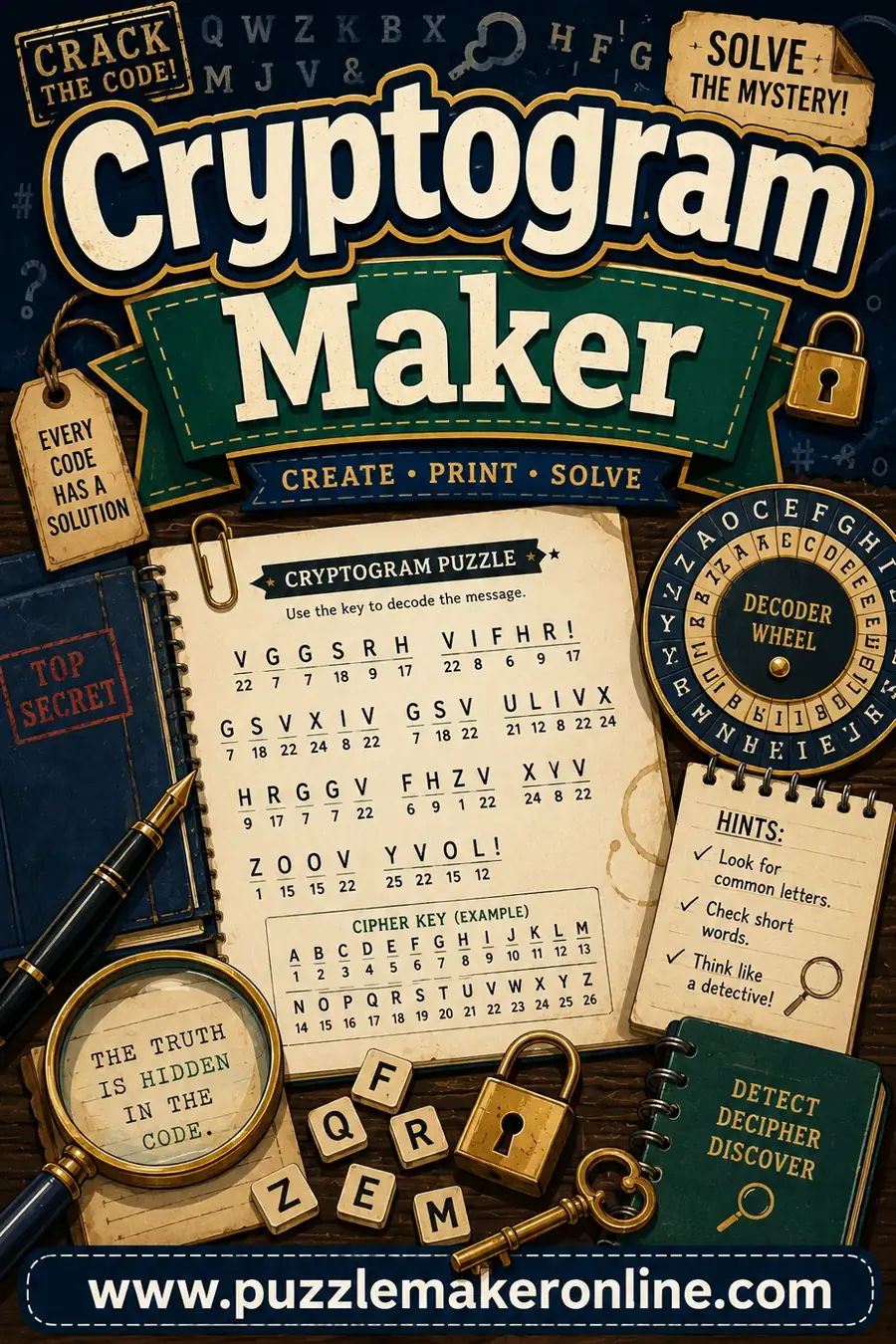
A cryptogram is a short piece of text encoded with a simple substitution cipher. Every "A" might become a "Q," every "B" a "T," and so on, consistently throughout the message. To solve it, you look for patterns, common short words like "THE" or "AND," repeated letters, and the apostrophe in contractions, and slowly decode the whole thing.
A cryptogram maker handles the hard part: it scrambles the alphabet, applies the substitution to your text, and gives you a clean puzzle plus an answer key. You don't have to invent a cipher or check it by hand. You just supply the message.
Cryptograms come in a couple of common styles:
- Letter substitution. Each letter is replaced by another letter. The classic newspaper style.
- Symbol substitution. Letters become symbols or shapes. Popular for kids and themed puzzles.
- Number codes. Each letter maps to a number (A=1, B=2, or a scrambled order). Great for math-flavored fun.
Why Use a Cryptogram Maker Instead of Doing It by Hand
You could build a cipher with paper and patience, but a maker beats it for three reasons.
- It's instant. Encoding a quote by hand and checking every letter is slow and error-prone. The tool does it in a click.
- The code is consistent. One slip in a hand-made cipher breaks the whole puzzle. A cryptogram maker applies the substitution perfectly.
- You get the answer key automatically. No decoding your own puzzle to make a key, the tool prints the original text and the cipher alongside.
It's also free and needs no install. You go from a favorite quote to a finished, printable cryptogram in under five minutes.
Free Cryptogram Content Ideas (Copy & Paste)
Cryptograms work best with short, recognizable phrases or themed word lists. Here are 30 ready-to-use seeds, sorted by use. Drop a quote or a column of words into the maker to start.
| Short Quotes | Holiday Phrases | Themed Words |
|---|---|---|
| Knowledge is power | Happy new year | Cipher |
| Practice makes perfect | Trick or treat | Decode |
| Better late than never | Season of giving | Secret |
| Honesty is the best policy | Home for the holidays | Mystery |
| Actions speak louder | Sweethearts forever | Pattern |
| Every cloud has a lining | Give thanks today | Message |
| Look before you leap | Lucky four leaf clover | Hidden |
| The early bird wins | Springtime is here | Riddle |
| Slow and steady wins | Summer fun ahead | Puzzle |
| Where there is a will | Cozy autumn nights | Treasure |
Pick a quote for a single-puzzle sheet, or use a column of themed words for a multi-word cryptogram. Short, familiar phrases are easier to crack, which makes them ideal for beginners.
Theme ideas to try
- Inspirational quotes. A coded motivational line for a classroom or office bulletin.
- Holiday messages. Encode a festive greeting for a party or card.
- Secret messages. Build a coded note for a scavenger hunt or escape-room game.
- Vocabulary review. Encode subject terms so students decode and study at once.
How to Make a Cryptogram in 4 Steps
You don't need any tech skills. Here's the whole process.
- Choose your text. Pick a short quote or a list of themed words. Shorter is easier to solve.
- Paste it in. Drop the text into the cryptogram maker.
- Choose your settings. Pick letter, symbol, or number code, decide whether to include a starter hint, and generate the answer key.
- Print. Hit print, grab your stack, and you're ready.
That's it. To reuse a cryptogram, slip the sheet into a clear sleeve so solvers can work with a dry-erase marker.
Setting the Right Difficulty
A cryptogram should challenge the solver without crushing them. Here's how to dial in the difficulty.
| Solver | Setting | Tips |
|---|---|---|
| Kids (8–10) | Symbol code, 1 short word | Decode a single word like CANDY. Add a letter hint. |
| Tweens (11–13) | Short phrase | Use a familiar 3–5 word saying. Reveal one letter. |
| Teens & adults | Full quote | A 6–12 word quote is the classic challenge. |
| Puzzle fans | Long quote, no hints | Longer text with no starter letters. |
| Mixed groups | Short phrase + hint | Give one or two decoded letters so everyone can start. |
A great way to ease beginners in: reveal one or two letters up front, like the most common one. It gives solvers a foothold without giving away the whole code.
Where a Cryptogram Maker Comes in Handy
Because it turns any text into a puzzle, this tool fits a lot of settings. A few favorites:
Classrooms
Cryptograms sharpen logic and pattern recognition. Encode a famous quote tied to your lesson, a line from a novel, a historical motto, a science fact, and students decode it as a warm-up. It's critical thinking dressed up as a game, and it works across subjects.
Escape rooms and scavenger hunts
A coded message is a perfect clue for a homemade escape room or party hunt. Hide the cipher key in one spot and the cryptogram in another, and watch players race to decode the next location. Cryptograms add an instant layer of mystery.
Quiet brain teasers
For adults who love a mental workout, a cryptogram is a satisfying solo puzzle, like a crossword that you have to decode first. Print a few favorite quotes and keep them by the coffee table for downtime.
Greeting cards and bulletins
Encode a birthday message or a holiday greeting and turn an ordinary card into a tiny puzzle. It's a memorable touch for newsletters, bulletins, and personal notes alike.
Printing Tips for Clean, Reusable Sheets
A few small choices make a big difference.
- Print in black and white to save ink. Cryptograms read fine without color.
- Use a monospace font. Fixed-width letters line up the code neatly under each blank, which makes solving much easier.
- Keep the answer key separate. Print the solution and cipher on their own page so you can hand out puzzles without spoiling them.
- Leave room to write. Make sure there's a blank above each coded letter so solvers can pencil in guesses.
- Test one copy first. Print a single sheet to check spacing and margins before the full stack.
What to hand out with the sheets
You don't need much:
- Pencils with good erasers (decoding means lots of guessing and crossing out)
- A starter hint or two, if your group is new to cryptograms
- The answer key, kept aside for checking
- Clipboards if solvers are roaming
Fun Ways to Use a Cryptogram
Once you've got the basics down, try these twists.
- Race to decode. First solver to crack the message wins a small prize.
- Team relay. Each team member decodes a few letters, then passes it on.
- Coded scavenger hunt. Each solved cryptogram reveals the next clue's location.
- Daily quote. Post one coded quote a day on a classroom or office board.
The scavenger-hunt idea is a hit at parties and team events, since a decoded message feels like a real discovery.
How to Solve a Cryptogram (A Quick Guide for Beginners)
If you're making cryptograms for a group that's new to them, it helps to hand out a few tricks alongside the puzzle. Cracking a code feels like magic until you know the patterns, and then it clicks. Here's the short version you can pass along.
Start with the little words
One-letter words are almost always "A" or "I." Three-letter words are very often "THE," "AND," or "FOR." Find those early and you've decoded several letters in one move. From there, those letters appear elsewhere in the message and the puzzle starts to unravel.
Hunt for repeated letters
The most common letter in English is "E," followed by "T," "A," and "O." If one coded letter shows up far more than the rest, it's a strong bet for "E." Doubled letters in a word are usually "LL," "SS," "EE," or "OO." These frequency clues give you footholds even with no hints.
Use the apostrophe
The letter right after an apostrophe is almost always "T" (as in "don't"), "S" (as in "it's"), or "RE" and "LL" in contractions. An apostrophe is a gift, since it narrows the possibilities fast.
Guess words, then confirm
Once you've got a few letters, start guessing whole words and pencil them in lightly. If a guess makes the surrounding words spell out nicely, you're on track. If it creates nonsense, erase and try again. Cryptograms reward patient trial and error, which is exactly why a pencil with a good eraser matters.
Work in pencil and stay loose
Every solve involves wrong turns. The fun is in the gradual reveal, so encourage solvers to treat dead ends as part of the game, not a failure. A starter hint or two, revealed up front, keeps newcomers from giving up before that first satisfying break.
What Makes a Good Cryptogram Message
The puzzle is only as good as the text you feed it. A few choices make a cryptogram far more satisfying to crack.
- Keep it short for beginners. A 3-to-5-word phrase is plenty for a first solve. Save long quotes for experienced puzzlers.
- Pick familiar phrases. A well-known saying gives solvers a sense of "I almost have it" as the words emerge, which is the whole appeal.
- Avoid rare letters early. A message stuffed with Q, X, and Z is harder to crack because the common-letter tricks don't apply. Natural sentences work best.
- Include common short words. Text with plenty of "the," "and," and "is" gives solvers more entry points than a string of long, unusual words.
Cryptogram vs. Other Puzzle Types
Wondering whether a cryptogram is the right pick? Here's how it compares to the other puzzles you can build.
- Cryptogram. A logic and pattern puzzle. Best for older solvers who want a real mental challenge.
- Word scramble. Faster and simpler, since you're rearranging known letters, not decoding a cipher.
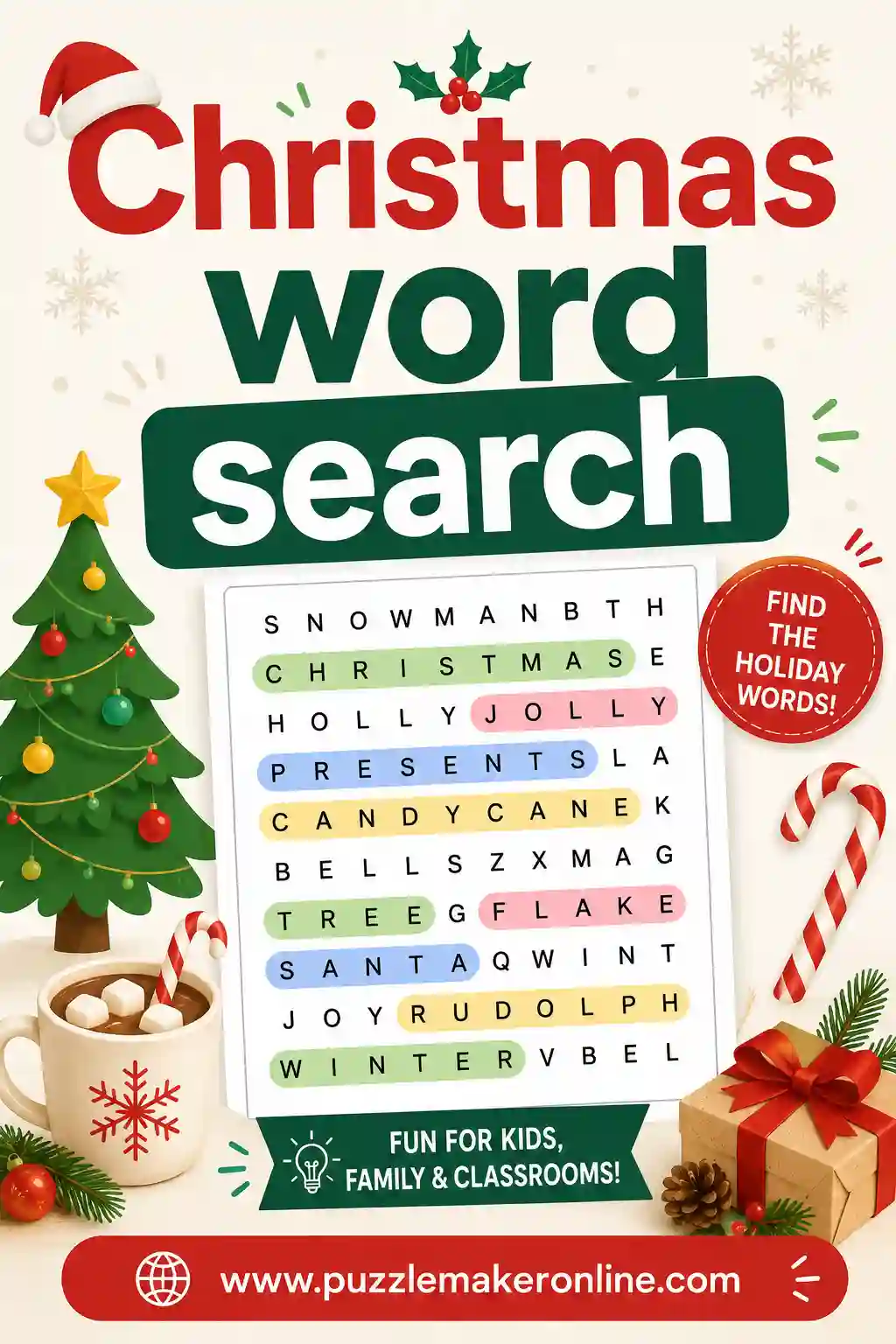
- Word search. The calmest option, great for word recognition and younger players.
- Crossword. A clue-based challenge that tests vocabulary and meaning rather than code-cracking.
If you want the toughest brain teaser, a cryptogram delivers. For something lighter, the same puzzle maker also builds scrambles, word searches, and crosswords from your text.
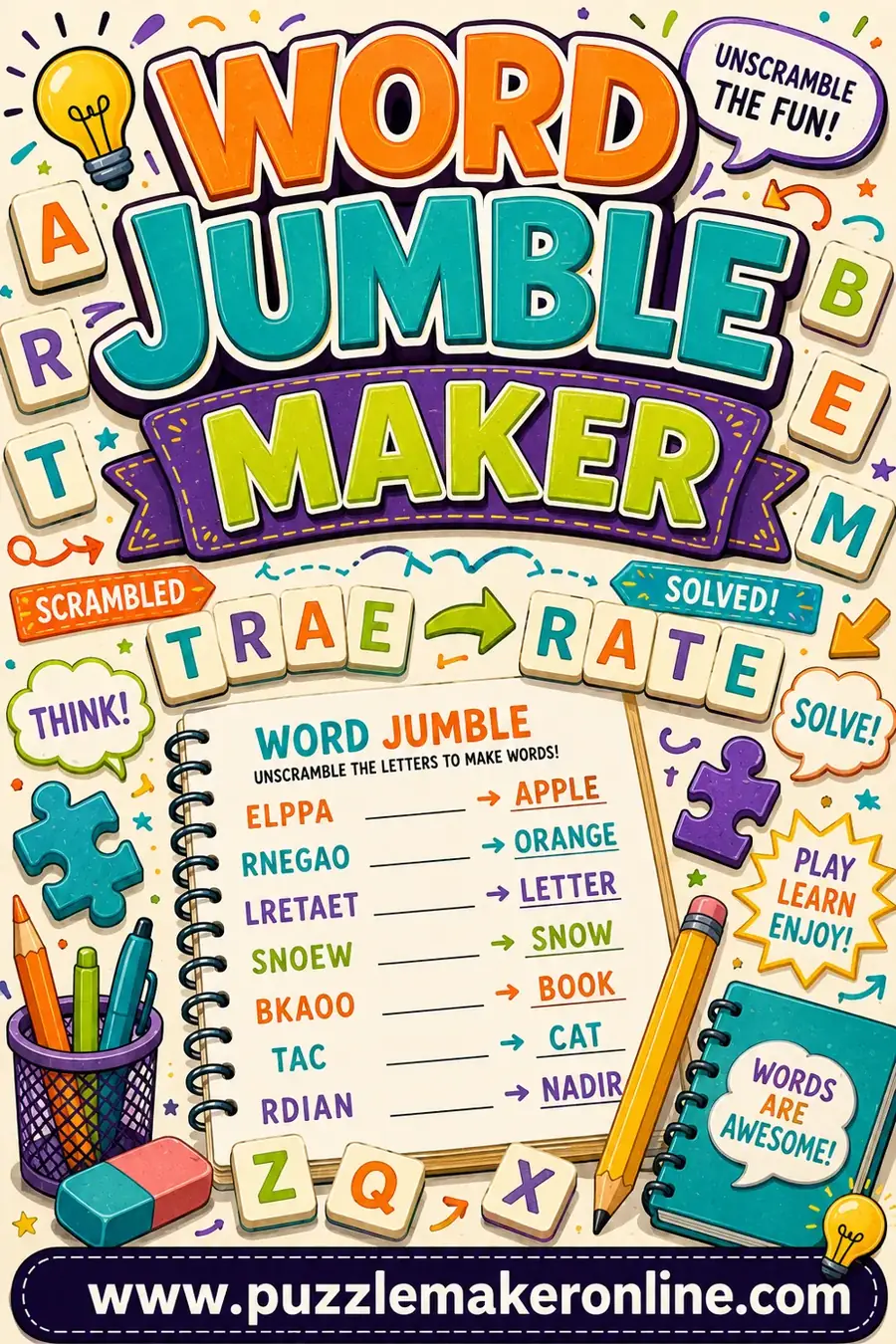
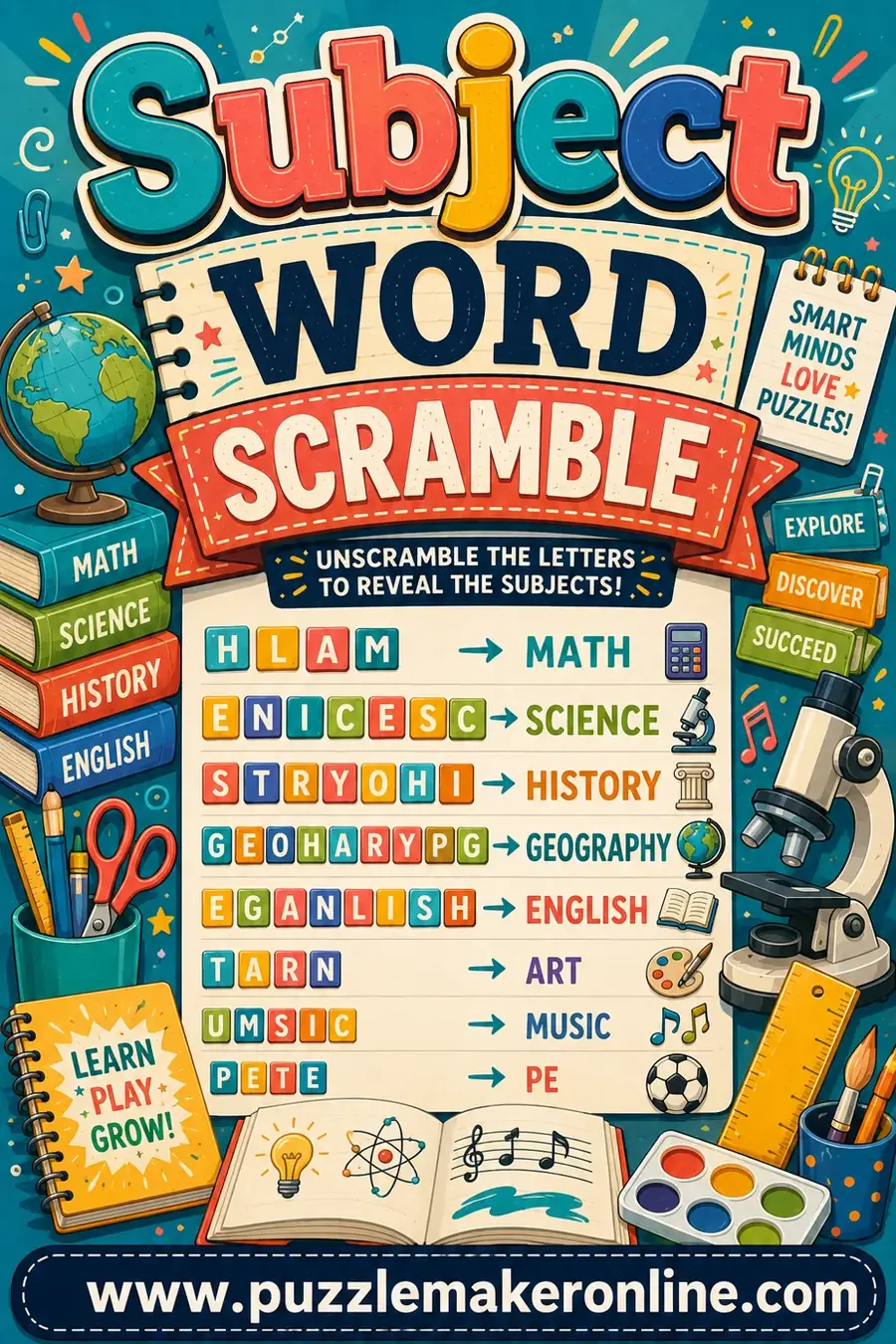
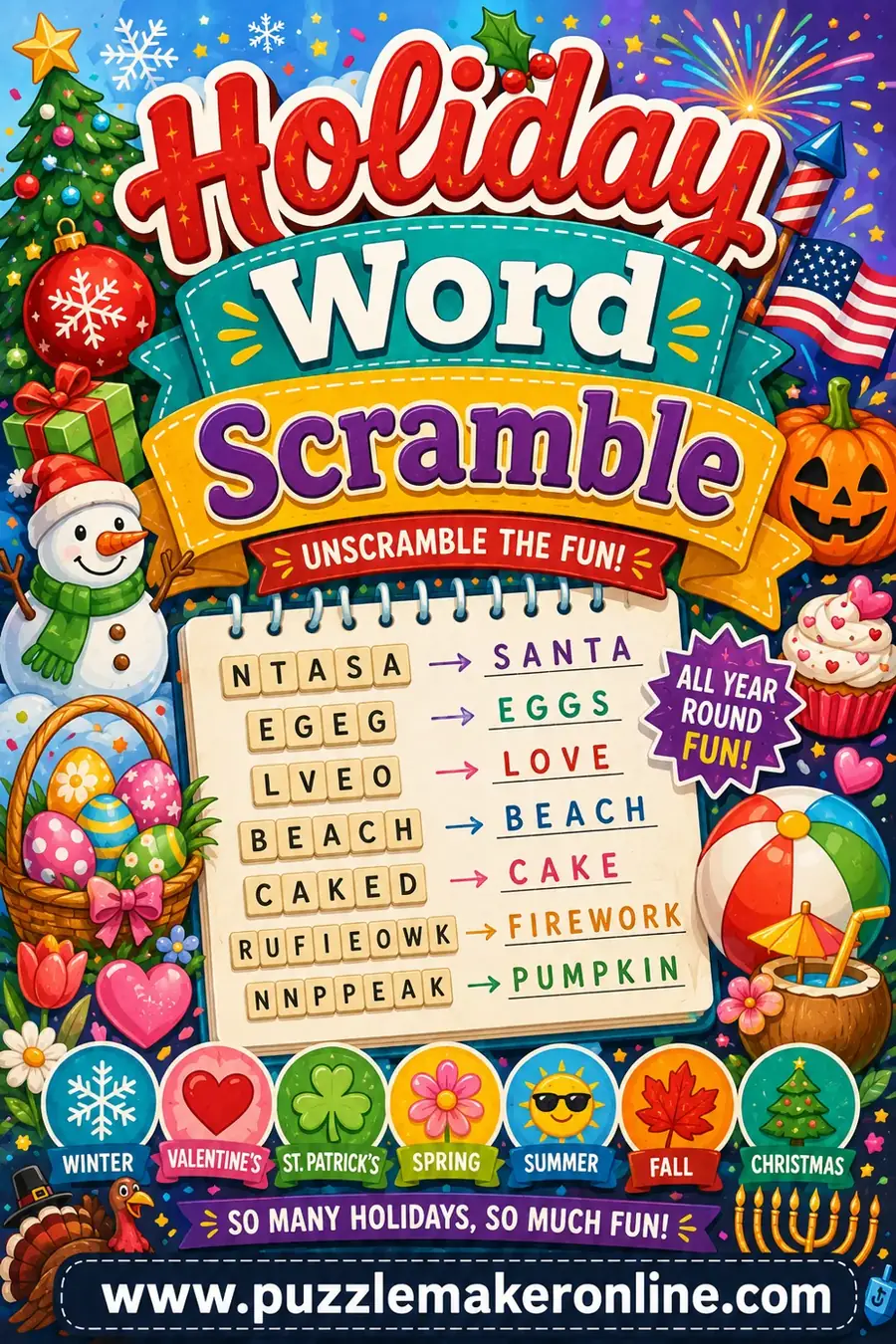
Loving the coded-puzzle idea? Mix it up with the all-purpose word jumble maker, a subject word scramble for review, or a festive holiday word scramble.
Frequently Asked Questions
What is a cryptogram maker?
It's a free tool that turns a quote, phrase, or word list into a coded puzzle by swapping each letter for a different letter, symbol, or number. You paste your text and the maker builds the cipher and a matching answer key.
How long should a cryptogram be?
For most solvers, a short quote of 6 to 12 words is the sweet spot. Beginners do better with a single phrase of 3 to 5 words. The tool handles any length, so match it to your audience.
Is the cryptogram maker really free?
Yes. You make and print the puzzles yourself at no cost. There's no sign-up and no watermark, so you can build as many cryptograms as you like from your own quotes and word lists.
Can I use letter, symbol, or number codes?
You can. The maker supports letter substitution (the classic style), symbol codes (fun for kids), and number codes (a math-flavored twist). Pick whichever fits your solvers.
Does it include an answer key?
Yes. The original message and the full cipher print on a separate page automatically, so you can hand out puzzles without spoiling them and still check work quickly.
How do beginners solve a cryptogram?
Start with short common words. A single letter is usually "A" or "I," a three-letter word is often "THE" or "AND," and the letter before an apostrophe is frequently "T" or "S." Revealing one or two letters up front gives newcomers an easy foothold.
What age is a cryptogram good for?
Letter-substitution cryptograms suit roughly age eleven and up, since they need reading and a bit of logic. For younger kids, use a symbol code on a single short word and reveal a starter letter. Teens and adults can handle full quotes with no hints at all.
How do I make a cryptogram easier or harder?
To make it easier, keep the message short, pick a familiar phrase, and reveal one or two common letters up front. To make it harder, use a longer quote, switch to symbols, and give no starting hints. The maker lets you adjust all of this before you print.
Ready to Make Your Cryptogram?
Grab a quote or word list above, open the free cryptogram maker, and you'll have a printable coded puzzle, answer key included, in minutes. It's free, there's no sign-up, and you choose every word in the message. Paste your text and let the code-cracking begin.