Human Body Word Search: Free Printable Puzzles
A human body word search is a printable letter grid that hides anatomy words like "HEART," "FEMUR," "LUNGS," and "SKELETON" for kids to find and circle. It's a quiet, screen-free way to drill the parts of the body, the major organs, and the bones, and it makes vocabulary stick far better than reading a list. The fastest way to build one is to paste a body-parts word list into a free puzzle maker that hides your words and prints a clean worksheet with an answer key.
Just want to make one now? Open the free puzzle maker, drop in a list (there's a ready-made one below), and print as many puzzles as you need. No sign-up, no cost, nothing to download.
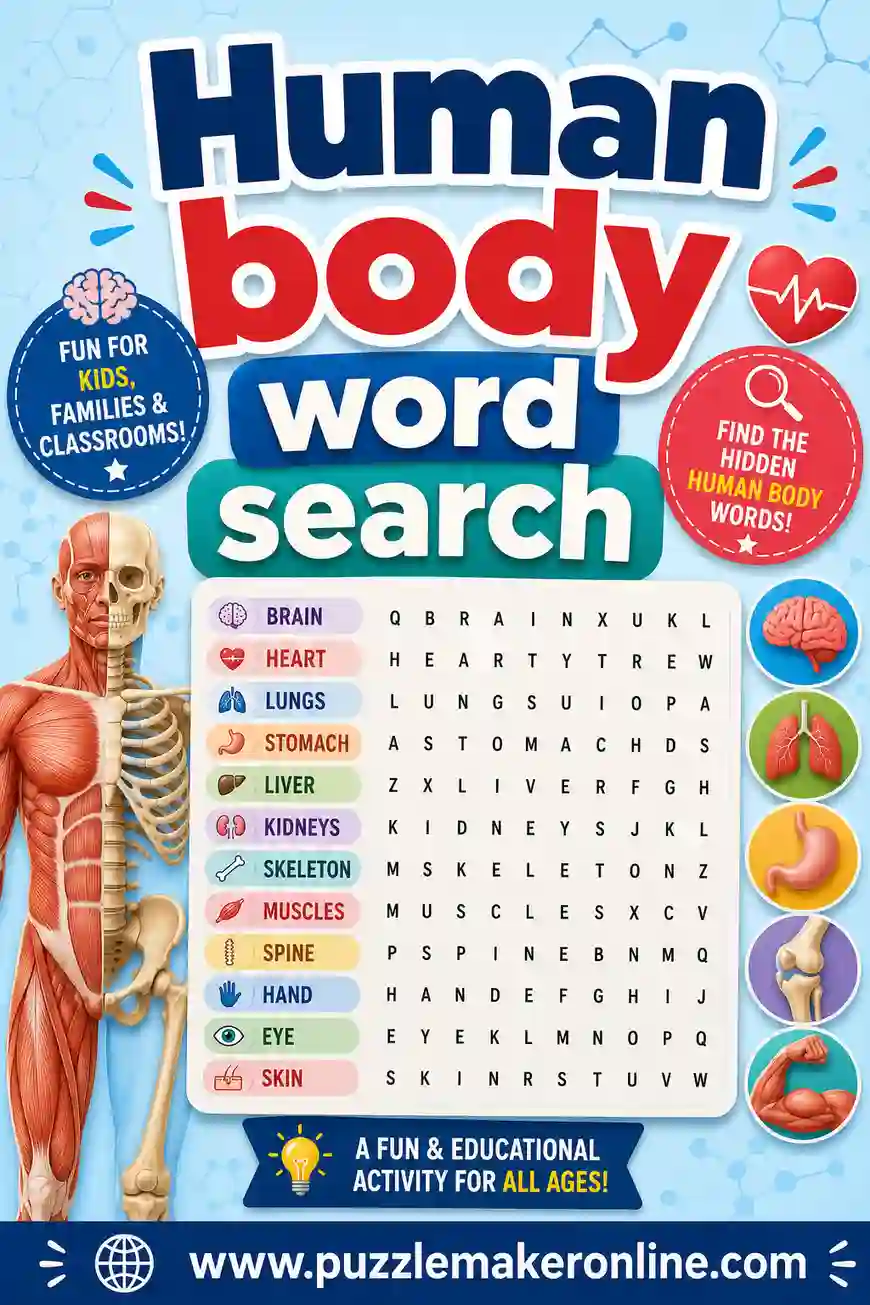
What Is a Human Body Word Search?
It's a word search built around anatomy. Instead of random vocabulary, the hidden words are parts of the body, organs, bones, or systems. A grid of letters holds words like "STOMACH," "TIBIA," and "ARTERY," and a word bank on the side tells the solver what to hunt for.
You can aim the puzzle at whatever you're teaching:
- Body parts. Simple, everyday words like arm, leg, hand, and foot. Perfect for little kids.
- Organs. Heart, lungs, liver, kidney, brain, stomach. A great fit for an elementary science unit.
- Bones. Femur, tibia, skull, rib, spine. Pairs beautifully with a skeleton diagram.
- Body systems. Nervous, digestive, circulatory. Best for middle school and up.
As students scan the grid, they read each tricky spelling several times. That repetition is exactly why "ESOPHAGUS" finally sticks after a puzzle, even when a textbook list didn't do the trick.
Why a Word Search Works So Well for Anatomy
Anatomy is heavy on spelling. The words are long, unfamiliar, and easy to mangle. A word search turns that challenge into a game.
- It drills spelling painlessly. To find "DIAPHRAGM," a student has to match it letter by letter. That's spelling practice in disguise.
- It builds recognition. Seeing "VERTEBRA" in a grid helps kids recognize it later in a diagram or a test.
- It's calm and focused. No buzzers, no pressure. A solid choice for a settle-down activity or independent work.
- It's flexible. One word list, and you can make an easy version for Tuesday and a harder one for the Friday review.
Because you choose the words, the puzzle matches your lesson exactly, whether the class is on the skeletal system this week or the five senses.
Free Human Body Word List (Copy & Paste)
Here's a ready-to-go bank of 30 anatomy words, sorted so you can grab the right level fast. Copy any column into the puzzle maker. For young kids, pick 8 to 12 simple words. For older students, load 20 or more from the organ and bone columns.
| Body Parts | Organs | Bones & Muscles |
|---|---|---|
| Arm | Heart | Femur |
| Leg | Lungs | Tibia |
| Hand | Brain | Skull |
| Foot | Liver | Spine |
| Elbow | Kidney | Ribs |
| Knee | Stomach | Pelvis |
| Shoulder | Intestine | Vertebra |
| Ankle | Bladder | Biceps |
| Wrist | Pancreas | Tendon |
| Throat | Esophagus | Cartilage |
A note on spelling: word searches hide each word as a single run of letters, so multi-word terms like "small intestine" usually go in as "INTESTINE." Keep terms to one word where you can, and the grid stays clean.
Themed mini-lists to try
- The five senses: eyes, ears, nose, tongue, skin. A gentle starter for early grades.
- The face: lips, cheek, chin, brow, jaw, eyelash. Fun and very picture-able.
- The hand: thumb, finger, palm, knuckle, nail, wrist. A nice close-up unit.
- Inside the chest: heart, lungs, ribs, diaphragm, aorta. Great alongside a torso diagram.
How to Make a Human Body Word Search in 4 Steps
No design skills required. Here's the whole thing.
- Pick your words. Choose 10 to 25 anatomy terms and paste them into the generator.
- Set the grid size. Bigger grids hide more words and feel harder. Smaller suits younger learners.
- Choose difficulty. Allowing backward and diagonal words ramps up the challenge. Forward-only is kinder for early grades.
- Print. Out comes a clean worksheet plus an answer key. Run a few copies and the whole class is covered.
That's it. Print on plain paper for a one-time worksheet, or use a clear sleeve and dry-erase marker if you want to reuse the same grid.
Difficulty by Age and Topic
The same anatomy list can be gentle or genuinely tough depending on your setup. Use this guide.
| Age / grade | Grid size | Word count | Best word set |
|---|---|---|---|
| Ages 5–6 (K) | 8x8 | 6–8 | Simple body parts |
| Ages 7–8 (2–3) | 10x10 | 10–12 | Body parts + a few organs |
| Ages 9–11 (4–5) | 12x12 | 15–18 | Organs and major bones |
| Ages 12–14 (6–8) | 15x15 | 20–25 | Bones, muscles, systems |
| High school+ | 17x17 | 25–30 | Full anatomy vocabulary |
Pick a setting that's slightly easier than you expect. A puzzle that's too hard gets abandoned, while one that's a touch easy still teaches and keeps confidence high.
Fun Ways to Use the Puzzle
A human body word search can do more than fill five minutes. Some ideas that work in real classrooms and at home:
Pair it with a body diagram
Have students find "FEMUR" in the grid, then label the femur on a printed skeleton. The word and the location lock in together, which is far stronger than either one alone.
Use it as a vocabulary warm-up
Start a science lesson with a quick word search of the day's key terms. By the time you dive into the lesson, the words already feel familiar.
Make it a "find and define" challenge
For older students, add a twist: after finding each word, write a one-line definition next to it. Now the puzzle reinforces both spelling and meaning.
Send it home as screen-free homework
Parents love a homework page that doesn't need a device, and kids don't dread it because it plays like a game. A win for everyone.
Printing Tips for Clean, Usable Worksheets
A few small choices keep the puzzle easy to read.
- Print in black and white. Word searches read perfectly in grayscale and save your color ink.
- Keep letters roomy. If the grid looks cramped, trim a couple of long words so kids aren't squinting.
- Always include the answer key. You'll want it for grading, and it rescues any student stuck on one stubborn word.
- Test one copy first. Print a single page before a full class set to catch margin issues.
- Reuse with sleeves. Slide the puzzle into a clear sleeve so kids can solve with dry-erase markers, then wipe and go again.
Common Mistakes to Avoid
A few easy slips can turn a fun puzzle into a frustrating one.
- Too many long words at once. "CARTILAGE," "ESOPHAGUS," and "DIAPHRAGM" together crowd a small grid. Balance long words with short ones.
- Mixing levels carelessly. Don't drop "PANCREAS" into a kindergarten puzzle. Match the words to the age.
- Skipping the word bank. Younger solvers need the list of what to find. Always include it.
- One grid size for all. A 15x15 grid overwhelms a 6-year-old. Size the puzzle to the learner.
Beyond the Word Search: Other Puzzles for the Same Words
A word search is the easiest entry point, but the same anatomy list powers two other printable puzzles. Switching formats keeps practice fresh, because each one works the brain a little differently.
Turn it into a crossword
A crossword asks students to recall a word from a clue instead of spotting one they can already see. A clue like "The organ that pumps blood" with five boxes nudges a student toward "HEART." That recall step is tougher than a find, which makes a crossword the perfect next stage once the word search feels easy.
Strong clues for a human-body crossword include:
- "You breathe with these" for lungs.
- "The longest bone in your body" for femur.
- "It controls everything you think and do" for brain.
Try a word scramble for quick review
A word scramble is the fastest of the three to make and solve. You take "SKULL," jumble it into "LSKLU," and the student unscrambles it. It's ideal for a five-minute warm-up or an exit ticket. Run a scramble of ten body parts in the time it takes the class to settle. The mini-tool near the top of this page shows exactly how that feels.
Cycling the same anatomy words through a word search, a crossword, and a scramble across one week means students meet each term several times, in three formats. That varied repetition is what turns a shaky "is the femur the arm one?" into solid, test-ready knowledge.
Frequently Asked Questions
How many words should a human body word search have?
For most lessons, 10 to 20 words works well. Young kids do best with 6 to 10 simple body parts, while older students can handle 25 to 30 anatomy terms. The puzzle maker loads any number and sizes the grid to fit.
What words go on a human body word search?
Use parts of the body, organs, bones, or systems, depending on your topic. The copy-and-paste list above gives you 30 ready to go, split into easy body parts, organs, and bones so you can grab the right level fast.
Are these word searches really free to print?
Yes. You build and print them yourself at no cost, with no sign-up and no watermark. A single free word list can cover an entire anatomy unit.
How do I handle long anatomy terms?
Long words like "ESOPHAGUS" are fine, but stack too many in a small grid and it gets cramped. Mix long and short terms, or bump up the grid size. Multi-word terms work best as a single word, like "INTESTINE."
Can I make a harder version for older students?
Definitely. Use a bigger grid, load more words, and allow words to run backward and diagonally. Switch to bones, muscles, and body systems for a real challenge.
Can I reuse the same puzzle?
Yes. Print the same word list again and the generator shuffles it into a fresh grid layout, so it feels new. Or slip one copy into a clear sleeve and let students solve it with dry-erase markers.
Ready to Print Your Human Body Word Search?
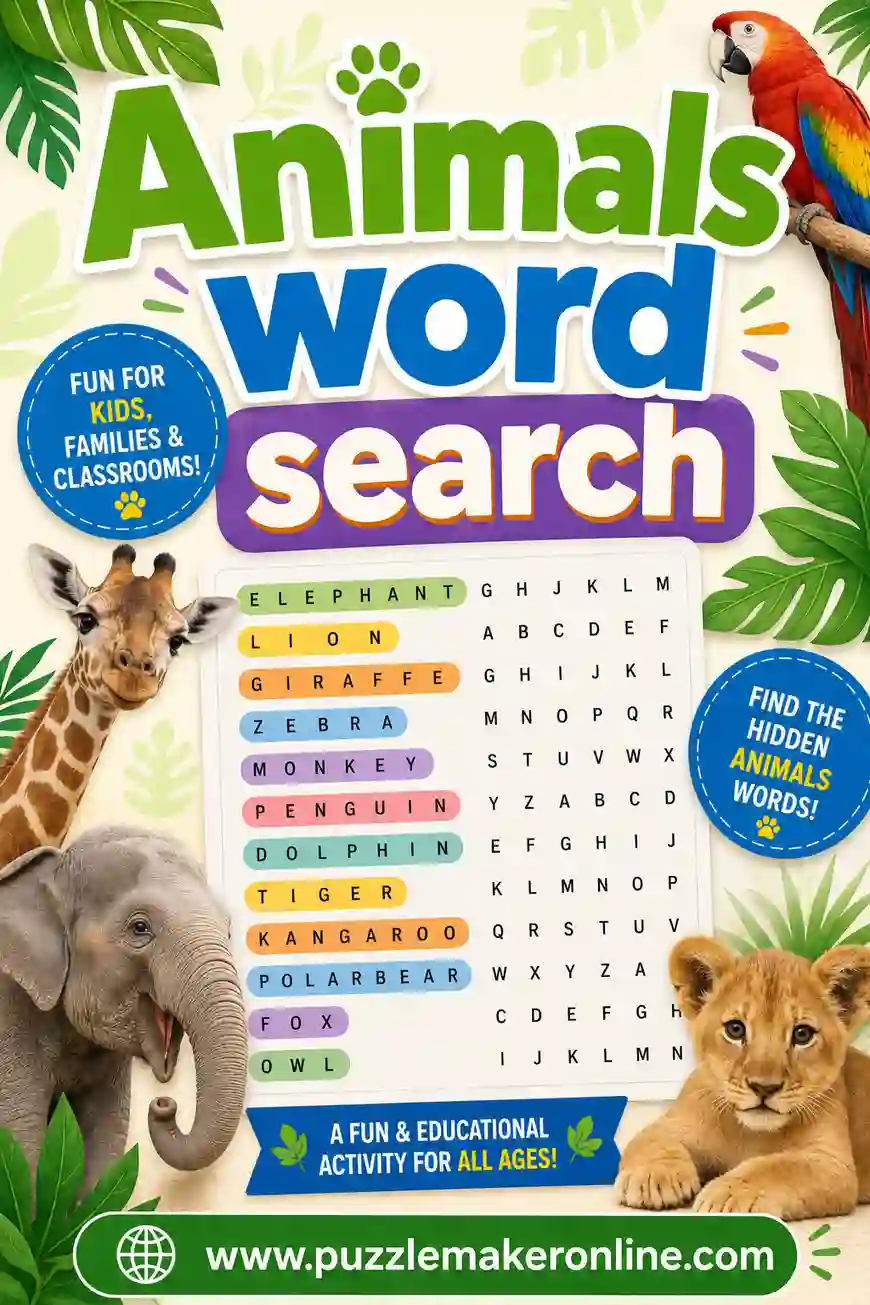
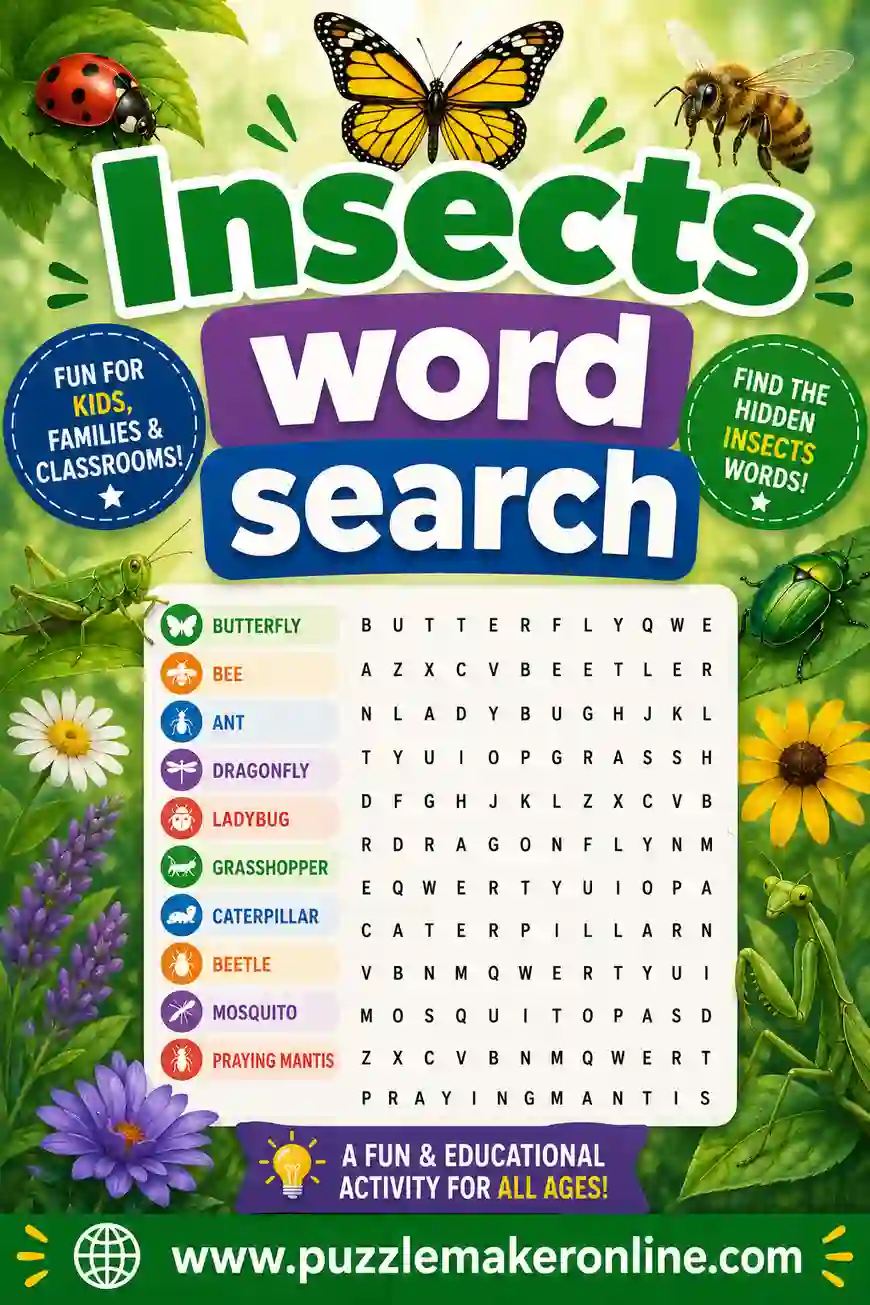
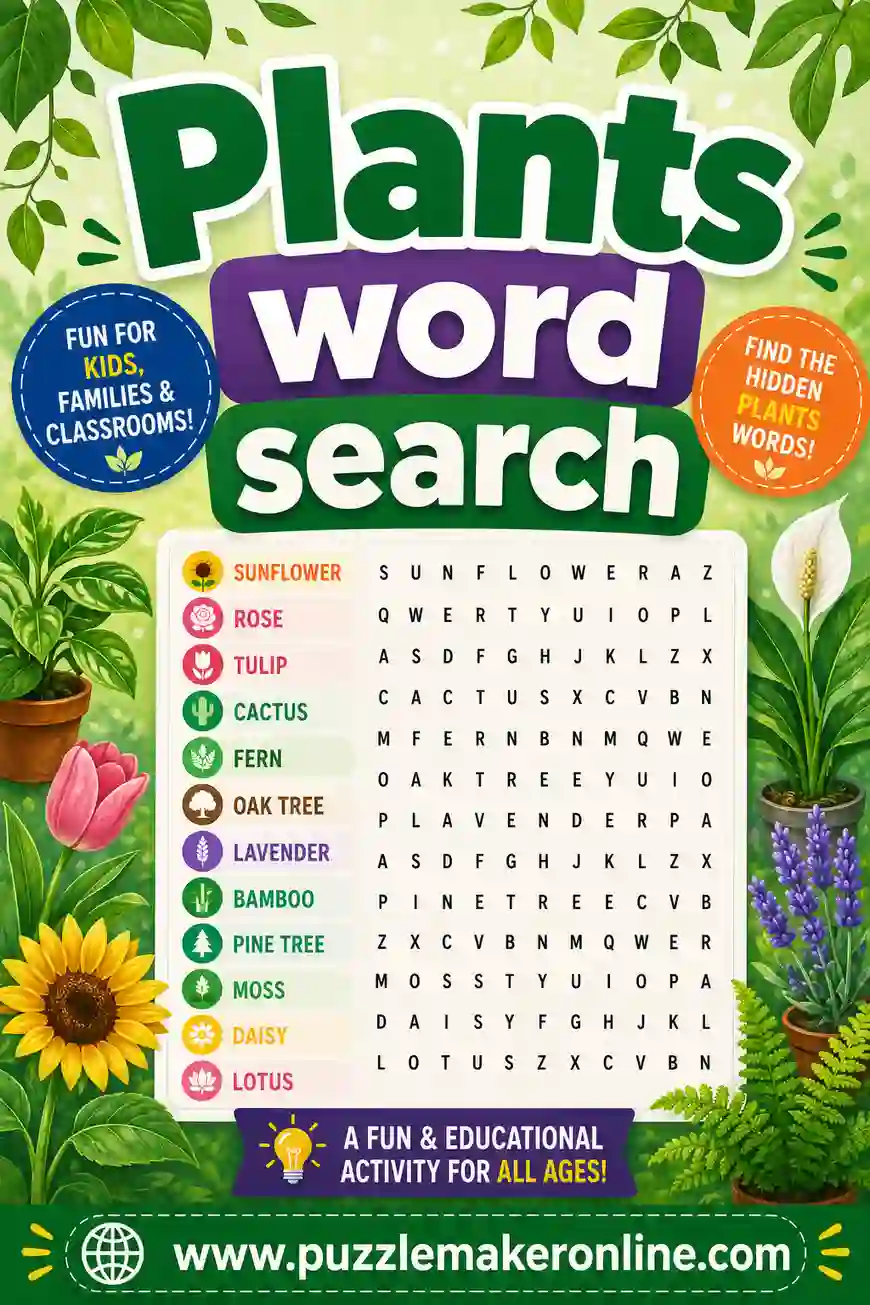
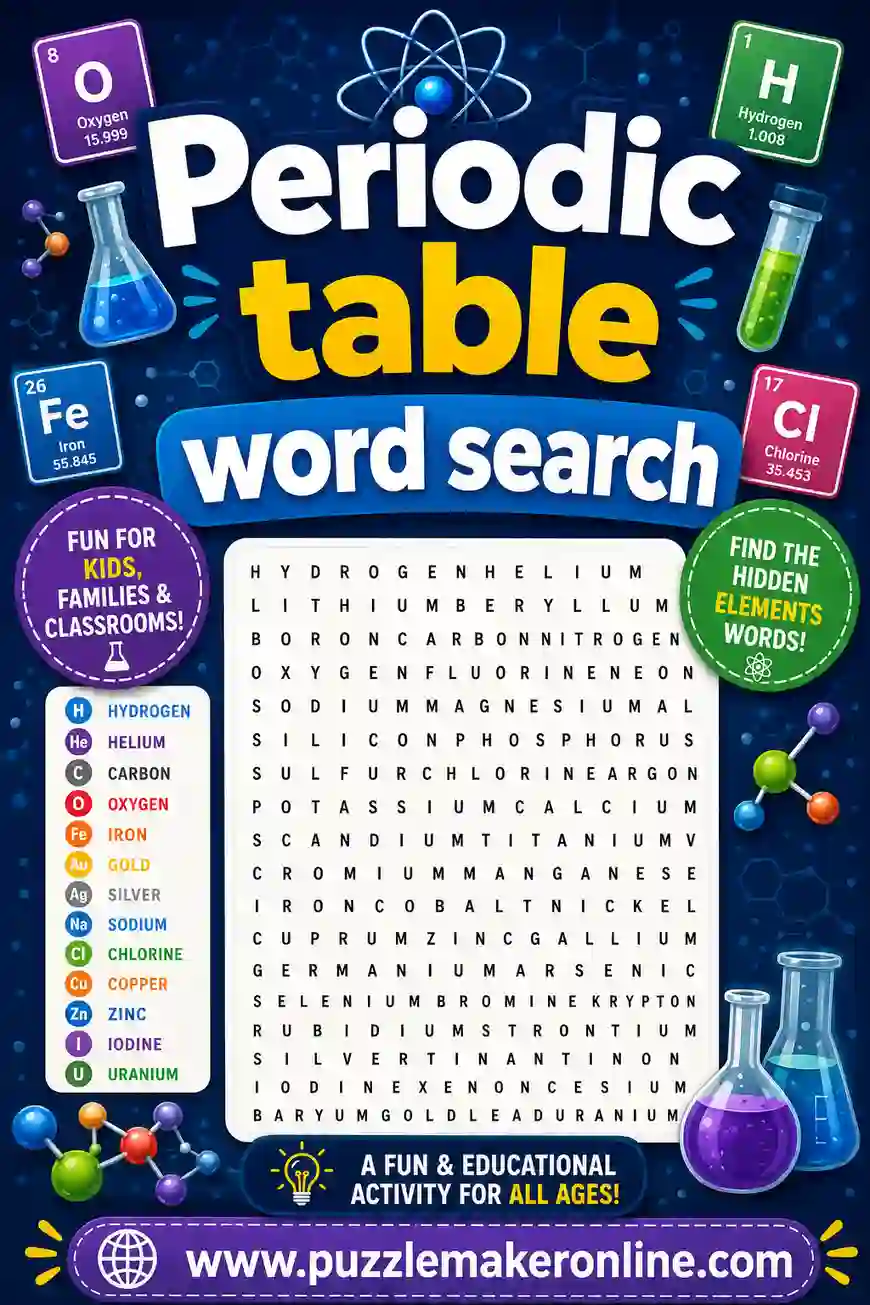
Grab the word list above, open the free puzzle maker, and you'll have a printable human body word search in minutes. It's free, there's no sign-up, and every print can be a little different, so it's ideal for warm-ups, reviews, and homework. Want more science puzzles? Try our animals word search, insects word search, plants word search, or periodic table word search. Happy puzzling.