Puzzles for Classroom Centers: Free Printable Word Games
Puzzles for classroom centers are printable word searches, crosswords, and word scrambles that students complete independently at a station while you work with other groups. They're self-running, they reinforce spelling and vocabulary, and they keep a center quiet and on-task. The fastest way to build a set is a free puzzle maker that turns your unit words into a clean, printable sheet you can run for the whole class.
Want to set one up now? Open the free puzzle maker, paste in your word list (there's a ready-made one below), pick word search, crossword, or scramble, and print a class set. No sign-up, no software, and it's free.
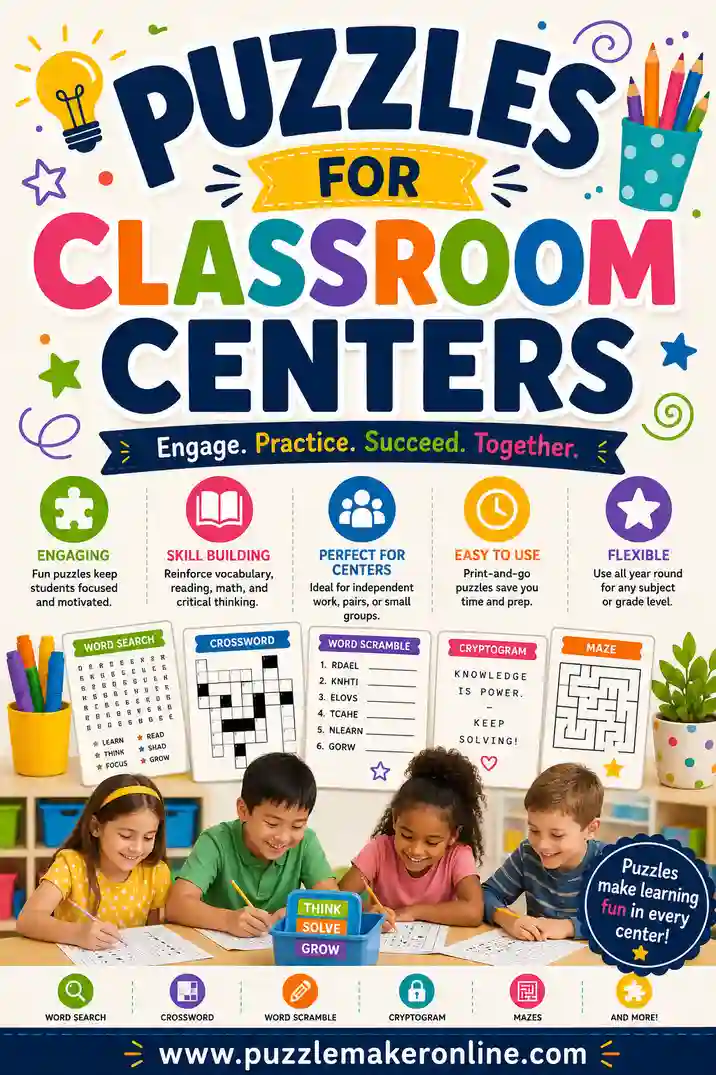
Why Puzzles Are Perfect for Centers
Centers live or die on one thing: can students do them without you? A great center activity is clear, self-checking, and engaging enough that kids stay on task while you run a small group across the room. Word puzzles tick every box. The instructions are obvious, the answer key makes them self-checking, and a good word search holds attention without a teacher hovering.
Here's why teachers keep puzzles in rotation:
- They run themselves. Students know exactly what to do. No re-teaching, no hand-holding.
- They're self-checking. Add an answer key and the center grades itself, freeing you to focus elsewhere.
- They reinforce the unit. Build them from spelling lists or vocabulary so the center supports your teaching.
- They're low-prep and free. Print a stack once and the center is stocked for the week.
You also control the words, so a center can target exactly the skill your class is working on, from sight words to content vocabulary.
Best Puzzle Types for Centers
You've got three formats, and you can make all three from one word list in the puzzle maker.
Word search
The reliable independent station. Students hunt for words in a grid, building spelling and word recognition. There's nothing to grade closely, it suits a wide range of readers, and it keeps a center calm and focused. This is your everyday workhorse.
Crossword
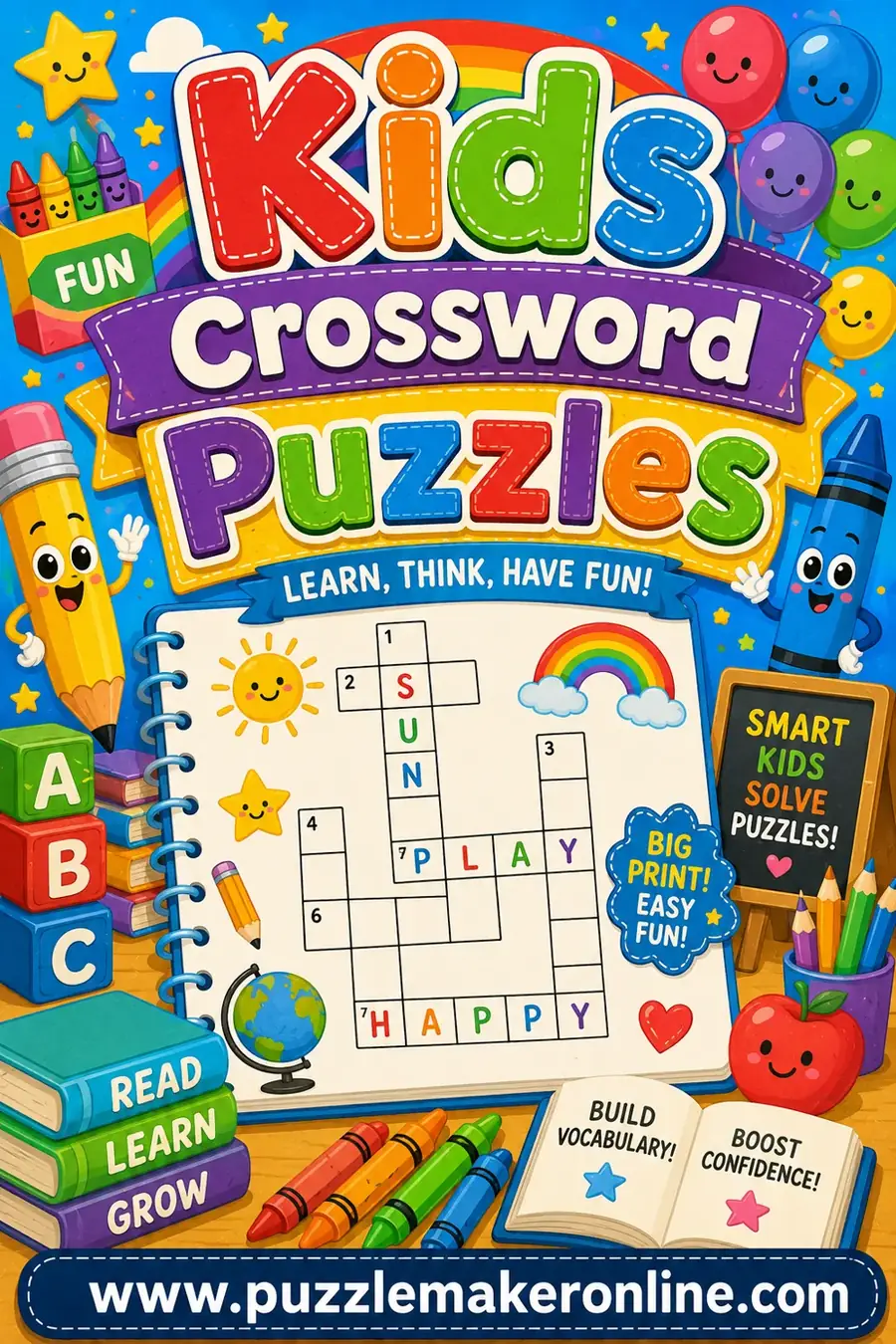
A meaning-and-spelling combo. Crosswords pair a clue with an answer, so students practice vocabulary and spelling together. They work best once kids read clues independently. Our kids crossword shows the right level for younger grades.
Word scramble
Fast, focused spelling practice. Scrambles ask students to rebuild a word, which drills tricky spellings. They're quick to finish, so they fit a short rotation or an early-finisher slot.
A Ready-to-Use Classroom Word List (Copy & Paste)
Here's a flexible set of 30 classroom words you can drop into the puzzle maker. Use the whole set for a word search, pick 10 to 15 for a crossword, or grab any 6 for a scramble. Swap in your unit words for a perfect fit.
| Literacy | Math & Science | School Life |
|---|---|---|
| Reading | Number | Pencil |
| Spelling | Pattern | Teacher |
| Vowel | Measure | Library |
| Syllable | Science | Recess |
| Sentence | Magnet | Backpack |
| Author | Planet | Notebook |
| Rhyme | Weather | Calendar |
| Story | Animal | Schedule |
| Letter | Plant | Lunchbox |
| Vocabulary | Liquid | Classroom |
Mix words across the columns to match your week. For the tightest fit, replace these with your actual spelling list or content vocabulary.
How to Build a Puzzle Center in 5 Steps
No prep skills needed. Here's the whole flow.
- Pick the skill. Spelling words, sight words, or unit vocabulary, depending on what you're teaching.
- Choose a format. Word search for independence, crossword for meaning, scramble for spelling drills.
- Paste your words. Drop them into the puzzle maker. Match word length to your grade level.
- Print the puzzle and the key. The answer key makes the center self-checking.
- Set up the station. Stack the sheets, add pencils, and clip the directions where kids can see them.
That's it. Most teachers go from idea to a stocked center in under ten minutes.
Setting Up a Self-Running Station
A center works when students can run it without you. A few small setups make that happen.
- Post clear directions. One short sign: "Find all the words, then check the answer key." Less is more.
- Make it self-checking. Put the answer key in a folder at the station so kids verify their own work.
- Stock the supplies. A cup of pencils, highlighters for circling, and a tray for finished sheets.
- Set the expectation. Quiet voices, work alone or with a partner, finish before you rotate. Teach it once, then it runs.
Tie it to your rotation
Slot the puzzle center into your usual rotation alongside reading and writing stations. Time it for the length of one small-group session so students finish about when you rotate. A word search runs five to ten minutes; a crossword runs longer.
Differentiating Within One Center
Not every student is at the same level. The beauty of the puzzle maker is you can build several versions from one word list.
| Group | Best puzzle | Adjustments |
|---|---|---|
| Below level | Easy word search | Fewer, shorter words, large grid |
| On level | Word search or scramble | Grade spelling list |
| Above level | Crossword | Vocabulary with meaning clues |
| Early finishers | Bonus scramble | Extra challenge words |
| English learners | Picture-supported word search | Concrete, high-frequency words |
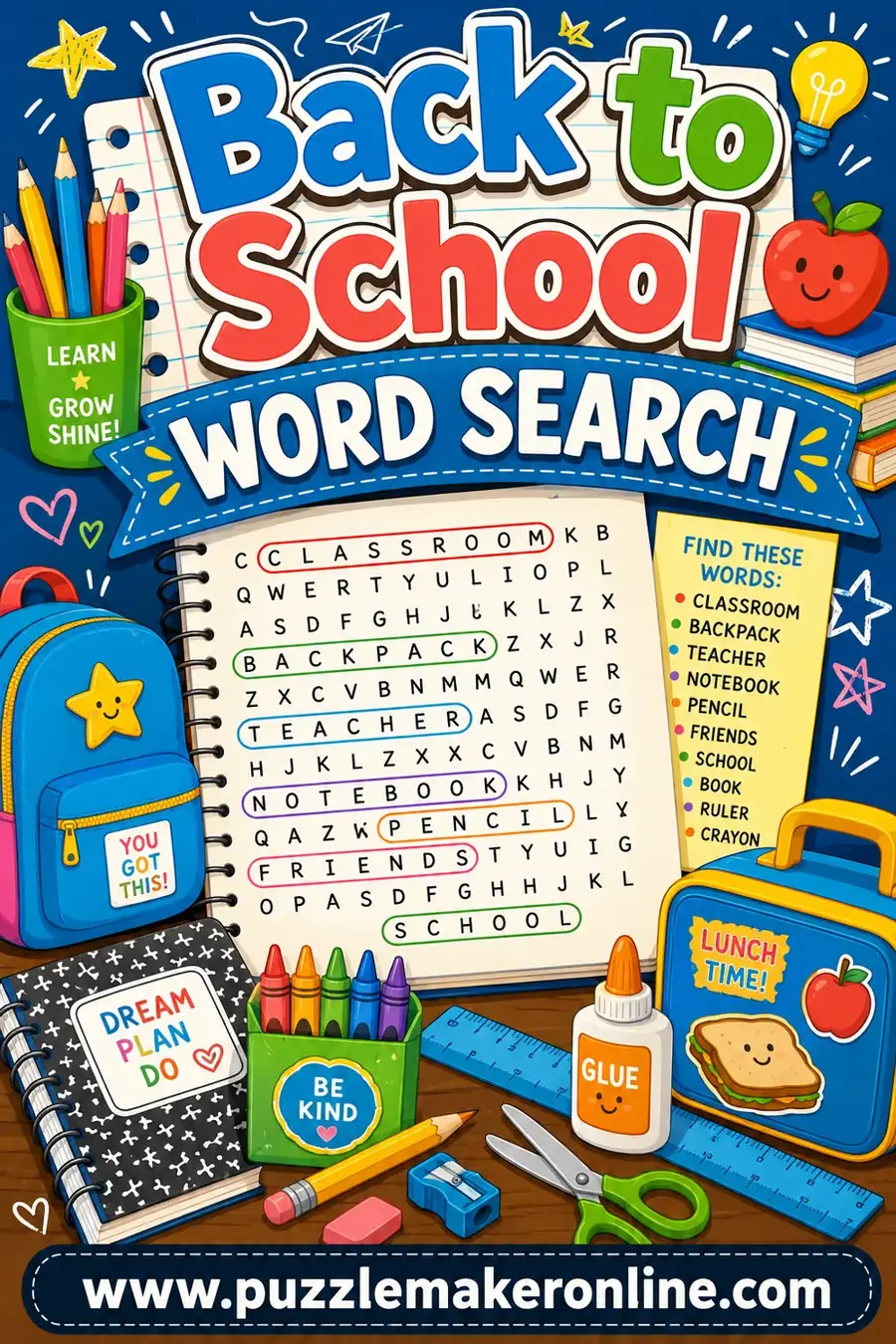
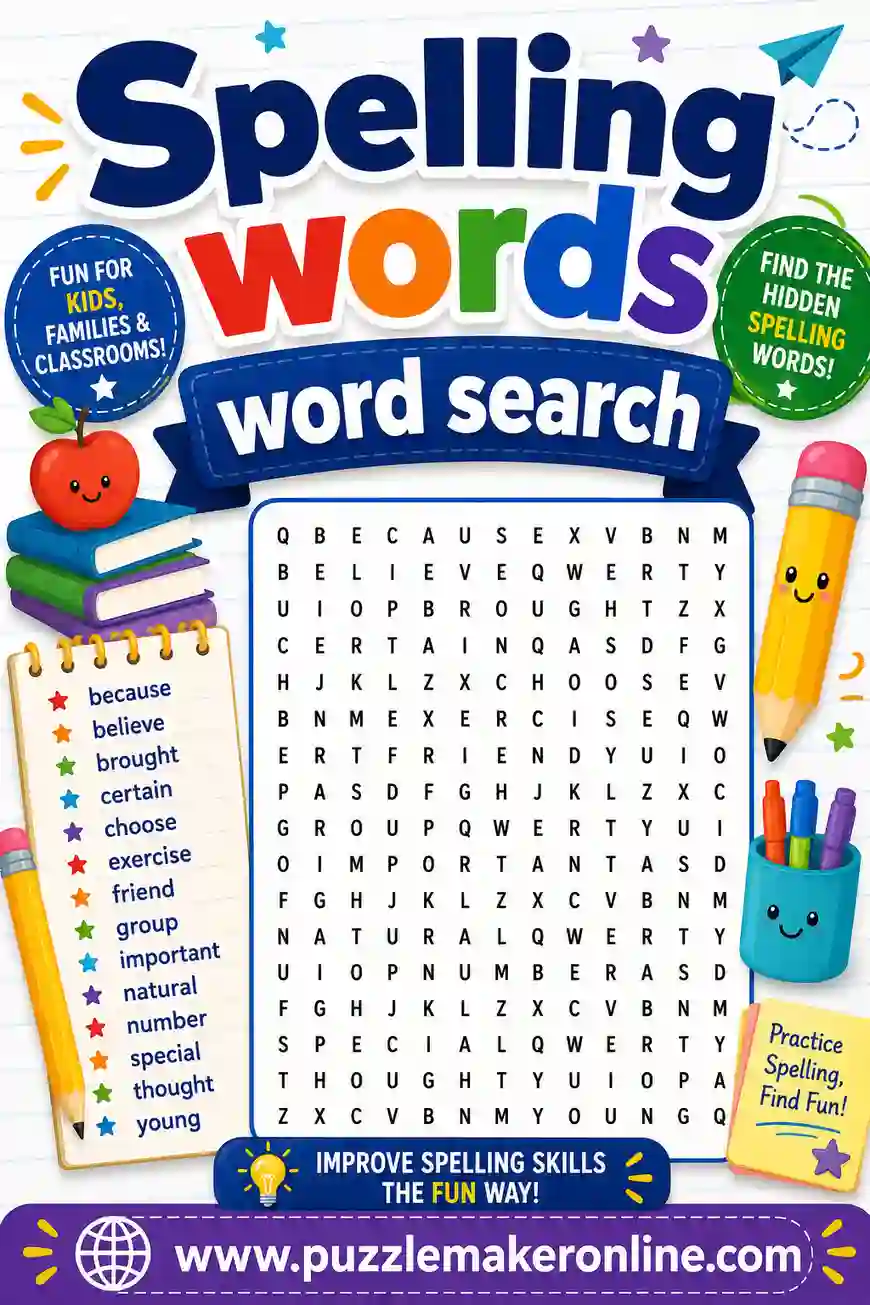
Print color-coded versions, easy on green paper, harder on blue, and students grab the right level without a fuss. For the start of the year, our back-to-school word search is center-ready, and the spelling words word search plugs straight into a literacy station.
Center Ideas Across Subjects
Puzzles aren't just for literacy. Build them for any subject you teach.
- Reading center. Words from the current story, characters, or vocabulary list.
- Spelling center. This week's spelling list as a word search and a scramble.
- Science center. Unit terms like "magnet," "planet," or "habitat" in a crossword with clues.
- Social studies center. Places, people, and key terms from the current topic.
- Math vocabulary center. Words like "sum," "fraction," and "angle" to reinforce math language.
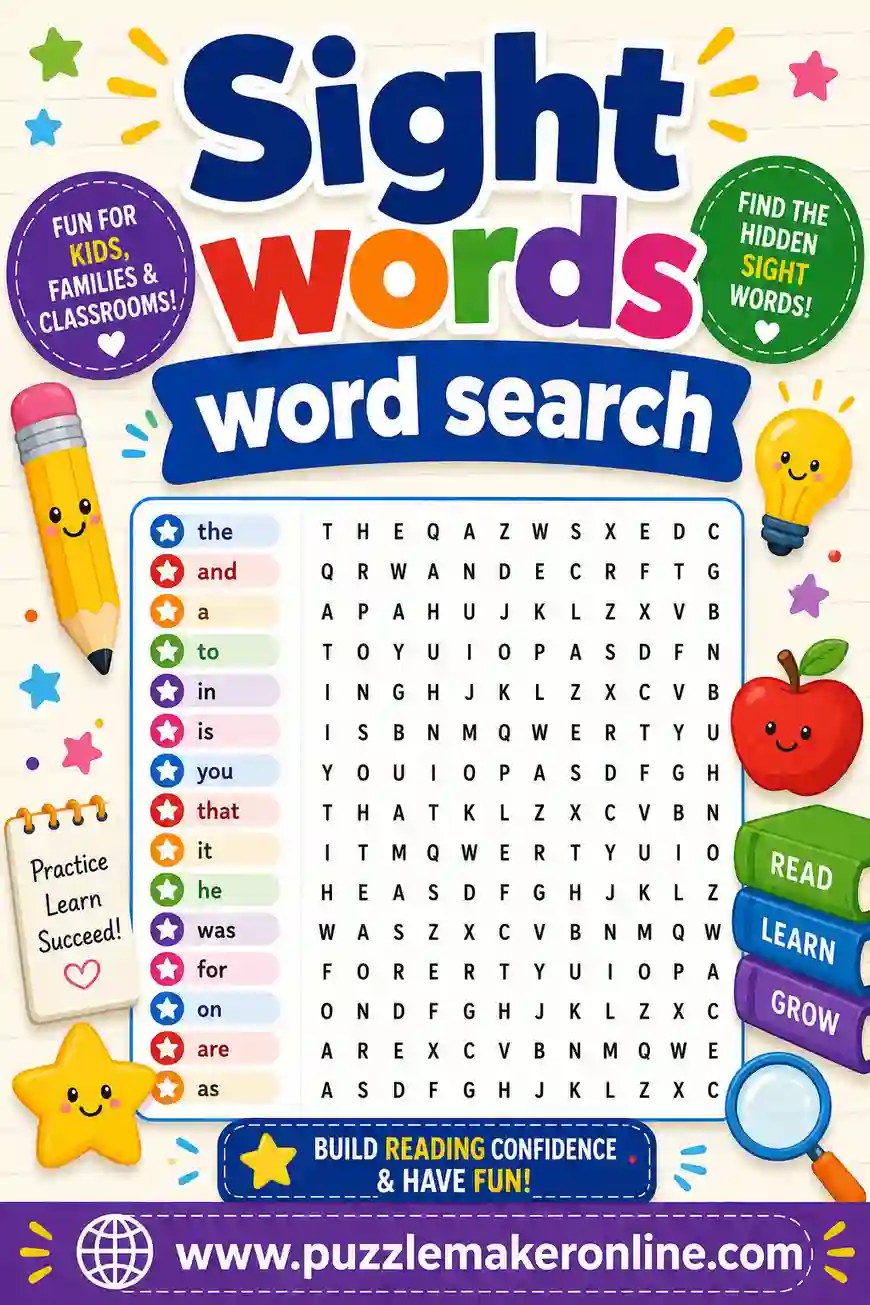
A sight words word search makes a strong early-grades literacy station that students can run from day one.
Keeping a Puzzle Center Fresh All Year
A center that never changes loses its pull. The good news is refreshing a puzzle station takes minutes, because the puzzle maker builds a new sheet from any word list in seconds.
- Swap with each unit. New unit, new words. Pull the vocabulary from whatever you're teaching that week and the center stays connected to your lessons.
- Rotate the format. Run a word search one week, a crossword the next, a scramble the week after. The change keeps students curious.
- Tie it to the season. Holiday and seasonal themes feel timely and fun, and they're easy to build from a quick word list.
- Let students help. Older grades can suggest words for next week's puzzle. Ownership boosts engagement.
A few minutes of prep on a Friday keeps your center humming for the whole next week, with zero re-teaching.
Managing Behavior at a Puzzle Center
A self-running center still needs clear norms, especially early in the year. A little structure up front saves you interruptions later.
- Set the volume. Decide whether the center is silent or quiet-partner work, and post it. Consistency prevents the noise from creeping up.
- Define "done." Tell students what to do when they finish: check the key, place the sheet in the tray, then read or start a bonus scramble. Idle hands cause trouble.
- Use a visual timer. A timer students can see helps them pace themselves and signals when to rotate without you calling out.
- Build independence early. Spend the first week modeling exactly how the center runs. The time you invest pays off all year in centers that run themselves.
Teach the routine once, reinforce it for a few days, and the puzzle center becomes a station you can truly leave alone while you focus on your small group.
Common Mistakes to Avoid
A few things keep a center from running smoothly. Steer clear of these.
- No answer key. Without one, the center isn't self-checking and you get a line of "Is this right?" Print the key.
- Words too hard. A frustrated student goes off task. Match difficulty to the group.
- Unclear directions. If kids aren't sure what to do, the center stalls. Post one simple sign.
- One version for all. A single difficulty leaves some bored and others lost. Differentiate with a couple of versions.
- Running too long. A puzzle that outlasts the rotation leaves kids idle. Time it to your group.
Frequently Asked Questions
What puzzles work best for classroom centers?
Word searches are the best all-around center because students run them independently and they need no close grading. Use crosswords to pair vocabulary with meaning and word scrambles for quick, focused spelling practice or early finishers.
How do I make a self-checking puzzle center?
Print the answer key along with the puzzle and keep it in a folder at the station so students check their own work. Pair it with one clear direction sign and a tray for finished sheets, and the center runs itself.
Are these classroom puzzles free to print?
Yes. You make and print them yourself at no cost, with no sign-up and no watermark. A single free word list can stock a center for your whole class.
How do I differentiate a puzzle center?
Build several versions from the same word list in the puzzle maker: an easy word search for students below level, a standard one for on-level, and a crossword for above-level. Color-code the paper so students grab the right version without help.
How long should a center puzzle take?
Time it to your small-group rotation, usually 10 to 20 minutes. A word search runs about five to ten minutes, while a crossword takes longer, so pick the format that matches your rotation length.
Can I build puzzles for subjects besides reading?
Yes. Make puzzles from science terms, social studies vocabulary, or math language to reinforce any unit. Just paste the relevant words into the puzzle maker and choose the format that fits the skill.
Ready to Build Your Classroom Center Puzzles?
Grab the word list above, open the free puzzle maker, and you'll have printable word searches, crosswords, or scrambles ready in minutes. It's free, there's no sign-up, and every sheet prints clean with an answer key for self-checking. Tie the words to your unit, set up the station, and let the center run itself while you work your small groups. Happy teaching.