Puzzles for Early Finishers: Free Printable No-Prep Worksheets
Puzzles for early finishers are quick, printable worksheets, like word searches, crosswords, and scrambles, you keep on hand for students who finish their work ahead of everyone else. They give fast workers something productive and quiet to do instead of waiting around or causing distractions. The fastest way to build a stash is a free puzzle maker that turns any word list into a printable puzzle in a couple of clicks.
Want one ready for tomorrow? Open the free puzzle maker, paste in a word list (there's a ready-made one below), and print a few extra copies to keep in a folder. No account, no fee, no software to install.
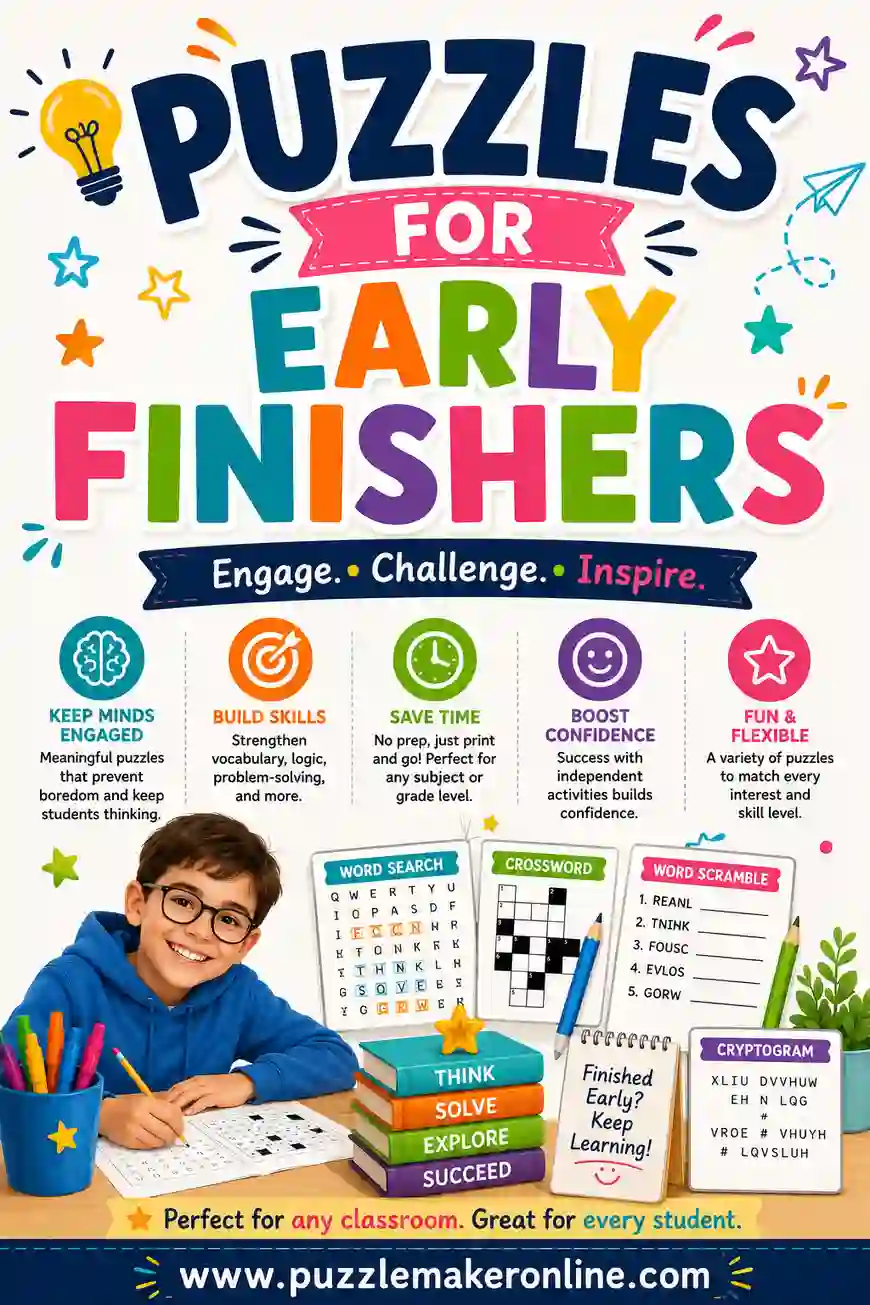
The Early Finisher Problem (and Why Puzzles Solve It)
Every classroom has them: the students who race through an assignment and then sit, fidget, or wander off-task while everyone else is still working. Left unmanaged, that gap turns into chatter, distraction, and a classroom management headache.
The fix is a ready supply of meaningful work that students can pick up on their own. Not busywork that feels like punishment, but something engaging enough that finishing early feels like a reward, not a trap. Puzzles are perfect for that.
Here's why they work better than most filler:
- No prep when the moment hits. Print them once; they're ready in a folder all week.
- Self-directed. A student grabs one and starts without asking you a thing.
- Quiet. A word search keeps a fast finisher absorbed and silent.
- Still learning. Build them from your unit words and the "extra" time reinforces the lesson.
- Self-checking. With an answer key, students can verify their own work.
A small stash of puzzles turns your fastest students from a distraction into a calm, self-running corner of the room.
What Makes a Good Early Finisher Puzzle
Not every puzzle suits this job. The best early finisher puzzles share a few traits that keep them low-maintenance for you.
Self-explanatory
The student should be able to start without instructions. A clear one-line direction printed on the page, "Find all 15 words" or "Solve the crossword", is all it takes. You shouldn't have to stop teaching to explain it.
A little challenging
Your early finishers are often your quickest thinkers, so make the bonus puzzle slightly harder than the main work. A denser crossword or a bigger word search keeps them engaged instead of breezing through in two minutes and asking for another.
Self-checking
Pair the puzzle with an answer key, or post the answers at a center, so students can confirm their own work. This saves you from grading a stack of optional bonus pages.
Get those three right and the puzzles run themselves. The generator handles the answer key automatically, which covers the trickiest part.
A Ready-to-Use Word List for Bonus Puzzles
Here's a flexible set of 30 words you can paste straight into the puzzle maker for a quick early finisher puzzle. Pick a column or mix them, and swap in your own unit vocabulary anytime.
| Brain & Thinking | School Words | Fun Challenge |
|---|---|---|
| Puzzle | Vocabulary | Adventure |
| Riddle | Spelling | Mystery |
| Challenge | Sentence | Treasure |
| Solution | Paragraph | Journey |
| Pattern | Chapter | Champion |
| Logic | Syllable | Discovery |
| Clever | Adjective | Explorer |
| Focus | Equation | Victory |
| Strategy | Fraction | Galaxy |
| Genius | Diagram | Legend |
Tie the words to your current unit when you can, so the bonus puzzle quietly reinforces what you're teaching. A general set like this works as a no-subject backup for any day.
How to Build an Early Finisher Puzzle in 4 Steps
The whole point is to set it and forget it. Here's the quick process.
- Pick the puzzle type. Word search for an easy, calm bonus; crossword for a real challenge; scramble for a quick one.
- Paste your word list. This week's vocabulary or a general list like the one above.
- Bump the difficulty. Make it a notch harder than the main assignment so it actually occupies your quickest kids.
- Print a few extras. Keep a small stack in a labeled folder so they're ready the moment a student finishes.
Do this once and you've got a week's worth of bonus work waiting. Refresh the folder when it runs low.
Set Up a Self-Running Early Finisher Station
The smoothest classrooms turn early finisher puzzles into a routine students manage themselves. Here's how a simple station works.
| Element | What it is | Why it helps |
|---|---|---|
| A labeled folder or tray | Holds printed puzzles by difficulty | Students grab one without asking |
| A one-line instruction sign | "Finished early? Take a puzzle." | Removes the need to explain each time |
| An answer key at the station | Lets students self-check | Keeps grading off your plate |
| A "done" basket | Where finished puzzles go | Keeps the room tidy and tracks who's engaged |
Once students learn the routine, the station runs without you. A child finishes a test, walks over, grabs a puzzle, solves it, checks it, and drops it in the basket, all while you keep teaching. That's the goal.
Tips to Keep the Puzzles Fresh and Useful
A stale folder of the same five puzzles loses its appeal fast. A few habits keep your early finisher stash working.
- Rotate the themes. Swap in seasonal or unit-based word lists so the puzzles feel new, not recycled.
- Offer a few difficulty levels. Stock an easy word search and a tough crossword so every student finds the right fit.
- Make them slightly harder than the lesson. Early finishers are usually your strongest students; give them a real stretch.
- Always include the answer key. Self-checking is what keeps these off your grading pile. The generator makes one for you.
- Keep them screen-free. A printed puzzle avoids the device-management hassle and works the second a student finishes.
Make them reusable
Print on cardstock or use clear sleeves so students solve with dry-erase markers and wipe clean. One laminated class set lasts the whole year and survives constant handling, which matters for a station that gets used daily.
Where Early Finisher Puzzles Fit Beyond the Bonus Pile
These puzzles do double duty across the school day. A few places they shine:
- After tests. When fast finishers turn in a quiz, a quiet puzzle keeps them busy while others work.
- Indoor recess. A pile of fun-themed puzzles saves a rainy day when the class is restless.
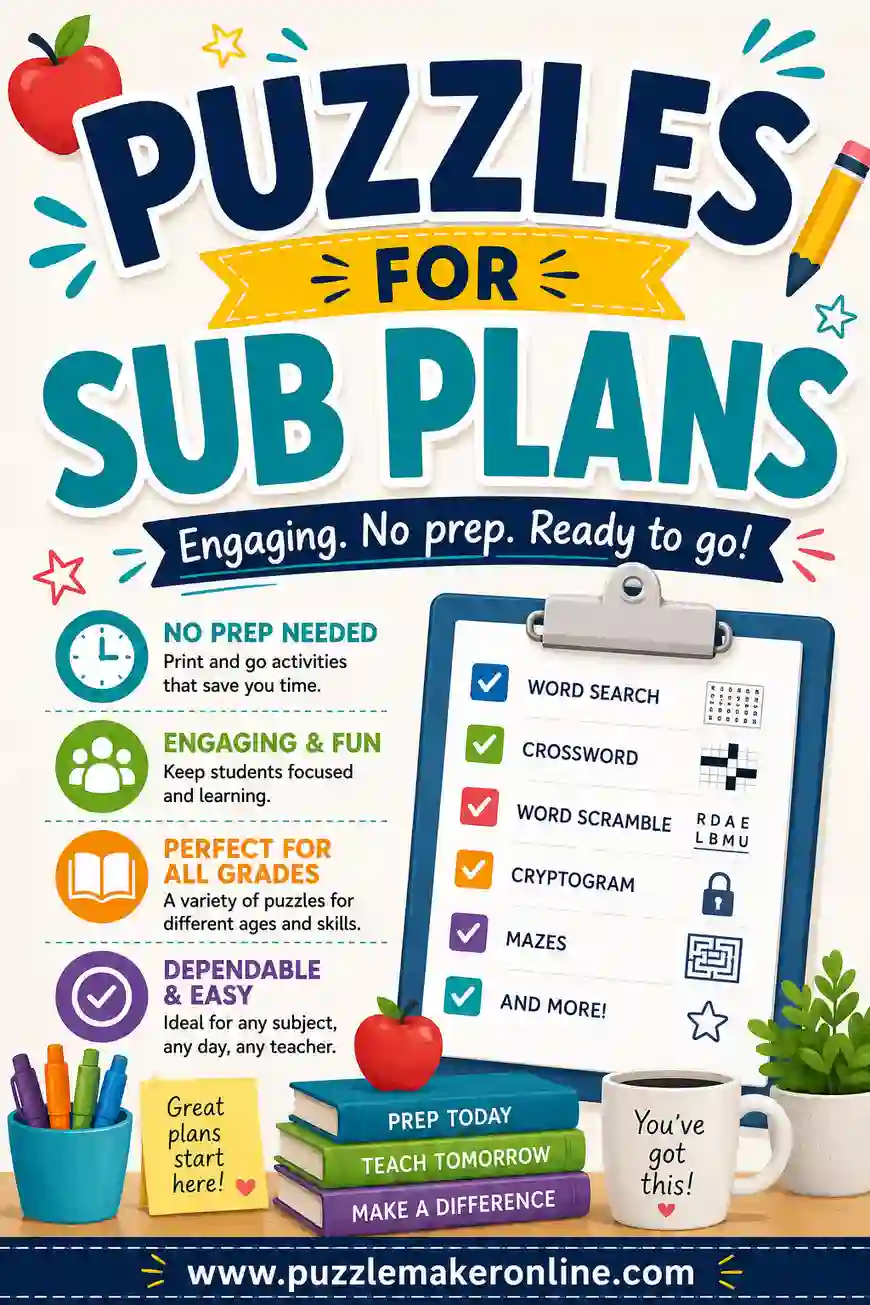
- Sub days. Early finisher puzzles are exactly the backup a substitute needs, which is why our sub plan puzzles guide treats them as essential.
- Homework choice boards. Offer a puzzle as an optional bonus and motivated kids will take it.
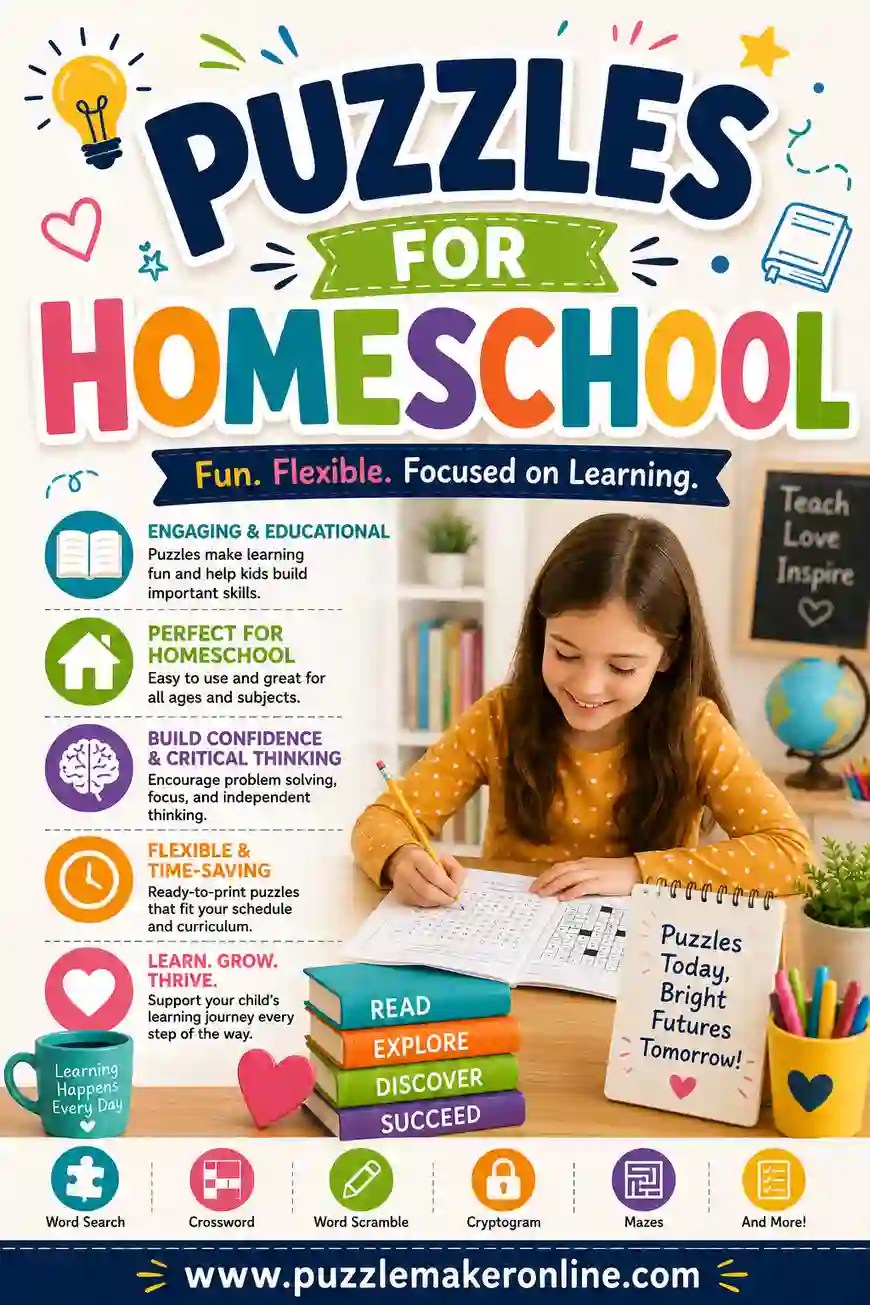
- Homeschool independent work. The same self-running idea keeps a fast learner busy while you teach a sibling, covered in our homeschool puzzles guide.
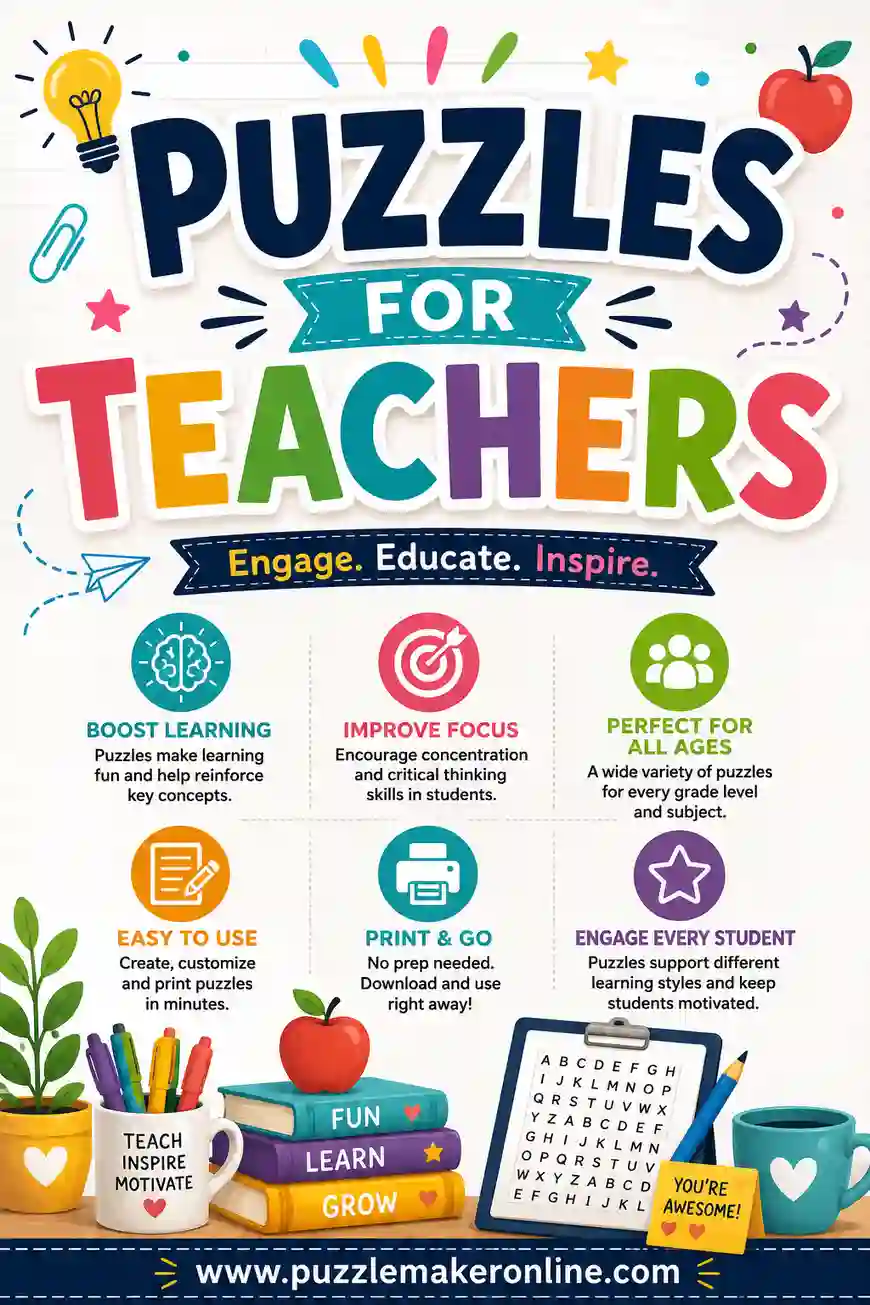
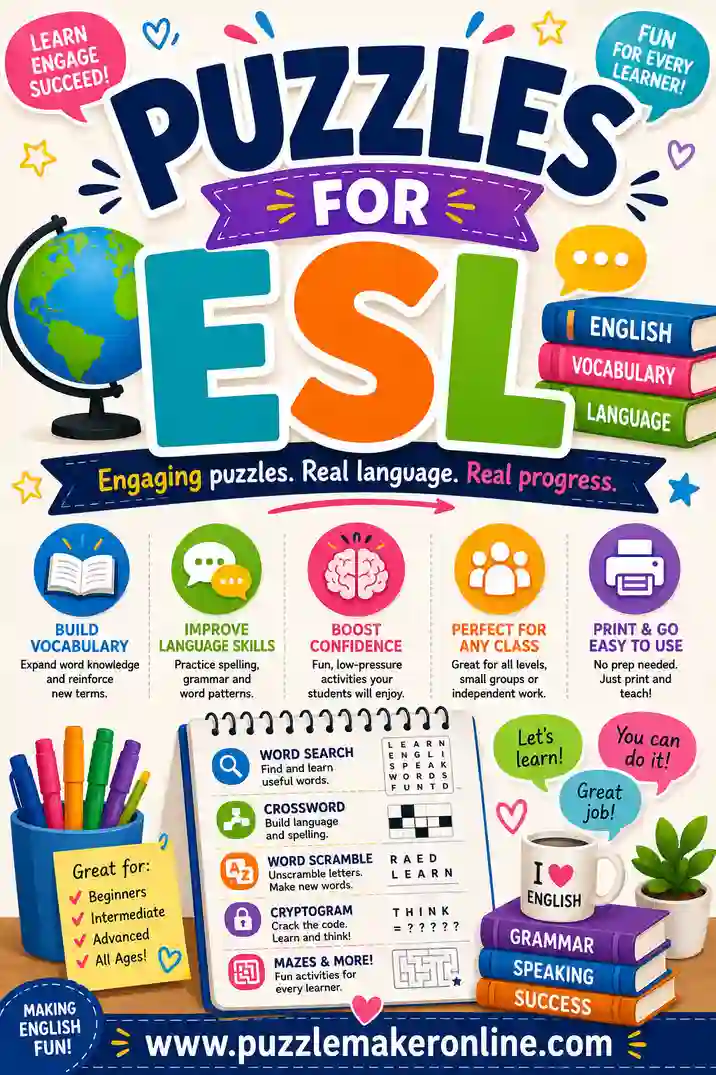
If you build puzzles into your everyday teaching, not just for early finishers, our broader puzzles for teachers guide ties it all together, and our puzzles for ESL guide adds tips for English learners who finish early.
Turning "Done Early" Into a Habit, Not a Reward Race
One worry teachers have is that bonus puzzles will push kids to rush their real work just to reach the "fun" pile. A few small framing choices prevent that.
Treat the puzzle as the expected next step, not a prize. When finishing early simply means moving to a quiet puzzle, rather than free time or a screen, students have no reason to cut corners on the main assignment. The puzzle is calm and pleasant but it's still work, so the incentive to rush evaporates.
It also helps to keep a quality check in place. A quick rule like "show me your finished work before you take a puzzle" lets you glance at the main assignment first. If it's rushed, the student fixes it before earning the bonus page. That keeps standards high while still rewarding genuine speed.
Done right, the early finisher puzzle becomes a normal classroom rhythm: finish your work well, show it, take a puzzle, work quietly. No race, no chaos, just a smooth transition that students manage themselves.
Frequently Asked Questions
Are these puzzles for early finishers really free to print?
Yes. You make and print them yourself at no cost. There's no sign-up, no watermark, and no fee, so you can stock a full early finisher folder for free.
What puzzle type works best for early finishers?
A slightly challenging word search or crossword. Early finishers are usually your quickest students, so a puzzle a notch harder than the main work keeps them genuinely engaged instead of finishing in two minutes and asking for another.
How do I keep early finishers from interrupting me for instructions?
Print a one-line direction right on the puzzle and set up a self-serve folder with an answer key. Once students learn to grab a puzzle, solve it, and self-check, they stop needing you, which is the whole point.
Do early finisher puzzles come with an answer key?
Yes. The puzzle maker generates a matching answer key automatically, so students can check their own work and you stay off the grading hook.
How many early finisher puzzles should I keep on hand?
A small rotating stack, maybe three to five at a couple of difficulty levels, covers a typical week. Refresh them when the folder runs low or when you start a new unit, so the puzzles always feel fresh.
Should early finisher puzzles match my current lesson?
When you can, yes. Building them from your unit vocabulary turns "extra" time into quiet review. A general, no-subject puzzle works fine as a backup, but unit-tied puzzles get more learning out of the same minutes.
Ready to Stock Your Early Finisher Folder?
Grab the word list above, open the free puzzle maker, and you'll have a printable word search, crossword, or scramble ready for your fastest students in minutes. It's free, there's no sign-up, and a few minutes of building gives you a self-running early finisher station for the whole year. Print a stack, label the folder, and turn early finishers into your easiest students to manage.