Puzzles for Senior Brain Games: Free Printable Word Games
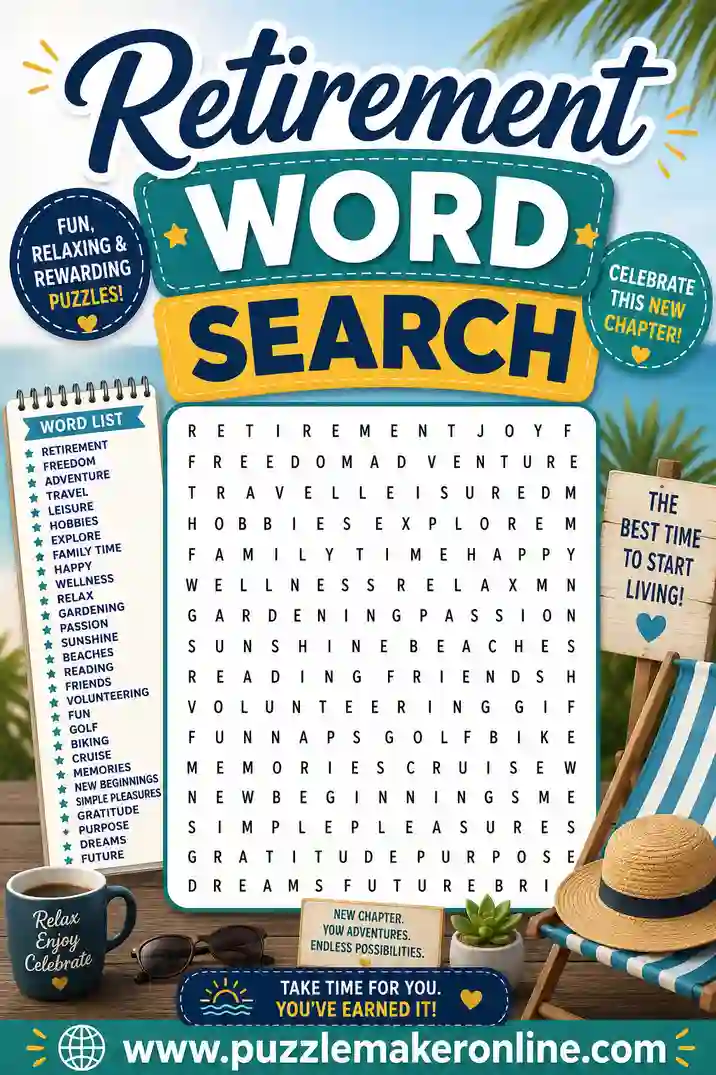
Puzzles for senior brain games are printable word searches, crosswords, and word scrambles designed to be easy to read, gently challenging, and fun for older adults. They give the mind a workout, fill quiet afternoons, and bring people together in senior centers and care homes. The easiest way to make a large-print set is a free puzzle maker that turns your word list into a clean, readable sheet you can print as many times as you like.
Want to make one right now? Open the free puzzle maker, paste in a word list (there's a ready-made one below), choose word search, crossword, or scramble, and print large-print copies for your group. No sign-up, no software, no cost.
Why Word Puzzles Suit Seniors So Well
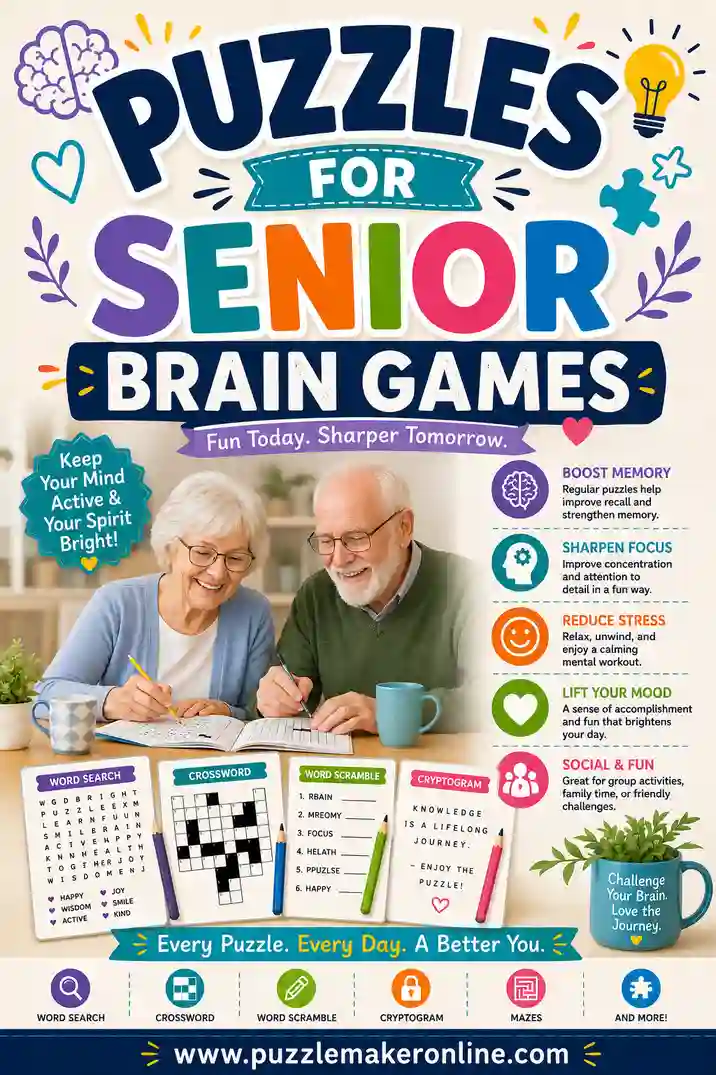
Word puzzles ask the brain to recall, scan, and recognize, all things that keep the mind active. They're calm, they're satisfying, and they don't require a screen or a steady internet connection. For many older adults, a printed puzzle is a familiar, comfortable pastime that still gives the brain a good stretch.
Here's why activity directors and families reach for them:
- They're gentle but engaging. A word search isn't stressful, yet it still keeps the mind busy and rewarded.
- They're flexible. You set the difficulty. An easy word search suits one person; a tricky crossword suits another.
- They're social or solo. One person can solve quietly, or a whole room can work a shared puzzle together.
- They're accessible. Large print, simple grids, and familiar words make them welcoming for low vision and early memory loss.
Best of all, you control the words, so you can use names, places, and topics that feel personal and spark conversation.
Best Puzzle Types for Seniors
You've got three reliable formats, and you can make all three from one word list in the puzzle maker.
Word search
The most accessible choice. Hide familiar words in a grid and let the solver circle them. There's no answer to get wrong, the pace is relaxed, and large-print grids work well for low vision. This is your safest pick for a mixed-ability group.
Crossword
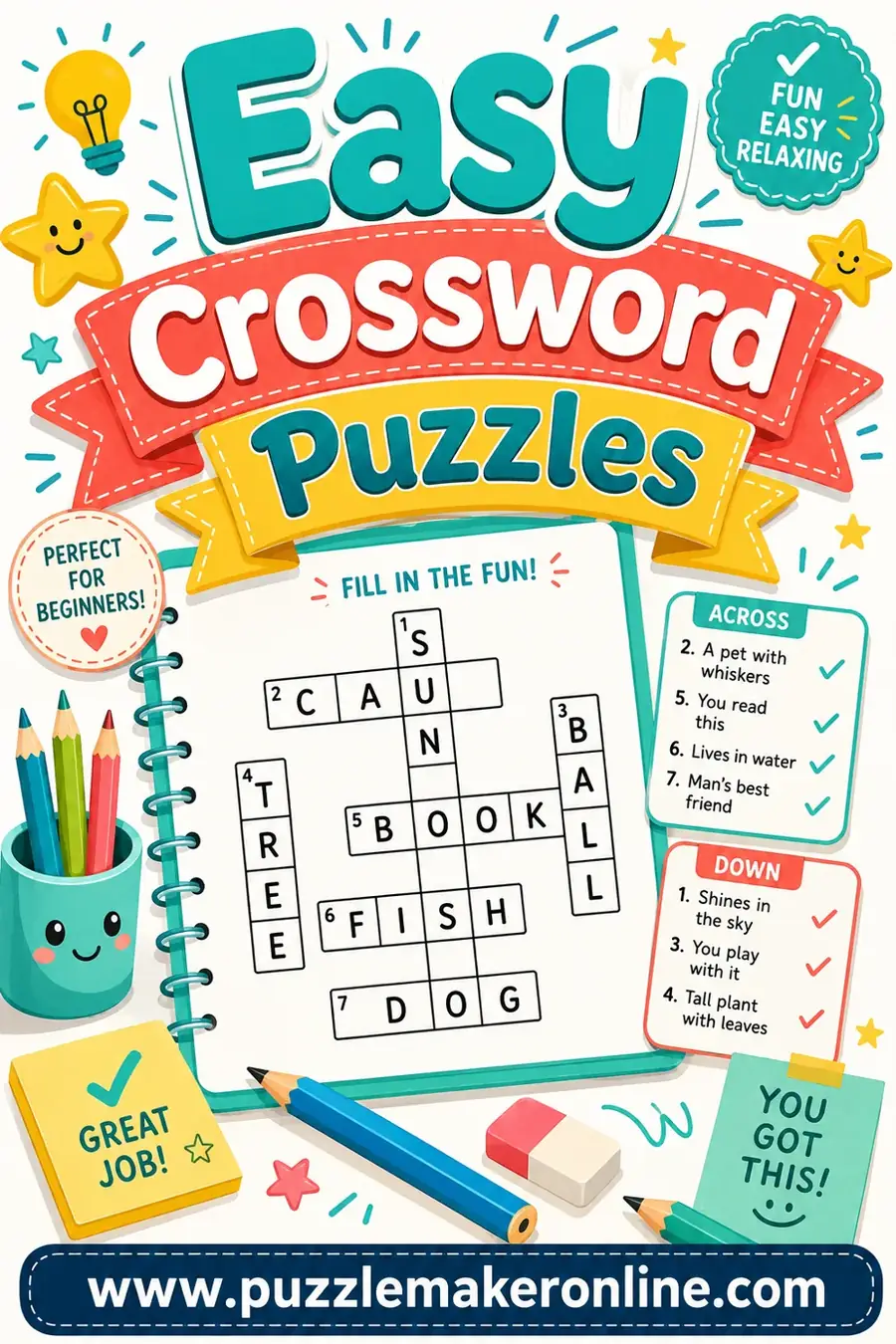
A bigger mental workout. Crosswords draw on memory and vocabulary, which makes them rewarding for sharp solvers. Keep clues fair and familiar so they challenge without frustrating. Our easy crossword shows a friendly starting level.
Word scramble
Short and focused. Scrambles work one word at a time, which suits shorter attention spans and gives a quick win. They're a nice option for solvers who find a full grid tiring.
A Ready-to-Use Senior Word List (Copy & Paste)
Here's a flexible list of 30 familiar, conversation-friendly words you can drop straight into the puzzle maker. Use the whole set for a word search, pick 10 to 15 for a crossword, or grab any 6 for a scramble.
| Home & Comfort | Nature & Seasons | Memories & Hobbies |
|---|---|---|
| Garden | Sunset | Memory |
| Kitchen | Autumn | Recipe |
| Coffee | Garden | Letter |
| Armchair | Snowfall | Photograph |
| Blanket | Bluebird | Knitting |
| Teapot | Maple | Crossword |
| Window | Harvest | Music |
| Fireplace | Meadow | Dancing |
| Porch | Rainbow | Storytelling |
| Quilt | Daffodil | Friendship |
Mix words across the columns for variety. For a personal touch, swap in hometown names, decade-specific terms, or favorite hobbies that will spark stories.
How to Make Senior Brain-Game Puzzles in 5 Steps
No tech skills needed. Here's the whole flow.
- Pick a theme. Familiar topics work best, like gardens, old movies, hometowns, or the current season.
- Choose a format. Word search for accessibility, crossword for a challenge, scramble for quick wins.
- Paste your words. Drop them into the puzzle maker. Keep words familiar and not too long.
- Set it to large print. Bigger letters and a roomy grid make all the difference for older eyes.
- Print your set. One per person, plus spares. Cardstock is easier to hold than thin paper.
That's it. Most caregivers go from idea to printed stack in under ten minutes.
Accessibility Tips That Make a Real Difference
For seniors, how the puzzle looks matters as much as the content. A few choices make puzzles far easier to enjoy.
- Go large print. Bigger letters reduce eye strain and frustration. This is the single biggest win.
- Use fewer words. A 12 to 18 word grid feels achievable. A packed grid can overwhelm.
- Add white space. A roomy layout with clear gaps is easier to scan than a dense block.
- Print in high contrast. Crisp black on white reads best. Avoid light gray or busy backgrounds.
- Use familiar words. Concrete, everyday terms beat obscure ones. They reward recall instead of testing it.
For early memory loss
Keep puzzles short, positive, and pressure-free. Use words tied to long-term memories, like decade-specific items or hometown landmarks, which often stay vivid. Celebrate every word found. The goal is enjoyment and gentle engagement, never a test.
Matching Difficulty to the Solver
The same theme can suit different abilities if you adjust the format.
| Solver | Best puzzle | Difficulty tips |
|---|---|---|
| Sharp, active mind | Crossword | Standard clues, varied vocabulary |
| Casual solver | Standard word search | 15–20 familiar words, large print |
| Low vision | Large-print word search | 10–15 words, big font, high contrast |
| Short attention span | Word scramble | One word at a time, short words |
| Early memory changes | Easy word search | 8–12 long-term-memory words, lots of praise |
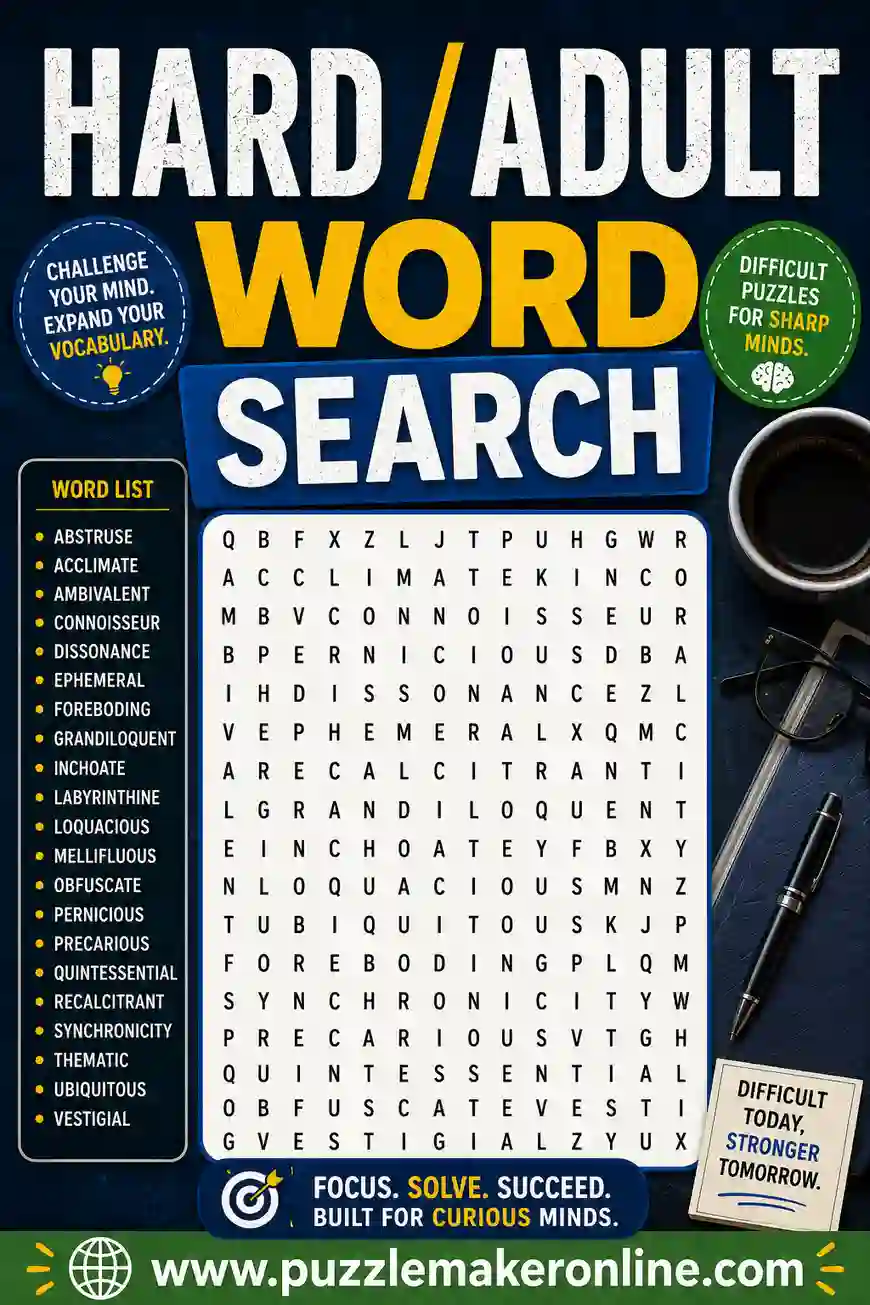
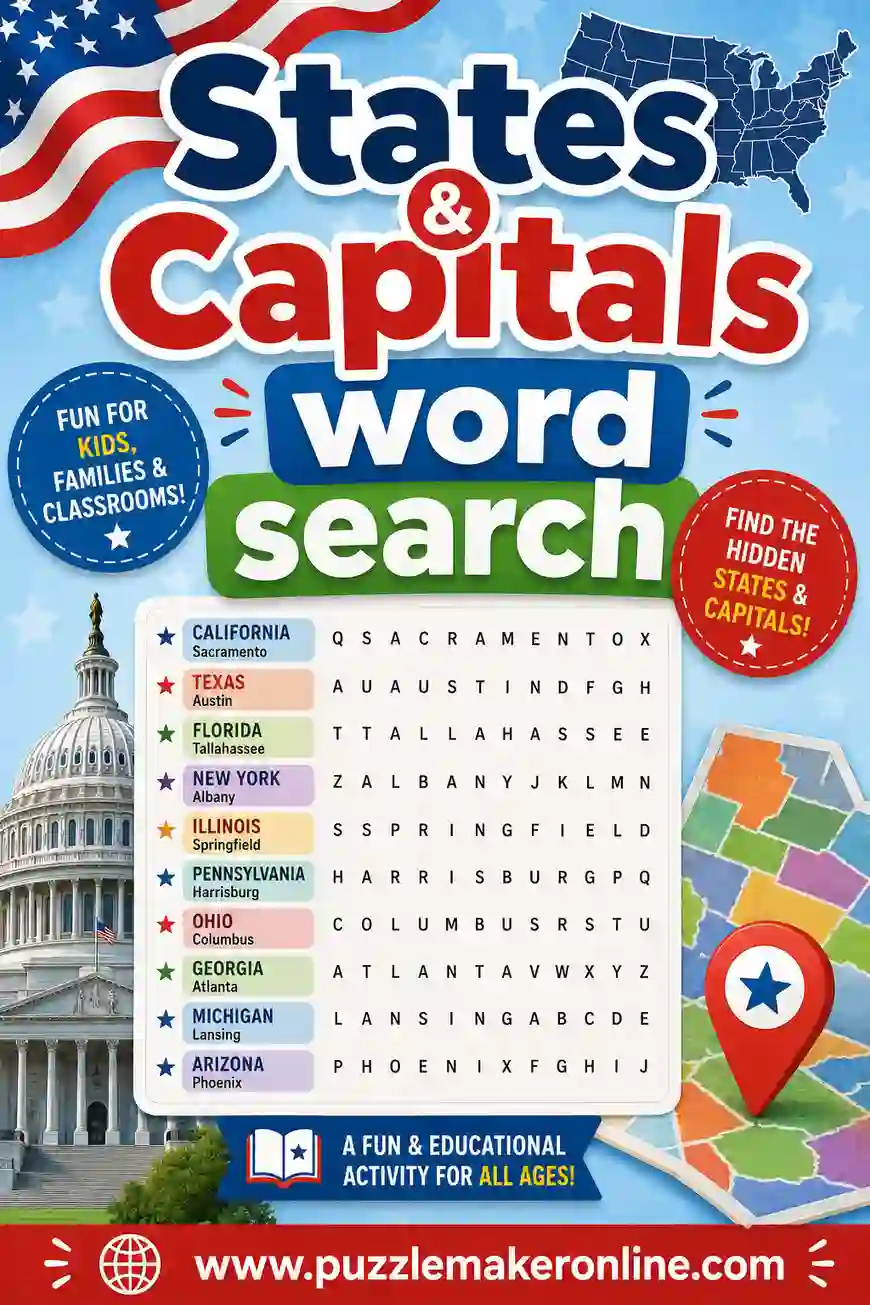
For solvers who want more of a challenge, our hard adult word search raises the difficulty, while a themed states and capitals word search sparks geography memories and good conversation.
Using Puzzles in Group Activities
Puzzles shine in senior centers and care homes, both solo and together.
- Shared big puzzle. Print one large crossword and solve it as a group, with someone reading clues aloud.
- Theme of the week. Tie puzzles to a season, holiday, or decade and pair them with related music or photos.
- Reminiscence prompts. Words like "drive-in," "transistor radio," or "soda fountain" spark stories. Pause to let people share.
- Pairs. Partner a stronger solver with someone who needs a hand. It builds connection and confidence.
Keep sessions short and upbeat. Twenty to thirty minutes is plenty, and the social side often matters as much as the solving.
Theme Ideas That Spark Conversation
The best senior puzzles do double duty: they exercise the mind and open the door to stories. Build a puzzle around a theme and you'll often get a memory along with every word found. Here are themes to drop into the puzzle maker.
- Classic movies and stars: drive-in, silver screen, matinee, leading lady, popcorn, usher, double feature, premiere, marquee, ticket.
- Old-time kitchen: percolator, icebox, rolling pin, apron, cast iron, Sunday roast, pie, recipe card, canning, kettle.
- Songs and dances: jitterbug, big band, jukebox, record, waltz, swing, crooner, ballroom, melody, chorus.
- Hometown and travel: main street, railway, county fair, lighthouse, postcard, road trip, diner, ferry, boardwalk, landmark.
- Garden and seasons: rose, tomato, trellis, robin, harvest, frost, daffodil, hummingbird, orchard, bloom.
Pause after a few words and ask, "Did you ever go to a drive-in?" The puzzle becomes a gentle invitation to share, which is often the most rewarding part of the activity.
Printing and Prep Tips
Small choices keep your sheets clean and comfortable.
- Print on cardstock. It's easier to grip and doesn't crease as the solver works.
- One puzzle per page. Resist crowding. Space and large print beat fitting more on a sheet.
- Black and white is best. High contrast reads clearly and saves ink for big group sets.
- Provide grippy pencils or markers. Chunky pencils are easier to hold than thin ones.
- Print the answer key. A key on a separate sheet lets solvers or staff check work without pressure.
Common Mistakes to Avoid
A few things trip up first-timers. Here's how to sidestep them.
- Print too small. Tiny letters are the number one frustration. Always go large print for seniors.
- Too many words. A crowded grid feels like a chore. Keep word counts modest.
- Obscure vocabulary. Strange words frustrate rather than reward. Stick to familiar terms.
- Low contrast. Faint or gray printing strains the eyes. Use crisp black on white.
- Treating it like a test. Pressure drains the fun. Keep the tone warm and praise effort.
Frequently Asked Questions
What puzzles are best for senior brain games?
Large-print word searches are the most accessible and suit nearly everyone, since they're relaxing and have no wrong answers. Crosswords give a bigger mental workout for sharp solvers, and word scrambles offer quick wins for shorter attention spans.
How do I make a large-print puzzle for seniors?
Paste a list of familiar words into the puzzle maker, choose word search, crossword, or scramble, and set it to large print before you print. Keep the word count modest and the letters big for comfortable reading.
Are these senior puzzles free to print?
Yes. You make and print them yourself at no cost, with no sign-up and no watermark. A single free word list can supply a whole senior center or care home.
What words work well for older adults?
Familiar, concrete words from everyday life and long-term memory work best, like garden, kitchen, recipe, and hometown landmarks. Decade-specific terms often spark stories and conversation, which adds to the fun.
Are word puzzles good for people with memory changes?
Gentle, large-print word searches can be a positive, pressure-free activity for early memory changes. Use words tied to long-term memories, keep puzzles short, and celebrate every word found rather than treating it as a test.
How can I use puzzles in a group setting?
Print one large crossword or word search and solve it together, with someone reading clues aloud, or hand out personal copies tied to a weekly theme. Pause to let reminiscence words spark stories, since the social side is half the benefit.
Ready to Make Your Senior Brain-Game Puzzles?
Grab the word list above, open the free puzzle maker, and you'll have large-print word searches, crosswords, or scrambles ready in minutes. It's free, there's no sign-up, and every sheet prints clear and easy to read. Pick familiar words, go big on the print, and give the people you care for a gentle, rewarding workout for the mind. Happy puzzling.