SAT Vocabulary Word Search: Free Printable Maker
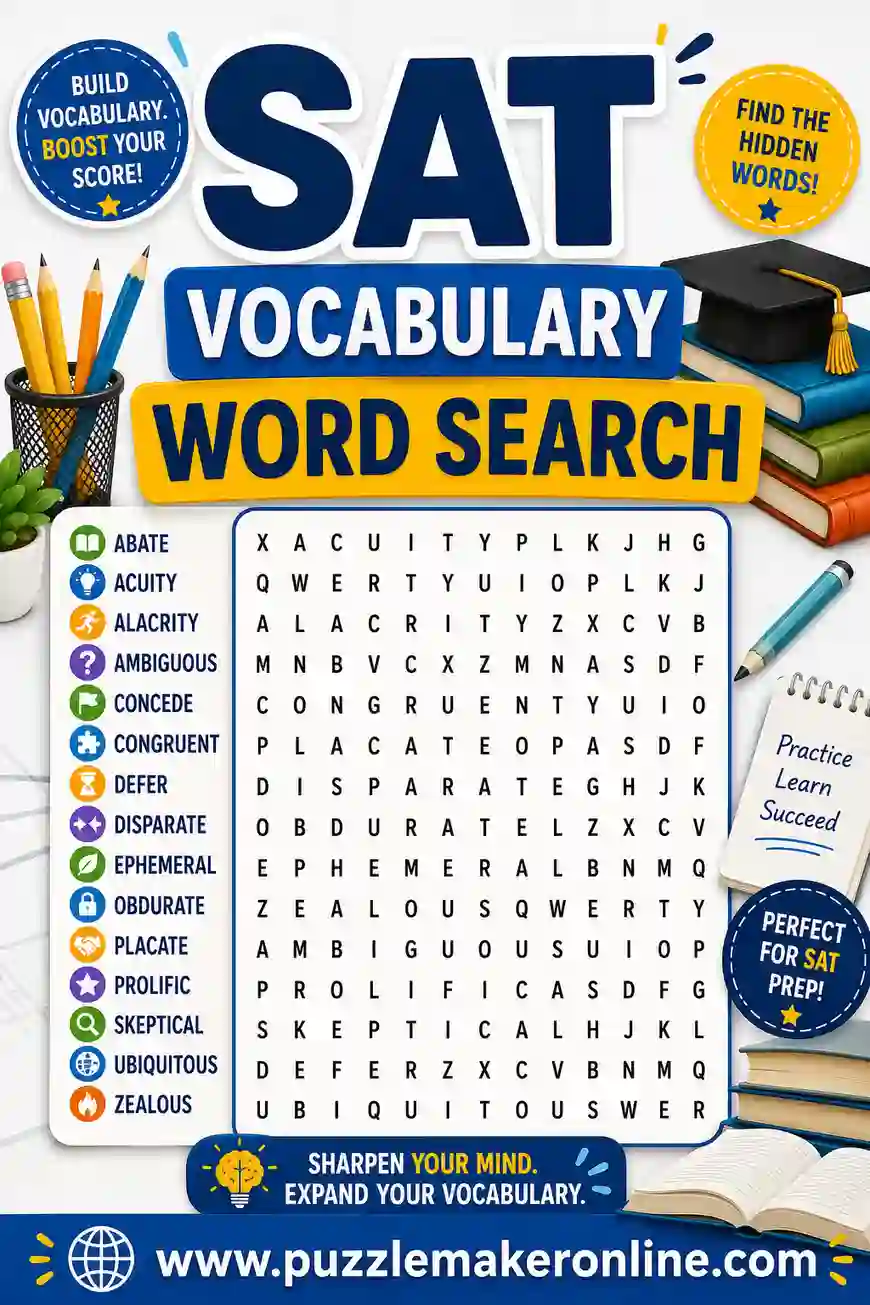
An SAT vocabulary word search hides high-frequency test words like ambiguous, candor, and pragmatic in a letter grid, giving students a low-stress way to review tough vocabulary. It's a smart change of pace from flashcards, and the fastest way to build one is a free puzzle maker that turns your word list into a printable grid in seconds.
Prepping a study session? Open the free puzzle maker, paste in an SAT word list (there's a ready-made one with definitions below), pick your grid size, and print. You can print an answer key alongside it so students can self-check.
Does a Word Search Actually Help SAT Prep?
It does, as long as you use it the right way. A word search alone won't teach definitions — it just helps with spelling and recognition. The win is pairing it with meaning. List the definition as the clue and make students recall the word before they hunt for it. Now they're connecting brief and to the point with concise every time they search.
The modern SAT leans on vocabulary in context rather than obscure memorization, so the goal isn't to cram a thousand rare words. It's to lock in a few hundred high-frequency ones you'll actually meet on test day. A word search is a relaxed, repeatable way to keep those words fresh.
Think of it as the warm-up, not the workout. Use it to review words you've already studied, break up a long session, or quiz a study group without the pressure of a real test.
How to Build an SAT Word Search That Teaches
A plain hunt is fine, but a few tweaks turn it into real prep.
- Use definition clues. Instead of listing the words, list their meanings. Students recall the word, then find it. That's the recall practice that matters.
- Group by root or theme. Cluster words that share a Latin root (bene-, mal-, -vor-) so students see the pattern.
- Keep it short and focused. Ten to fifteen words per puzzle. A wall of fifty words just exhausts people.
- Print the answer key. Students check their own work and see the correct spelling of each word.
Set it up in the puzzle maker, pick a 15×15 grid, allow backward and diagonal words for a real challenge, and print.
Free SAT Vocabulary Word List With Definitions (Copy & Paste)
Here are 30 high-frequency SAT words grouped by tone, each with a quick definition. Copy the words into the puzzle maker, and use the definitions as your clue list.
| Word | Quick Definition |
|---|---|
| ambiguous | open to more than one meaning |
| candor | honesty; frankness |
| pragmatic | practical; sensible |
| benevolent | kind; generous |
| ephemeral | lasting a very short time |
| gregarious | sociable; outgoing |
| prudent | careful; wise |
| zealous | eager; passionate |
| concise | brief and to the point |
| superfluous | more than needed; excess |
| meticulous | very careful about detail |
| arduous | difficult; demanding |
| candid | open and honest |
| frugal | careful with money |
| novice | a beginner |
| tenacious | persistent; not giving up |
| lucid | clear and easy to understand |
| obsolete | out of date; no longer used |
| diligent | hardworking; careful |
| eloquent | fluent and persuasive in speech |
That's 20 with definitions; round out to 30 with these recognition-builders: austere, brevity, deference, esoteric, fastidious, garrulous, impetuous, juxtapose, mitigate, ubiquitous. Look those up as a group — they're SAT regulars.
Build puzzles around word roots
Roots unlock dozens of words at once. Theme a puzzle around one:
- bene- / mal- (good / bad). benevolent, beneficial, benefactor, malevolent, malicious, malign.
- -loqu- / -log- (speak / word). eloquent, loquacious, soliloquy, dialogue, prologue, monologue.
- -cred- (believe). credible, incredulous, credence, creed, credulous, discredit.
- -vor- (eat). carnivore, herbivore, voracious, devour, omnivore.
When students see the root, they can often guess an unfamiliar word on the test. That's the real payoff.
Match the Challenge to the Student
The same list can be easy review or a tough drill depending on the settings. Use this to dial it in.
| Goal | Grid size | Directions | Setup |
|---|---|---|---|
| Light review | 13×13 | Across & down | Word given in the list |
| Standard prep | 15×15 | Add backward | Definition as the clue |
| Real challenge | 17×17 | Add diagonals | Definition clue, longer words |
| Study-group race | 15×15 | All directions | Timed, definition clues |
A simple gauge: if students breeze through with the word listed, switch to definition clues. That single change turns a spelling exercise into genuine recall practice.
Smart Ways to Use It in a Study Routine
A word search fits neatly into a bigger prep plan. Here's where it shines.
Warm-up before the hard stuff
Open a study session with a quick word search to get the brain in gear before tackling reading passages or practice tests. Five minutes, low pressure, all review.
Study-group quizzing
Hand the same puzzle to a group and race. The competition makes dry vocabulary stick, and the post-game "wait, what does austere mean?" chatter is where real learning happens.
Spaced repetition
Rebuild the puzzle weekly with a mix of new words and ones from past weeks. Seeing ephemeral again three weeks later is exactly the spaced review that beats cramming.
Pair with a scramble or crossword
The same word list works as a word search, a word scramble, and a definition-clue crossword. The crossword especially forces recall from meaning — a great companion to the search.
Printing Tips for Test-Prep Puzzles
A few small choices keep your puzzles clean and useful.
- Print definitions as the clue list. This is the single best tweak for actual prep. Words go in the grid; meanings go in the clue column.
- Print the answer key separately. Students self-check and confirm correct spellings without you grading every sheet.
- Use black and white. Vocabulary puzzles read fine without color and it saves ink across a study group.
- Pick a clean font. Long words like superfluous and meticulous need clear letters so students can scan them accurately.
- Run a test page. Confirm the grid and the long words aren't cut off before printing a full set.
Common Mistakes to Avoid
A few easy missteps blunt the value of a vocabulary word search.
- Treating it as the whole study plan. It's a review tool, not a teacher. Pair it with real definition study and practice questions.
- Listing the words instead of definitions. If the word is right there in the list, students learn spelling but skip the recall. Use meanings as clues.
- Cramming fifty words in. A huge list overwhelms and overlaps. Ten to fifteen focused words per puzzle works far better.
- Skipping spaced repetition. One pass and done won't stick. Recycle words across weekly puzzles to lock them in.
How to Fit Word Searches Into a Real Study Plan
A word search isn't a study plan on its own — it's a review tool that makes the heavy lifting stick. Here's where it fits in a vocabulary routine that actually moves your score.
First, learn the words properly
Before a word ever lands in a puzzle, study it for real. Read the definition, see it used in a sentence, and note its part of speech. Ephemeral — lasting a very short time, as in "a ephemeral trend." That genuine first exposure is the part a word search can't replace. The puzzle comes after.
Then use the puzzle for spaced recall
Vocabulary fades fast without review. A few days after learning a batch of words, build a definition-clue word search from them. Reading "honest and frank" and recalling candid is active recall — the single most effective way to move a word into long-term memory. Then revisit the same words in another puzzle a week later.
Group by root to multiply your gains
The smartest SAT studiers don't memorize words one at a time — they learn roots. Build a puzzle around -loqu- (speak) and suddenly eloquent, loquacious, and soliloquy all connect. On test day, a student who knows the root can often crack an unfamiliar word from context. That's leverage a flat word list can't give you.
Track what's still slippery
Keep a "tricky words" list of the ones you keep blanking on. Every couple of weeks, build a word search from just those. Concentrating your review on the words that resist you is far more efficient than re-reviewing words you already own. The puzzle format keeps that targeted practice from feeling like a slog.
SAT Vocabulary Word Search FAQ
Do SAT word searches really help with the test?
They help with spelling, recognition, and — if you use definition clues — recall. They're a review tool, not a full study plan. Pair the puzzle with real definition study and practice passages for the best results.
How should I set up the puzzle for actual recall practice?
List each word's definition as the clue instead of the word itself. Students read the meaning, recall the word, then find it in the grid. That recall step is what builds test-ready vocabulary.
How many SAT words should go in one puzzle?
Keep it to 10–15 focused words. A wall of fifty words overwhelms students and crowds the grid. Smaller, themed puzzles you repeat over time beat one giant list.
Are these SAT vocabulary word searches free to print?
Yes. You build and print them yourself at no cost. There's no sign-up and no watermark, so you can make a fresh puzzle for every study session and recycle words across weeks for free.
Which SAT words should I focus on?
High-frequency words you're likely to meet in context, like ambiguous, candor, pragmatic, and concise. The word list above gives you 30 with definitions. Grouping by Latin root helps you cover more words faster.
Can I make the word search harder for advanced students?
Yes. Use a bigger grid, allow backward and diagonal words, switch to definition clues, and add longer words. Timing a study-group race adds pressure that mimics test-day conditions.
Ready to Build Your SAT Vocabulary Word Search?
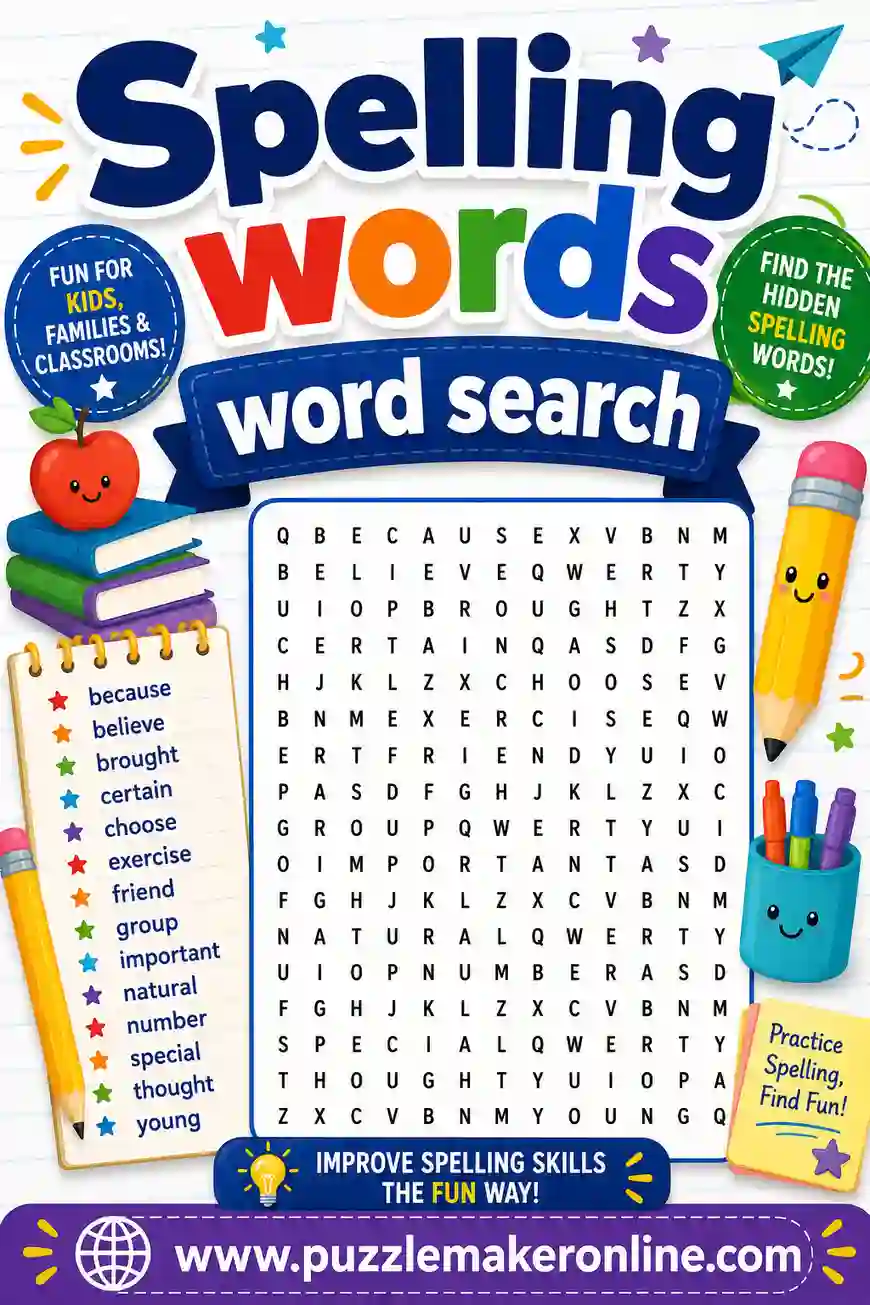
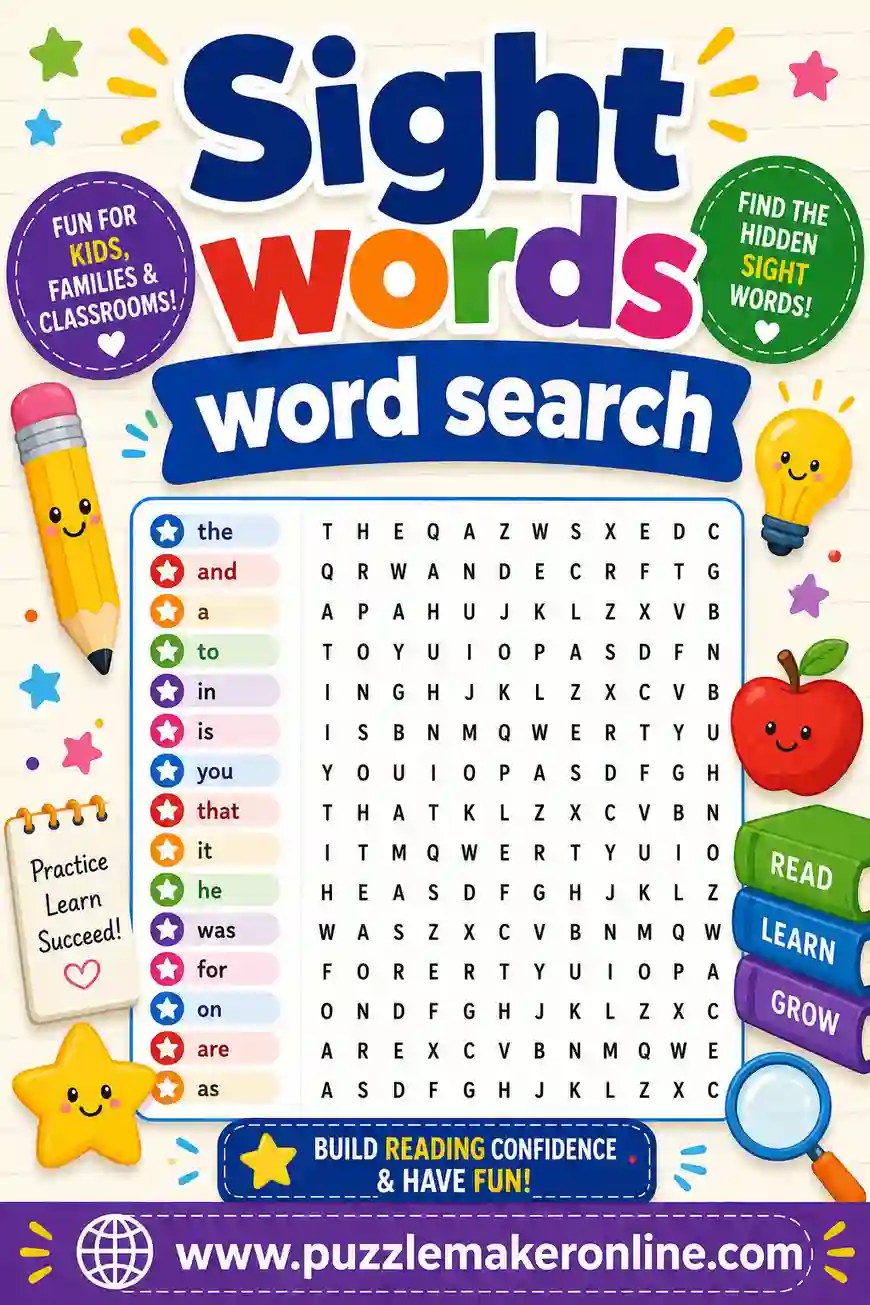
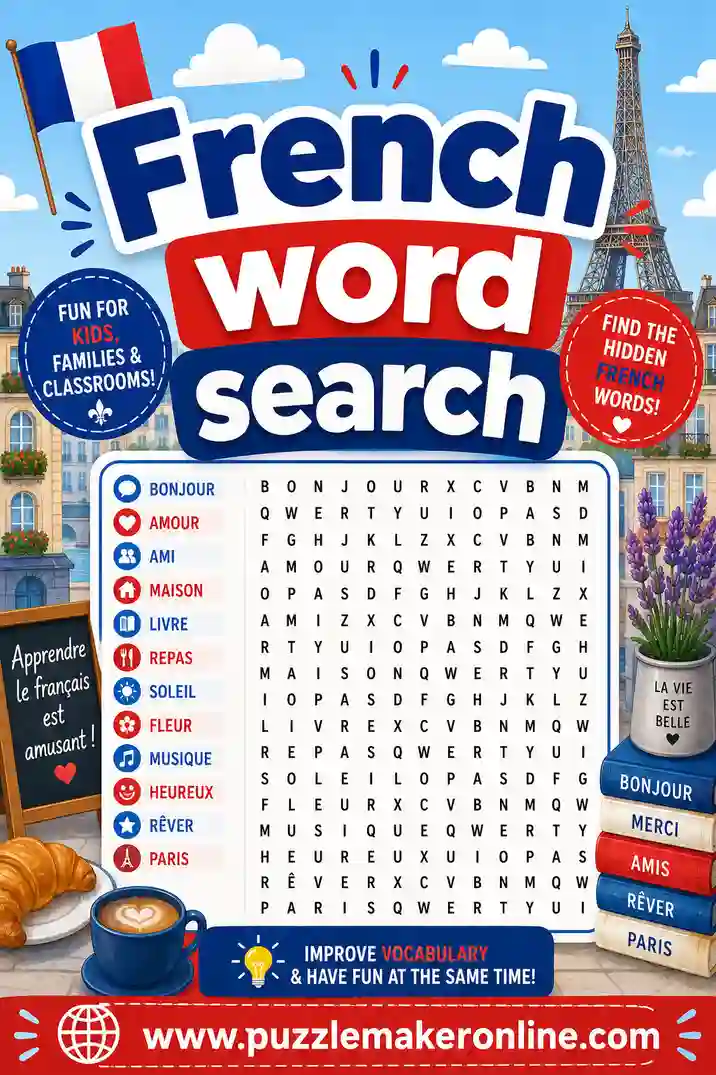
Grab the word list above, open the free puzzle maker, and you'll have a printable SAT vocabulary word search in minutes. It's free, there's no sign-up, and you can list definitions as clues for real recall practice. Keep prepping with our spelling words word search, sight words word search, or French word search. Good luck on test day!