Are Puzzles Good for the Brain? What the Science Says
Yes, puzzles are good for the brain. Word searches, crosswords, and word scrambles give your memory, focus, and problem-solving a steady workout, and they do it in a way that feels like play. They won't cure anything or make you a genius overnight, but as a regular habit they keep your mind sharp, engaged, and a little calmer.
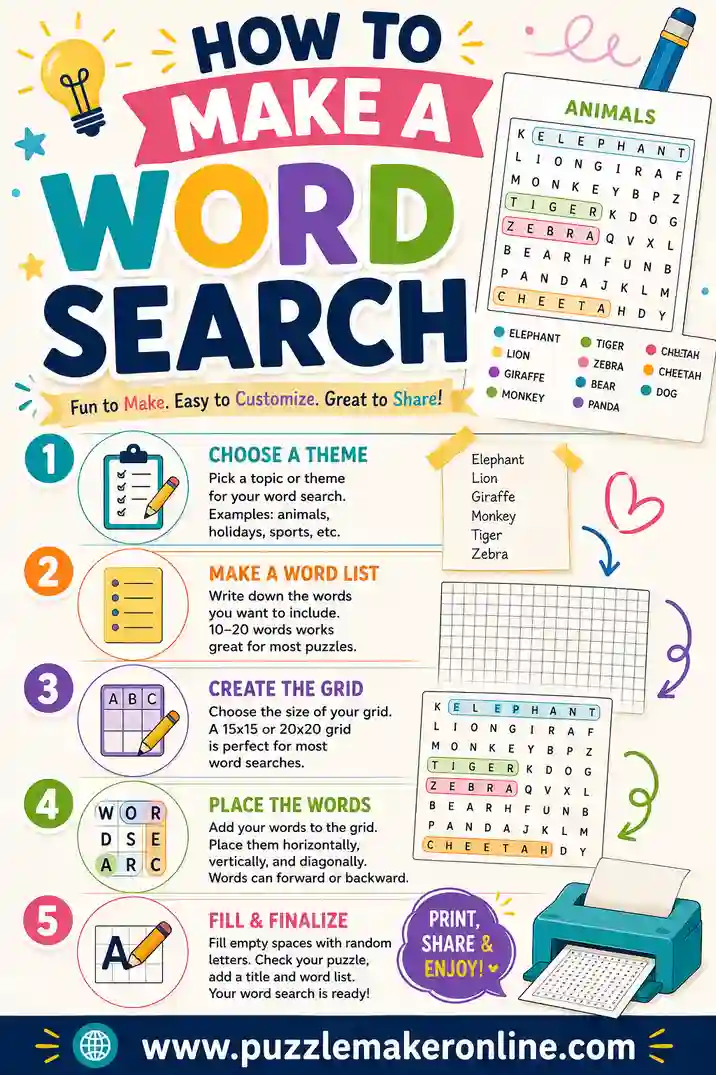
Want to put your brain to work right now? Open the free puzzle maker, paste in any word list (there's one below), and print a custom puzzle in seconds. No sign-up, no software, no cost.
The Short Answer, Then the Details
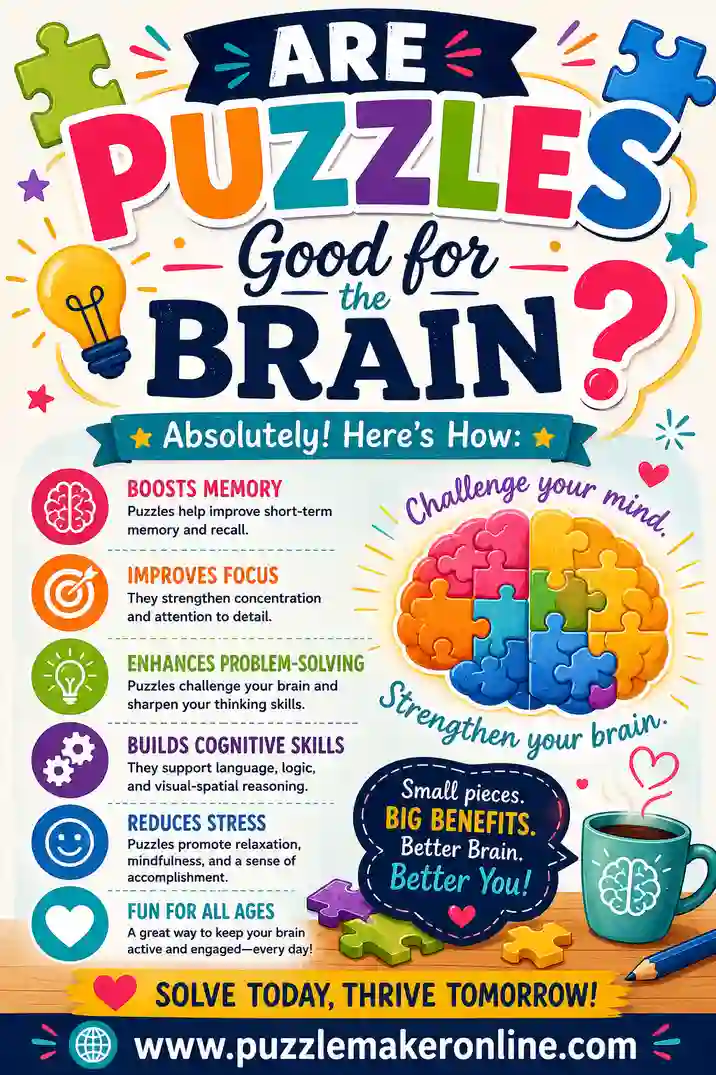
Puzzles give your brain a low-pressure way to stay active. When you hunt for a hidden word or untangle a scramble, you're exercising memory, attention, pattern recognition, and language all at once. Like any exercise, the benefit comes from doing it regularly, not from one heroic session.
It's worth being honest about what puzzles can and can't do. They are not a magic shield against memory loss, and the research doesn't promise that. What they reliably do is keep your mind engaged, give you a sense of accomplishment, and offer a calm, screen-free break. That's plenty of reason to make them a habit.
How Puzzles Work Your Brain
Different puzzles lean on different mental skills. That's actually a good thing, because mixing them gives you a more rounded workout. Here's what each type targets.
Word searches: focus and visual scanning
Finding a word in a grid of letters trains your eyes to scan in an orderly way and your brain to match patterns quickly. It's a gentle, almost meditative task that still keeps your attention locked in.
Crosswords: memory and language
Crosswords pull from your long-term memory and vocabulary. You're connecting clues to answers, recalling facts, and fitting words together, all of which keep your language network active and your recall nimble.
Word scrambles: flexible thinking
A scramble forces your brain to rearrange letters and test possibilities until a real word clicks. That's flexible, creative problem-solving in miniature, and it's surprisingly satisfying when the answer snaps into place.
The Real Brain Benefits
Here's what you actually get from a regular puzzle habit. These benefits hold for kids, adults, and seniors alike.
- Better focus. Puzzles demand sustained attention, which trains you to stay on task longer.
- Sharper memory. Holding clues and words in mind exercises working memory and recall.
- Stronger problem-solving. Every puzzle is a small problem with a clear solution, so you practice working toward answers.
- Bigger vocabulary. Crosswords and word games naturally expose you to new words and meanings.
- Lower stress. The steady, single-minded focus of a puzzle is calming, a bit like the appeal of coloring.
- A real sense of accomplishment. Finishing a puzzle gives a clean, satisfying win that lifts your mood.
Puzzle Types and What They Train
If you want to target a particular skill, pick the puzzle to match. Here's a quick comparison to help you choose.
| Puzzle type | Top brain skill | Also helps | Best for |
|---|---|---|---|
| Word search | Visual scanning, focus | Spelling, calm | Kids, relaxing breaks |
| Crossword | Memory, vocabulary | Recall, reasoning | Adults, word lovers |
| Word scramble | Flexible thinking | Spelling, speed | All ages, quick play |
| Mixed set | A bit of everything | Variety, engagement | A daily brain habit |
The nice thing is you don't have to choose just one. A free puzzle maker lets you build word searches, crosswords, and scrambles from the same word list, so you can rotate through all three.
Free Brain-Boost Word List (Copy & Paste)
Here's a ready-to-use list of 27 words built around thinking and well-being. Copy a column straight into the puzzle maker, or mix across columns. They work for word searches, crosswords, and scrambles alike.
| Mind & Memory | Calm & Focus | Everyday Words |
|---|---|---|
| Memory | Mindful | Coffee |
| Focus | Breathe | Garden |
| Logic | Relax | Window |
| Pattern | Calm | Journal |
| Recall | Quiet | Music |
| Puzzle | Steady | Walking |
| Attention | Patience | Sunrise |
| Reason | Balance | Reading |
| Solve | Rested | Notebook |
For a relaxing set, lean on the calm and everyday columns. For more of a mental stretch, the mind and memory words tend to be a little trickier to scramble.
Themed list ideas
- Daily routine. Words from your morning: coffee, journal, sunrise, walking.
- Hobbies. Build a puzzle around gardening, cooking, or music terms.
- Memory lane. Use place names or family words for a personal touch.
- Vocabulary stretch. Drop in a few words you want to learn.
Building a Daily Puzzle Habit
The brain benefits come from consistency, not intensity. A few minutes a day beats a long session once a month. Here's how to make it stick.
- Pick a time. Tie your puzzle to something you already do, like morning coffee or your evening wind-down.
- Keep it short. One puzzle a day is plenty. Short and regular wins.
- Mix it up. Rotate word searches, crosswords, and scrambles so you work different skills.
- Make it personal. Use word lists tied to your hobbies or interests so it stays fun.
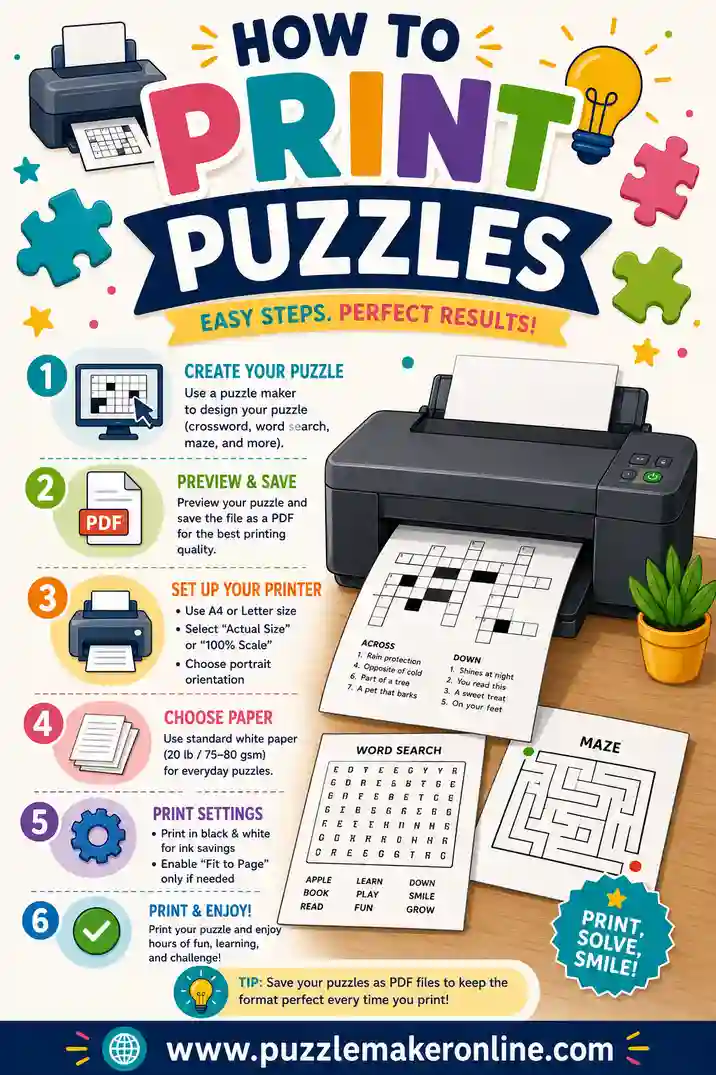
- Print a batch. Open the puzzle maker, build a week's worth at once, and keep them by your chair.
Keep it interesting
If a puzzle ever feels like a chore, change something. Bump up the difficulty, switch puzzle types, or pick a fresh theme. The goal is a habit you look forward to, not one you grind through.
Puzzles Across the Ages
Brain benefits aren't just for one group. Here's how puzzles serve every stage of life, with a setting tip for each.
| Group | Why it helps | Setting tip |
|---|---|---|
| Kids | Builds spelling, focus, confidence | Small grids, simple words |
| Teens | Vocabulary and study breaks | Medium difficulty, fun themes |
| Adults | Mental break, stress relief | Mixed puzzle types |
| Seniors | Engagement and recall practice | Large print, classic words |
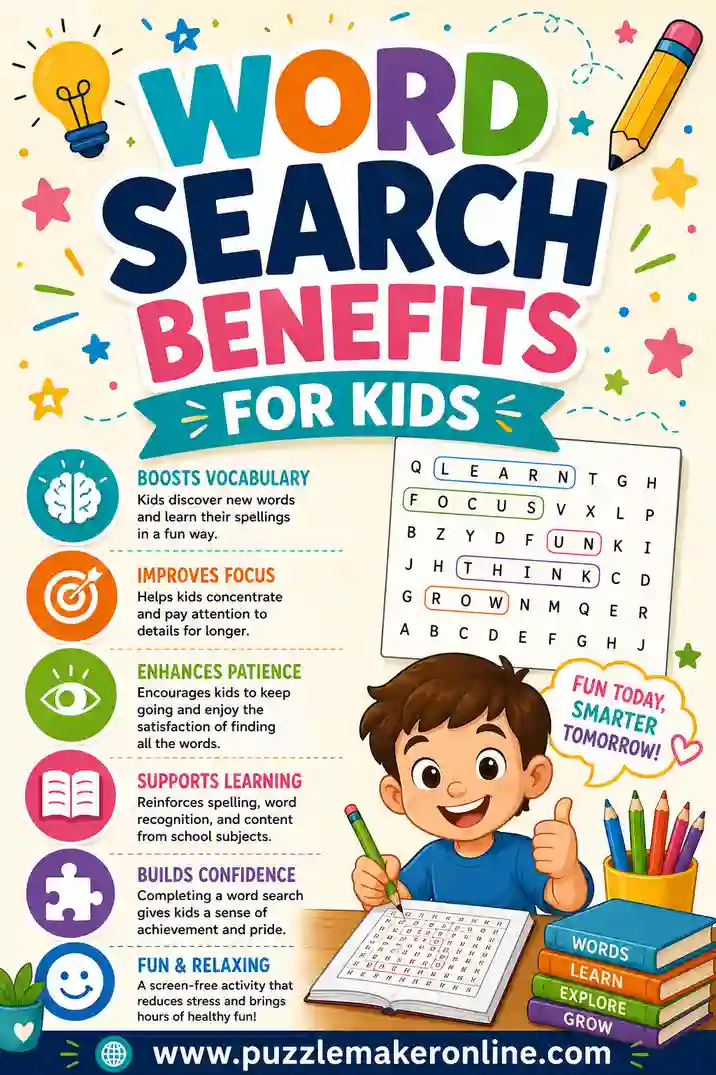
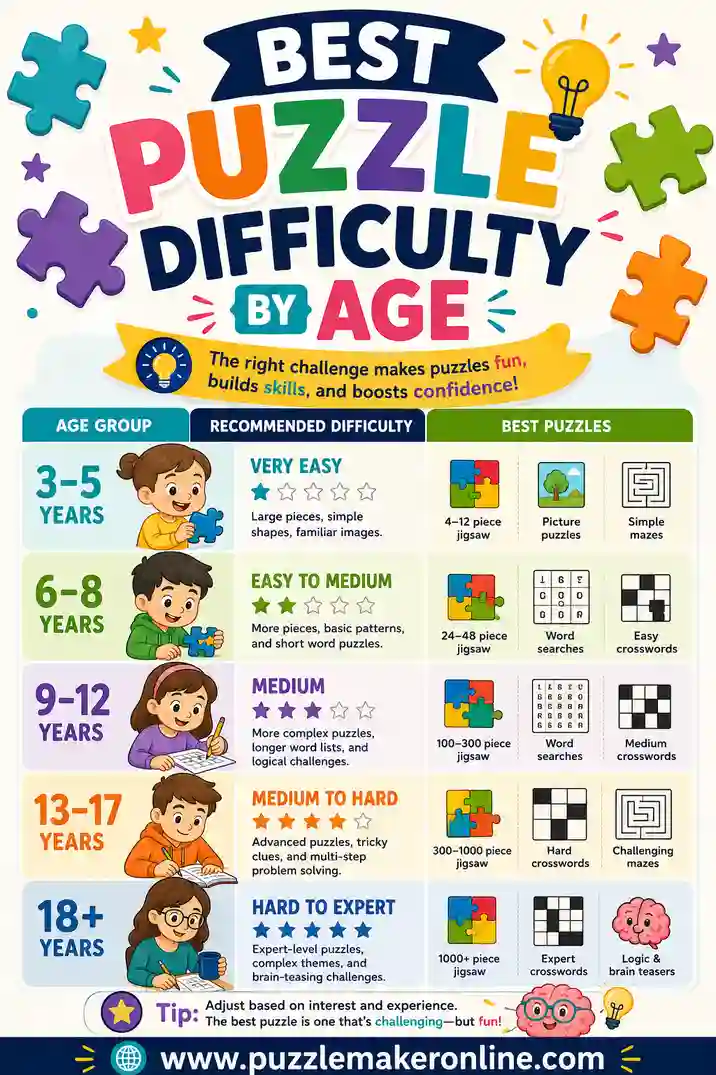
For kids in particular, the upsides go deep. Our guide on word search benefits for kids breaks down exactly how puzzles support early learning. And if you're not sure which challenge level fits, see best puzzle difficulty by age.
Why Puzzles Beat Passive Screen Time
It's worth comparing a puzzle to the thing it usually replaces: scrolling. Both fill a spare ten minutes, but they do very different things to your brain.
When you scroll a feed, your mind is mostly reacting. Content comes at you, you skim, you swipe, and very little sticks. It's stimulating but shallow, and it often leaves you feeling more drained than refreshed.
A puzzle flips that. You're the one driving. You hold a goal in mind, scan for clues, test ideas, and push toward a finish you chose. That active effort is exactly what makes it good for your brain, and it's why a solved puzzle leaves you satisfied rather than restless.
- Active, not passive. You generate the effort instead of absorbing a stream.
- A clear finish. Puzzles end with a win; feeds never end at all.
- Easier on the eyes. A printed puzzle is screen-free, which is gentler before bed.
- Calmer afterward. That focused, single-task state is restful in a way scrolling rarely is.
None of this means screens are bad. It just means that when you've got a few free minutes, a puzzle gives your brain more for the same time spent.
What Puzzles Can't Do
A quick reality check, because honesty matters. Puzzles are good for your brain, but they aren't a cure-all.
- They won't reverse memory conditions. Puzzles support engagement, but they're not medical treatment.
- They work best alongside other habits. Sleep, movement, and real social connection matter just as much for brain health.
- Variety beats repetition. Doing the exact same puzzle daily helps less than mixing it up.
Think of puzzles as one healthy habit among several, not a silver bullet. As part of a balanced routine, they're a genuinely worthwhile one.
The Science Behind the Benefits
You don't need a lab to feel that a puzzle keeps you sharp, but it helps to understand why. The benefits come down to a handful of ideas researchers talk about often.
Cognitive reserve
Think of cognitive reserve as your brain's rainy-day fund. The more you keep your mind active over the years, the more "spare capacity" you build up to draw on later. Mentally engaging activities like puzzles, reading, and learning new skills all feed that reserve. They don't rewrite your biology, but they help your brain stay flexible and resilient.
Active recall
Every time a crossword clue makes you dig up a half-forgotten word, you're practicing active recall, the same technique that makes flashcards work for studying. Pulling information out of memory, rather than just rereading it, strengthens the path back to it. A scramble or crossword turns that effortful retrieval into something that feels like play.
Flow and focus
Puzzles are easy to slip into "flow," that absorbed state where you lose track of time. Flow is restful for the mind precisely because it crowds out worry and distraction. That's a big part of why a puzzle leaves you calmer than a scroll session, you've given your attention one clear thing to do, and it thanks you for it.
Why variety matters
Different puzzles light up different mental skills, so rotating between them gives your brain a broader workout than hammering the same format. A word search trains scanning, a crossword trains recall, a scramble trains flexible thinking. Mixing them is the brain equivalent of cross-training instead of only ever running.
Making Puzzles a Family Habit
The brain benefits aren't just for solo solvers. Puzzles work beautifully as a shared activity, and doing them together adds a social layer that's good for everyone's mind.
- Build a puzzle jar. Print a small batch, fold them into a jar, and let each family member pull one after dinner. It turns a brain habit into a ritual.
- Make co-op crosswords. Work a single puzzle as a team, with each person tackling clues in their wheelhouse. Kids surprise you, and grandparents shine.
- Run a gentle race. Give everyone the same scramble and see who finishes first. Keep stakes low so it stays fun rather than stressful.
- Tie it to a theme. Build puzzles around an upcoming trip, a holiday, or a shared hobby so the words mean something to the whole group.
Shared puzzling does double duty: it exercises the brain and it connects people, and social connection is one of the things research consistently links to long-term brain health.
Frequently Asked Questions
Are puzzles really good for your brain, or is that a myth?
They're genuinely good for it. Puzzles exercise memory, focus, problem-solving, and language, and a regular habit keeps those skills active. The honest caveat is that they keep your mind engaged rather than dramatically boost intelligence or prevent disease.
What kind of puzzle is best for the brain?
The best puzzle is a mix. Word searches build focus and scanning, crosswords work memory and vocabulary, and scrambles train flexible thinking. Rotating between them gives your brain a fuller workout than sticking to just one.
How often should I do puzzles for brain benefits?
A few minutes most days beats one long session now and then. Consistency is what counts. Tie a single daily puzzle to an existing habit, like your morning coffee, and it becomes easy to keep up.
Can puzzles help prevent memory loss?
Puzzles support an active, engaged mind, which is part of overall brain health, but they aren't a guaranteed shield against memory loss. They work best alongside good sleep, regular movement, and staying socially connected.
Are puzzles good for kids' brains too?
Yes. For kids, puzzles strengthen spelling, vocabulary, focus, and confidence, and they do it in a way that feels like play. Just match the difficulty to their age so the puzzle stays fun rather than frustrating.
Do digital puzzles work as well as printed ones?
Both engage your brain. Printed puzzles have the added perk of being screen-free, which makes them calmer and easier on the eyes. Many people enjoy printing a small batch and keeping them handy for a quiet break.
Are puzzles good for stress and relaxation?
Yes. The steady, single-task focus a puzzle demands is naturally calming, a bit like the appeal of coloring or knitting. It crowds out racing thoughts and gives your mind one clear thing to do, which many people find genuinely soothing at the end of a busy day.
How long does it take to see brain benefits from puzzles?
There's no finish line to wait for, the benefit is in the doing. A few minutes most days keeps your mind engaged from the first session onward. The point isn't to "complete" a program but to make a small, enjoyable habit that you keep up over months and years.
Ready to Give Your Brain a Workout?
So, are puzzles good for the brain? Absolutely, as long as you make them a regular, varied habit. Grab the word list above, open the free puzzle maker, and print a custom word search, crossword, or scramble in minutes. It's free, there's no sign-up, and you can build a fresh puzzle every day. Your brain will thank you, one solved clue at a time.