Word Search Benefits for Kids: Why They Help Learning
The word search benefits for kids are real and well worth the few minutes it takes to print one. A good word search sharpens spelling, builds focus, grows vocabulary, and gives kids a quiet, screen-free win they can feel proud of. Best of all, the puzzle looks like play, so kids learn without realizing they're working.
Want to make one right now? Open the free puzzle maker, paste in any word list (there's a ready-made one below), and print a clean word search in seconds. No sign-up, no software, no fee.
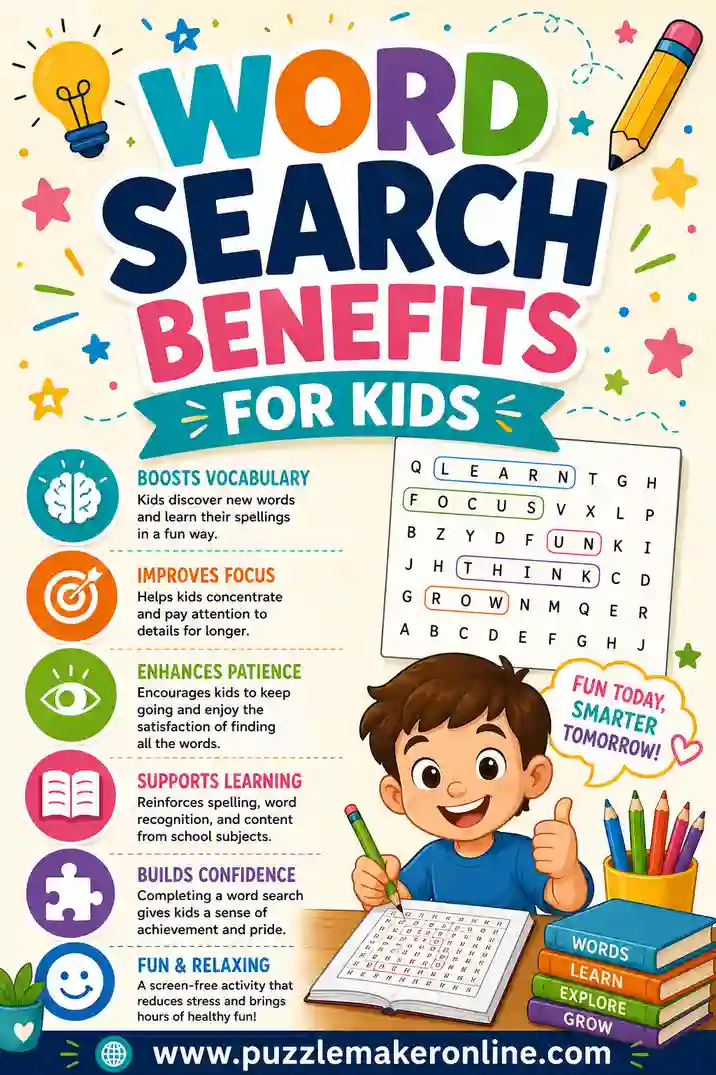
What a Word Search Actually Teaches
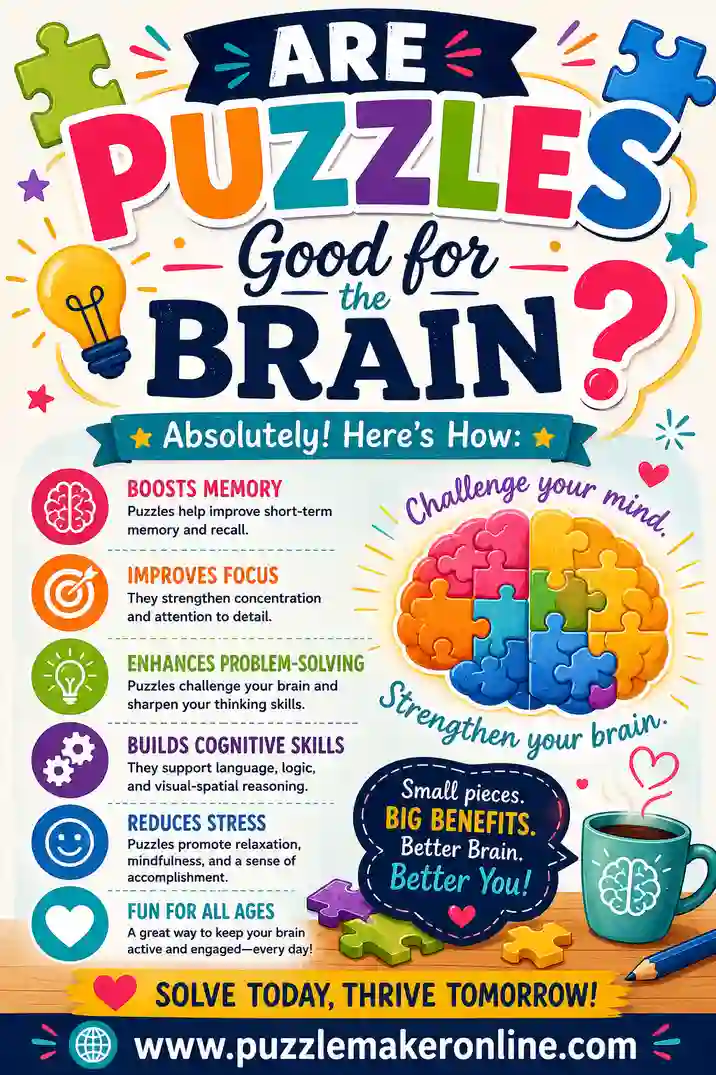
On the surface, a word search is just a grid of letters with a list of words to find. But under the hood, a child's brain is doing a lot of work. They're scanning, matching patterns, holding a target word in memory, and checking letter order, all at once.
That mix is what makes word searches so useful. They blend a few skills into one short, low-pressure activity. A kid who "hates worksheets" will happily hunt for hidden words because it feels like a game, not a test.
Here's the short version of why teachers and parents keep reaching for them:
- They reinforce spelling without drilling.
- They build the kind of focus that carries into reading and math.
- They grow vocabulary when you pick the words on purpose.
- They give a clear finish line, so kids feel that satisfying sense of "I did it."
The Top Benefits of Word Searches for Kids
Let's break down the real payoffs. None of these need a fancy setup. A printed grid and a pencil are enough.
1. Stronger spelling
To find a word, a child has to recognize its exact letter sequence inside a noisy grid. That repeated exposure quietly cements spelling patterns. Seeing "f-r-i-e-n-d" spelled correctly a dozen times sticks better than copying it once.
2. Bigger vocabulary
You control the word list, so you control the learning. Drop in this week's spelling words, science terms, or new vocabulary, and the puzzle does double duty. Kids meet the words in a fun context instead of a flashcard stack.
3. Better focus and patience
Finding a hidden word takes a steady eye. Kids learn to slow down, scan in order, and stick with a task until it's done. That patience is a muscle, and word searches give it a gentle workout.
4. Sharper visual scanning
The left-to-right, top-to-bottom scanning a word search demands is the same motion strong readers use. Practicing it helps early readers track text more smoothly across a page.
5. A confidence boost
A word search has a clear, reachable goal. Cross off the last word and the puzzle is done, the kind of small, certain win that builds confidence in kids who get discouraged easily.
6. Screen-free calm
A printed puzzle is a quiet, no-screen activity that still keeps a busy mind engaged. It's perfect for car rides, restaurants, waiting rooms, or that wind-down stretch before bed.
Word Searches by Skill Area
Word searches aren't one-size-fits-all. You can aim them at whatever your child is working on. Here's how the same simple tool stretches across subjects.
| Skill area | What to put in the word list | What it builds |
|---|---|---|
| Reading | Sight words, rhyming families, this week's story words | Word recognition, fluency |
| Spelling | The current spelling list | Letter order, memory |
| Science | Planets, animals, body parts, weather words | Subject vocabulary |
| Math | Number words, shapes, math terms | Term recall |
| Holidays | Seasonal and theme words | Fun, engagement |
| Names | Classmates, family, pets | Personal connection |
Because you pick the words, a single puzzle maker can support nearly any lesson. Swap the list and you've got a brand-new puzzle in seconds.
Free Kids Word List (Copy & Paste)
Here's a ready-to-use list of 28 friendly, kid-tested words. Copy the column you like straight into the puzzle maker, or mix and match across columns for variety. These are all easy to picture and safe for early readers.
| School & Learning | Animals & Nature | Fun & Everyday |
|---|---|---|
| Pencil | Rabbit | Cookie |
| Library | Turtle | Bicycle |
| Spelling | Butterfly | Soccer |
| Teacher | Penguin | Birthday |
| Reading | Dolphin | Rainbow |
| Backpack | Squirrel | Bubbles |
| Crayon | Ladybug | Sandbox |
| Homework | Elephant | Popcorn |
| Notebook | Garden | Puppy |
| Recess | Flower | Kitten |
If you're working with very young kids, lean on the short, concrete words like puppy, cookie, and rainbow. For older kids, the longer words like butterfly and homework add a nice challenge.
Themed list ideas
- Seasons. Build a fall, winter, spring, or summer puzzle with weather and holiday words.
- Favorite animals. Let your child pick the animals. Ownership boosts interest.
- Classroom names. Use the names of classmates for a first-week icebreaker.
- Story words. Pull words straight from a book you just read together.
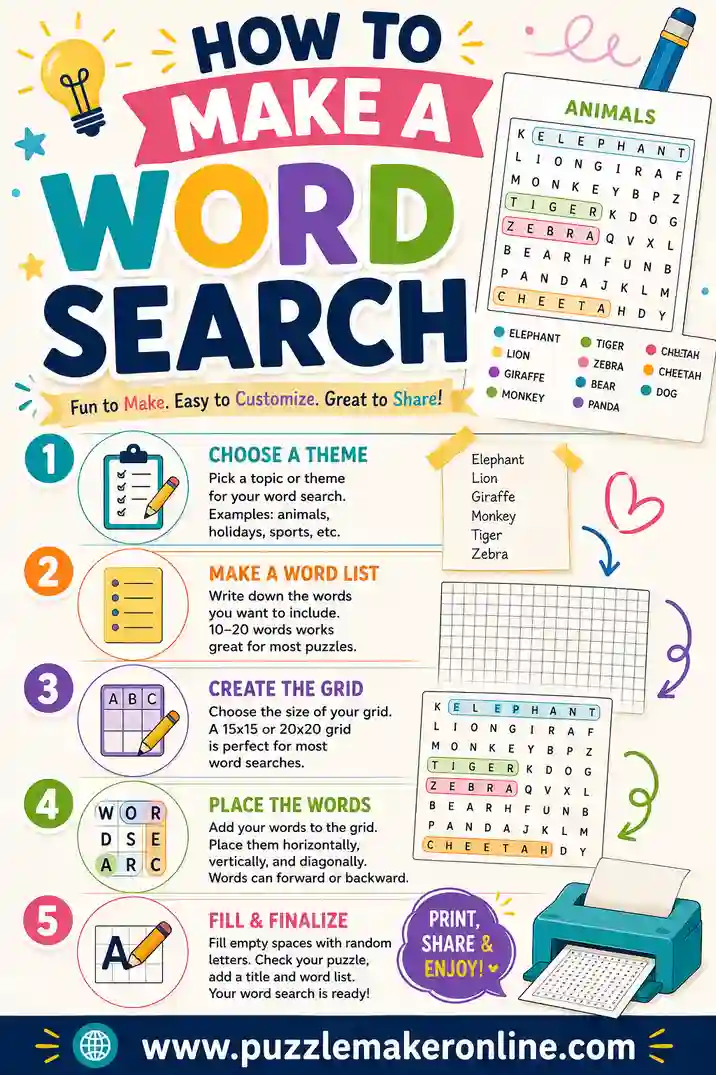
How to Make a Word Search for Kids
You don't need design skills or special software. Here's the whole process, start to finish.
- Pick a theme. This week's spelling list, a science unit, or just "fun" words your child likes.
- Gather 12 to 20 words. Fewer for little kids, more for older ones. Keep them age-appropriate so kids can actually find them.
- Paste them into the maker. Open the puzzle maker, drop in your list, and it builds the grid for you.
- Set the difficulty. Smaller grids and no diagonals for young kids, bigger grids with backward words for older ones.
- Print. Hit print, hand over a pencil, and you're done.
That's it. The whole thing takes a few minutes, and you can save the list to reuse it next week with a fresh grid.
Make it easier or harder
- Easier: small grid, words left-to-right and top-to-bottom only, no backward words.
- Standard: medium grid, words in several directions, maybe a diagonal or two.
- Harder: large grid, diagonals, and backward words for kids who breeze through the basics.
Age Guide: Matching Word Searches to Kids
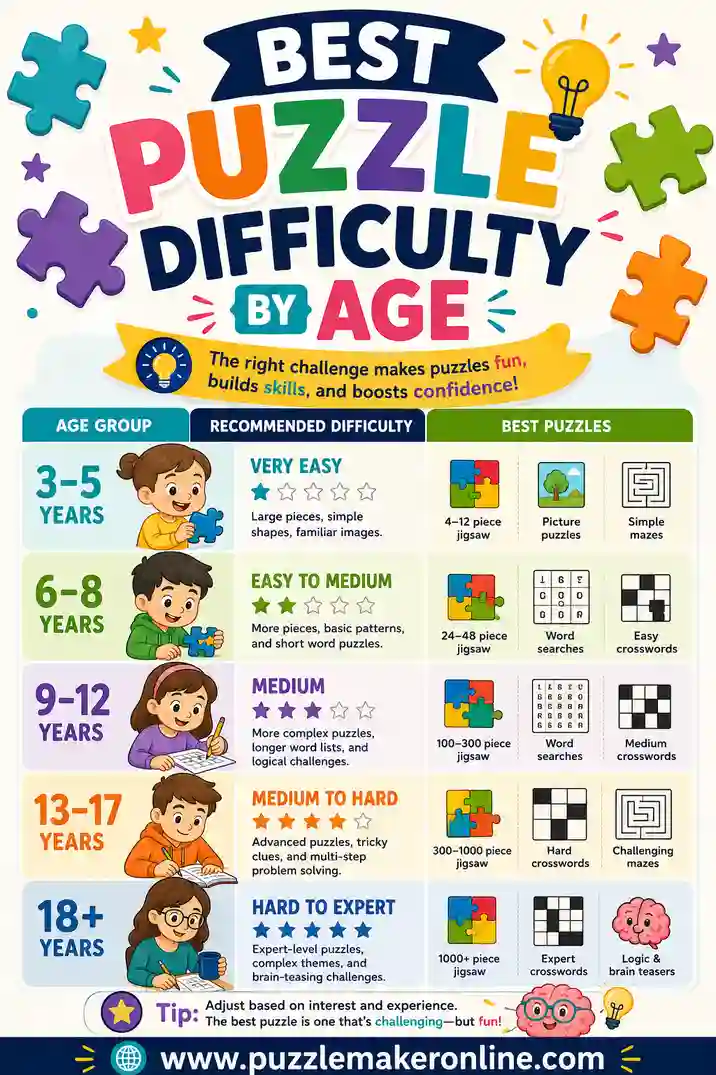
The same puzzle type works from preschool to middle school if you adjust a few settings. Here's a quick guide to keep it in the sweet spot, hard enough to be interesting, easy enough to finish.
| Age group | Grid size | Word count | Settings |
|---|---|---|---|
| Pre-K (3–5) | 7×7 | 5–6 short words | Across and down only, big letters |
| Early grades (6–8) | 10×10 | 8–12 words | Add a few diagonals |
| Tweens (9–12) | 13×13 | 12–18 words | Diagonals and some backward words |
| Teens (13+) | 15×15+ | 18–25 words | All directions, tricky overlaps |
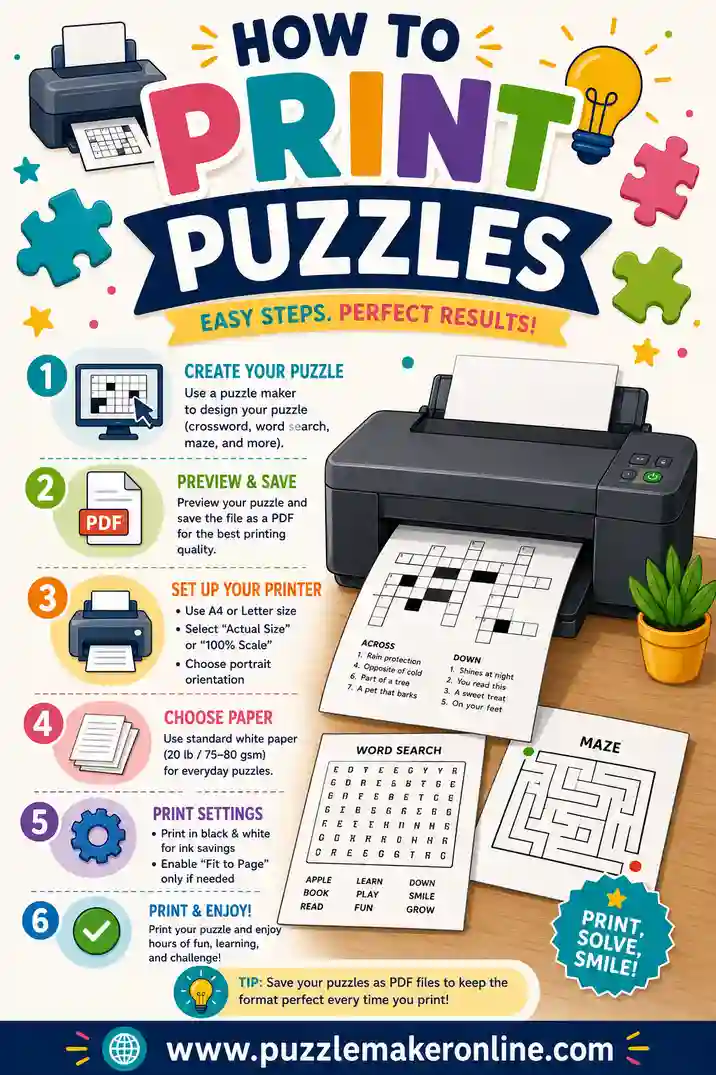
If you want a deeper breakdown of how to pick the right challenge level, see our guide on the best puzzle difficulty by age. And when you're ready to print a class set, our tips on how to print puzzles will save you ink and headaches.
Smart Ways to Use Word Searches at Home and School
A word search is more flexible than it looks. A few favorite uses:
- Morning warm-up. A short puzzle settles a class or a kitchen table before the real work starts.
- Early-finisher activity. Keep a stack ready for kids who race through their work.
- Spelling practice that doesn't feel like practice. Turn the weekly list into a puzzle.
- Quiet-time and travel. Tuck a few into a bag for restaurants, road trips, and waiting rooms.
- Reward. Some kids genuinely treat a fresh puzzle as a treat. Lean into it.
A few gentle tips
- Let them choose words sometimes. Ownership makes kids try harder.
- Don't rush. The benefit is in the slow scanning, not the speed.
- Celebrate the finish. A high-five at the last word keeps motivation high.
- Pair it with reading. A puzzle made from a book's words deepens what they just read.
Beyond Word Searches: Other Puzzles Kids Love
Word searches are a fantastic starting point, but they're not the only puzzle that helps kids. Rotating in a couple of others keeps things fresh and works slightly different skills.
- Word scrambles. Jumbled letters that kids rearrange into a real word. These push spelling and flexible thinking a little harder than a word search, and they're quick, which suits short attention spans.
- Simple crosswords. Once a child reads comfortably, an easy themed crossword adds clue-reading and recall to the mix. Start with picture clues or very short answers.
- Fill-in puzzles. Kids slot a given word list into a blank grid. This builds the same scanning skills as a word search with a touch more logic.
The nice thing is you can build all of these from the same word list. Make a word search on Monday, a scramble on Wednesday, and an easy crossword on Friday, all from this week's spelling words. The variety keeps kids engaged while quietly reinforcing the same vocabulary three different ways.
Frequently Asked Questions
At what age can kids start doing word searches?
Most kids are ready for a simple word search around age four or five, once they recognize letters and can find short words like cat or dog. Start with a tiny grid, big letters, and only a handful of left-to-right words, then build up from there.
Are word searches actually educational or just busywork?
They're genuinely educational when you choose the words on purpose. A word search reinforces spelling, grows vocabulary, and builds focus and visual scanning. The trick is to load it with words tied to what your child is learning, not random filler.
How many words should a kids' word search have?
For young kids, 5 to 8 words keep it doable. Early grade-schoolers handle 8 to 12, and tweens enjoy 12 to 18. Match the count to attention span. A puzzle that's too long gets abandoned, which defeats the purpose.
Do word searches help with reading?
Yes. The left-to-right, top-to-bottom scanning a word search requires is the same eye movement strong readers use. Finding and recognizing whole words also reinforces sight-word fluency, which makes reading smoother.
What words work best for a kids' word search?
Concrete, easy-to-picture words work best: animals, food, school items, and names. Tie them to a theme or a current lesson so the puzzle does double duty. The free list above gives you 28 kid-tested words to start with.
Can I make a word search for a specific spelling list?
Absolutely. That's one of the best uses. Just paste your child's weekly spelling words into the puzzle maker and it builds a custom word search. It turns rote spelling practice into a game they'll actually want to finish.
Ready to Make a Word Search Your Kids Will Love?
The benefits add up fast: better spelling, bigger vocabulary, sharper focus, and a happy, screen-free kid. Grab the word list above, open the free puzzle maker, and print a custom word search in minutes. It's free, there's no sign-up, and you can build a fresh one for every lesson, season, or rainy afternoon. Hand over a pencil and watch them dig in.