Best Puzzle Difficulty by Age: A Simple Guide
The best puzzle difficulty by age comes down to matching grid size, word count, and complexity to a person's skills. Little kids do best with tiny grids and a handful of easy, left-to-right words. Older kids and adults can handle bigger grids, diagonals, backward words, and trickier vocabulary. Get the level right and the puzzle feels fun; get it wrong and it's either boring or frustrating.
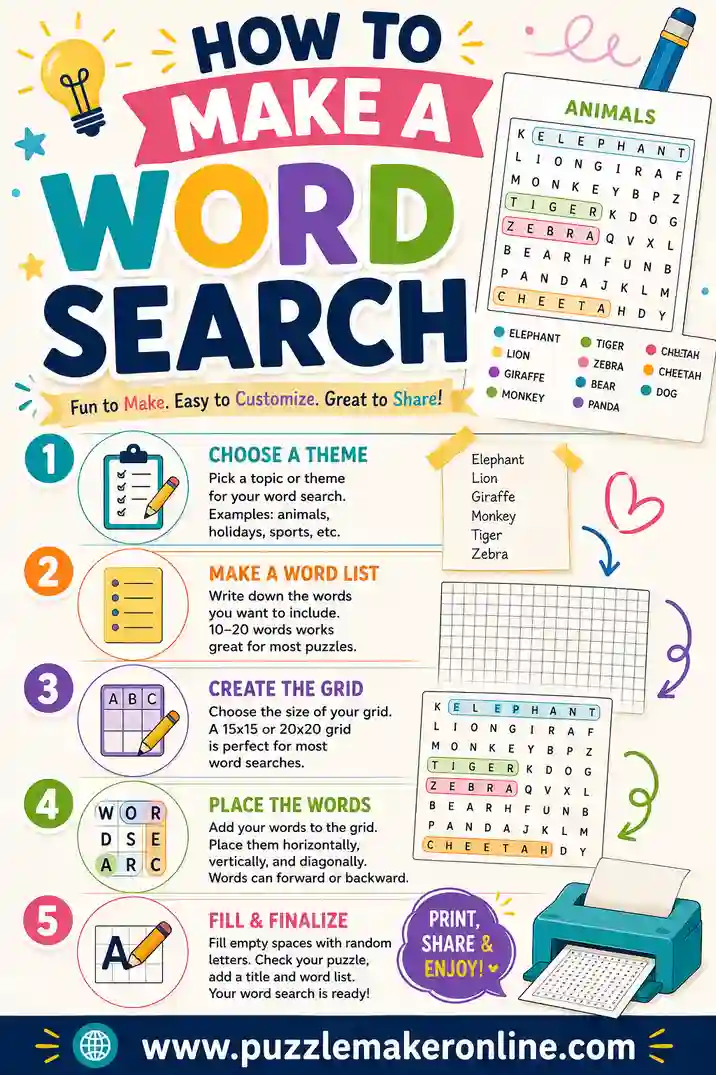
Want to build a perfectly-leveled puzzle right now? Open the free puzzle maker, paste in a word list (there's one below), set the difficulty, and print. No sign-up, no software.
What Makes a Puzzle Easy or Hard
Before the age chart, it helps to know which knobs you can turn. Difficulty isn't one setting, it's a few working together.
- Grid size. A bigger grid means more letters to scan, which raises difficulty.
- Word count. More words to find or solve takes longer and demands more focus.
- Word length and vocabulary. Short, familiar words are easy. Long or unusual words are hard.
- Directions. Words running only across and down are easiest. Add diagonals and backward words to ramp it up.
- Overlaps. In word searches, words that share letters are trickier to spot. In crosswords, more intersections mean a harder solve.
Adjust these together and you can fine-tune any puzzle for any age, from a wobbly preschooler to a crossword veteran.
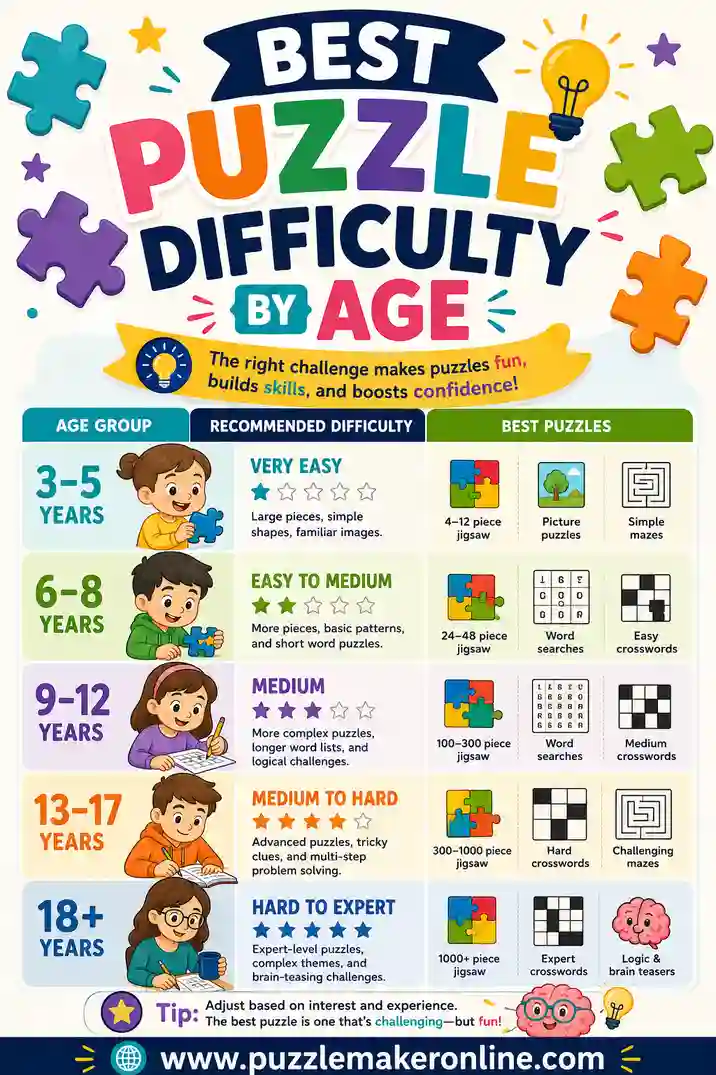
The Best Puzzle Difficulty by Age Chart
Here's the quick reference. These are starting points, not rules, so nudge them up or down based on the individual.
| Age group | Grid size | Word count | Settings | Word style |
|---|---|---|---|---|
| Toddlers (2–4) | 5×5 | 3–4 | Across only, picture clues | Very short, simple |
| Preschool (4–5) | 6×6 | 4–6 | Across and down | Short, concrete |
| Early grades (6–8) | 8×8 to 10×10 | 6–10 | A few diagonals | Familiar words |
| Tweens (9–12) | 12×12 | 10–16 | Diagonals, some backward | Mixed, themed |
| Teens (13–17) | 14×14 | 16–22 | All directions | Varied vocabulary |
| Adults | 15×15+ | 20–30 | All directions, overlaps | Any, including tricky |
| Seniors | 10×10 to 12×12 | 10–18 | Large print, classic words | Clear, well-known |
Notice seniors aren't at the "hardest" end. The goal there is enjoyable engagement with comfortable print, not maximum challenge.
Puzzles for Toddlers and Preschoolers (2–5)
At this age, success is everything. A puzzle they can finish builds confidence; one they can't just frustrates them.
- Keep grids tiny. A 5×5 or 6×6 is plenty.
- Use 3 to 6 short words. Think cat, sun, dog, ball.
- Words go across and down only. No diagonals, no backward words.
- Pair words with pictures if the child isn't reading yet.
- Make the letters big. Easier to see, easier to track.
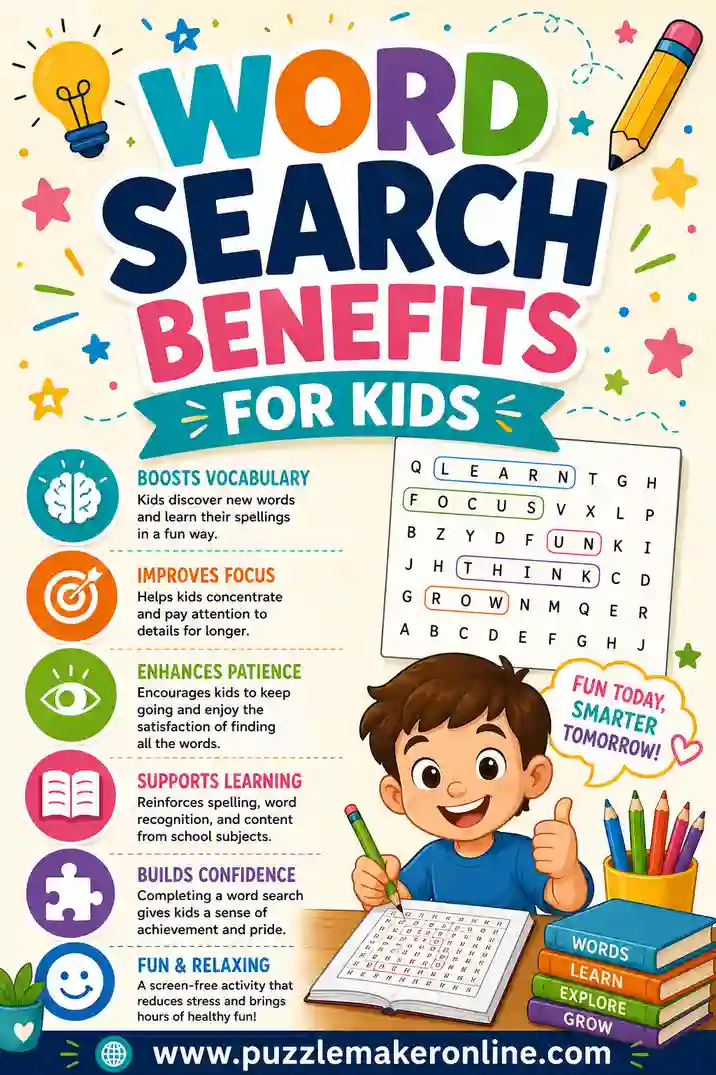
For little ones, word searches and very simple scrambles work better than crosswords, which lean on reading clues. The payoff is real, our guide on word search benefits for kids covers how even simple puzzles build early skills.
Puzzles for Grade-Schoolers (6–12)
This is the sweet spot where puzzles can stretch a kid without losing them. Difficulty should climb steadily across these years.
Early grades (6–8)
- 8×8 to 10×10 grids
- 6 to 10 words tied to a lesson or theme
- Add a couple of diagonals once they're comfortable
- Familiar words they can actually spell
Tweens (9–12)
- 12×12 grids
- 10 to 16 words, including a few longer ones
- Diagonals plus some backward words
- Themed lists they choose themselves for buy-in
At this stage, kids can start enjoying crosswords too, especially themed ones built around a favorite topic. Variety keeps them coming back.
Puzzles for Teens and Adults (13+)
Older solvers want a real challenge, and they get bored fast if a puzzle is too easy.
- Go big on the grid. 14×14 for teens, 15×15 or larger for adults.
- Pack in more words. 16 to 30, with plenty of overlap.
- Use every direction. Across, down, diagonal, and backward.
- Reach for richer vocabulary. Themed or specialized words add bite.
- Crosswords shine here. Adults often prefer the recall challenge of a good crossword.
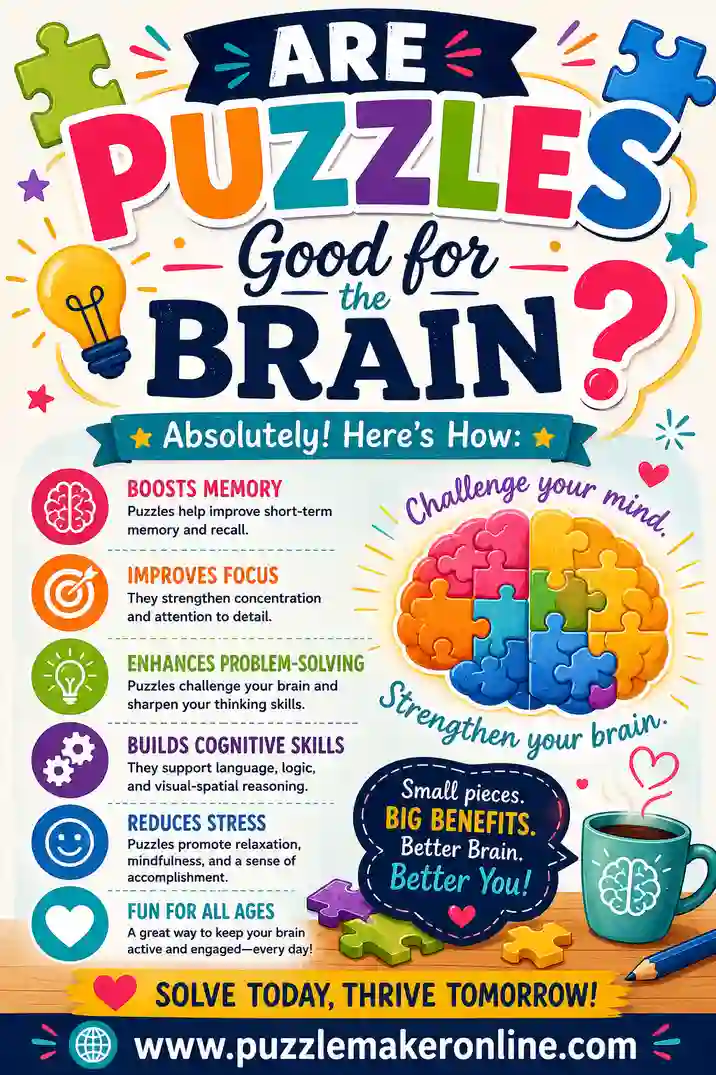
If you want a true brain workout, mixing puzzle types is ideal. Our piece on whether puzzles are good for the brain explains why variety beats repetition.
Puzzles for Seniors
Difficulty for seniors is about comfort and enjoyment, not making things as hard as possible. The aim is a satisfying, engaging solve.
- Use large print. Bigger letters reduce eye strain and frustration.
- Keep grids moderate. 10×10 to 12×12 is comfortable.
- Choose clear, well-known words. Classic vocabulary feels familiar and rewarding.
- Offer plenty of contrast. Dark letters on white paper print cleanest.
- Let interest set the pace. Some seniors love a tough crossword; others prefer a relaxing word search. Follow the person.
A well-leveled puzzle is a wonderful daily ritual for older adults, calm, engaging, and screen-free.
Free Word List for Any Level (Copy & Paste)
Here's a ready-to-use list of 27 words sorted by difficulty. Pick the column that fits your audience, then paste it straight into the puzzle maker.
| Easy (kids) | Medium (tweens & up) | Harder (teens & adults) |
|---|---|---|
| Cat | Garden | Adventure |
| Sun | Pencil | Mystery |
| Dog | Rabbit | Compass |
| Ball | Sunset | Galaxy |
| Tree | Cookie | Voyage |
| Star | Rocket | Harmony |
| Fish | Castle | Journey |
| Cake | Dolphin | Triumph |
| Bird | Bicycle | Discovery |
Mix and match if you're building for a mixed-age group, just pair the right grid size with the right column.
Matching Puzzle Type to Age, Too
Difficulty isn't only about grid size and word count. The puzzle type itself carries a built-in challenge level, so picking the right kind for an age group matters just as much.
- Word searches are the most forgiving. There are no clues to read, just words to find, which makes them ideal for the youngest solvers and anyone who wants a relaxing, low-pressure puzzle.
- Word scrambles sit in the middle. They need reading and a bit of flexible thinking, so they suit early grade-schoolers through adults. They're also the quickest to solve, which is handy for short attention spans.
- Crosswords are the most demanding because they lean on clues, vocabulary, and recall. They shine for tweens and up, and they're a favorite challenge for adults and word-loving seniors.
A good rule of thumb: start younger solvers on word searches, add scrambles as their reading grows, and introduce crosswords once they can comfortably read and answer clues. Mixing all three over time keeps puzzles fresh and works a wider range of skills, which is better for the brain than repeating the same format.
How to Set the Right Difficulty in the Maker
Matching the level is quick once you know what to adjust.
- Choose the age group you're building for.
- Pick the grid size from the chart above.
- Add the matching number of words from the right difficulty column.
- Set the directions. Across and down for young kids, more directions for older solvers.
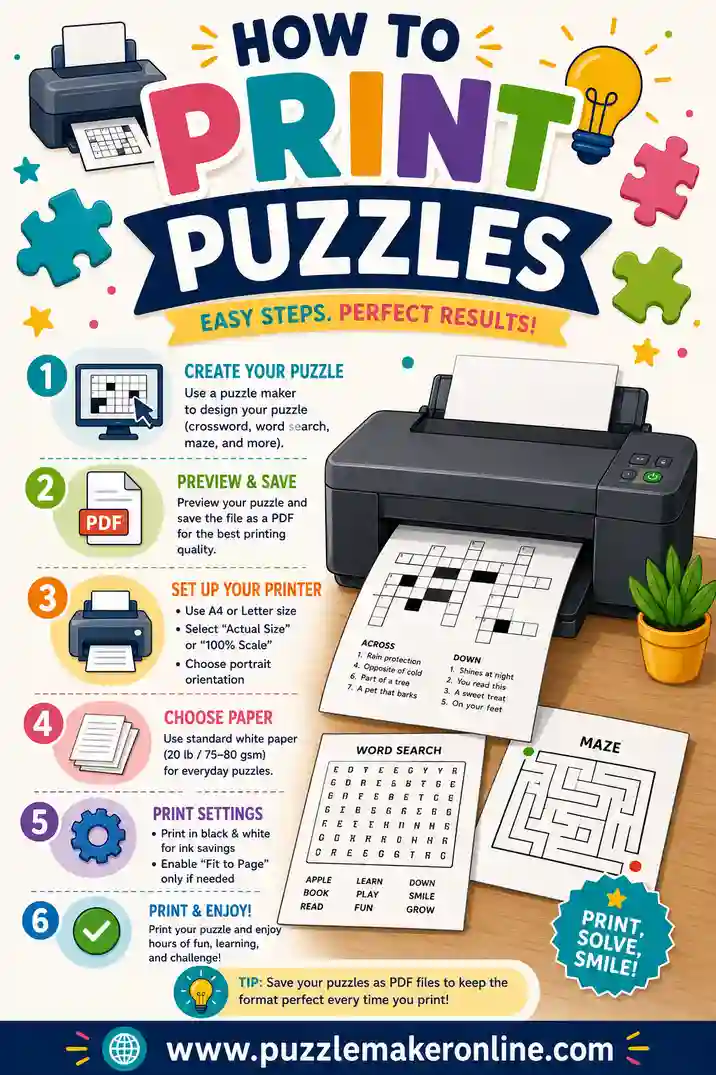
- Print and test. Try the puzzle yourself first to confirm it's the right level. For clean output, see how to print puzzles.
The puzzle maker handles the heavy lifting, so once you've picked your settings, a perfectly-leveled puzzle is one click away.
Signs You've Got the Difficulty Wrong
Watch the solver and adjust. The puzzle should tell you if the level's off.
- Too easy: they finish in seconds and look bored. Bump the grid size or add directions.
- Too hard: they give up partway, get frustrated, or stop trying. Shrink the grid and simplify the words.
- Just right: they're focused, a little challenged, and clearly satisfied when they finish.
When in doubt, start a touch easier. A confident finish makes people want another puzzle; a wall of frustration makes them quit.
How to Ramp Up Difficulty Over Time
Picking the right level for today is only half the job. The real goal is to keep nudging a solver forward as their skills grow, so the puzzle stays interesting without ever tipping into frustrating. Here's how to scale up gently.
Change one thing at a time
If you jump from a tiny across-only grid straight to a big puzzle with diagonals and backward words, you'll lose the solver. Instead, raise one knob per puzzle. Add a couple of diagonals this week. Bump the word count next week. Stretch the grid the week after. Each step feels small, but they add up.
Let success set the pace
The solver tells you when they're ready. If they're breezing through and looking bored, that's your cue to add a little challenge. If they're stalling, hold steady or ease off. You're aiming for that focused, slightly-stretched state where they finish proud, not defeated.
Keep a fallback in your pocket
For kids especially, have an easier version ready in case a puzzle lands too hard. Print a backup at a lower level so a frustrated solver can switch and still get a win. Ending on a finished puzzle matters more than pushing through a hard one.
Use themes to mask the jump
A solver will accept a harder puzzle more happily if the topic excites them. Tie a tougher level to a favorite subject, dinosaurs, space, a sports team, and the extra challenge feels worth it. Interest buys you a little more difficulty than you'd otherwise get away with.
Tailoring Difficulty for Special Cases
The age chart covers most people, but a few situations call for their own tweaks. A little adjustment goes a long way.
- Early or reluctant readers. Lean on word searches over crosswords, since searches don't require reading clues. Pair words with pictures and keep the list short.
- Solvers with low vision. Reach for large print, high contrast, and a moderate grid no matter the age. A 10×10 in big, dark letters beats a cramped 15×15 every time.
- Group settings. When one puzzle has to serve a range of skills, build a medium grid with a mix of easy and hard words so everyone solves a few. Or print two leveled versions of the same theme.
- Speed lovers. Some solvers want a quick win, not a marathon. For them, a smaller grid with familiar words and a timer turns the puzzle into a fast, satisfying race.
The same free maker handles all of these, since you control the grid size, word list, and print size every time.
Frequently Asked Questions
What puzzle difficulty is right for a 5-year-old?
Keep it very gentle. A 5×5 or 6×6 grid with 4 to 6 short, familiar words running only across and down is ideal. Pair words with pictures if the child isn't reading yet, and use big letters so they're easy to spot.
How do I make a puzzle harder for adults?
Increase the grid size, add more words with overlaps, and turn on all directions including diagonal and backward. Richer or themed vocabulary also raises the challenge. For adults, a dense crossword often hits the sweet spot better than a simple word search.
What grid size is best for kids?
It depends on age. Toddlers do well with 5×5, preschoolers with 6×6, early grade-schoolers with 8×8 to 10×10, and tweens with about 12×12. Smaller grids with fewer words keep young kids from getting overwhelmed.
Should puzzles for seniors be the hardest level?
Not necessarily. The goal for seniors is enjoyable engagement with comfortable, large-print puzzles, not maximum difficulty. A moderate 10×10 to 12×12 grid with clear, well-known words is comfortable, though some seniors genuinely enjoy a tougher crossword.
How do I know if a puzzle is too hard?
Watch the solver. If they give up partway, get frustrated, or stop trying, it's too hard. Shrink the grid, cut the word count, and use simpler words. The right level keeps them focused and a little challenged, with a satisfying finish.
Can one puzzle work for a mixed-age group?
Yes, with a little planning. Use a medium grid and include a mix of easy and harder words so everyone finds something they can solve. Or print two versions from the same theme, an easy one for the kids and a tougher one for the adults.
Which puzzle type is easiest for young kids?
Word searches are the most forgiving, since there are no clues to read, just words to find. Start the youngest solvers there, add simple scrambles as their reading grows, and introduce crosswords once they can comfortably read and answer clues.
How do I make a puzzle harder without changing the words?
Turn up the other knobs. Enlarge the grid so there's more to scan, add diagonal and backward directions, and increase how much the words overlap. Each of these raises the challenge even with the exact same word list, so you can level up a familiar set instantly.
Ready to Build a Perfectly-Leveled Puzzle?
Matching difficulty to age is the difference between a puzzle people love and one they abandon. Use the chart above, grab the word list, open the free puzzle maker, and set the grid size and directions for your audience. It's free, there's no sign-up, and you can build an easy toddler puzzle and a tough adult one from the same screen. Print one and watch it land just right.